Can Cats Eat Pepperoni – Is It Safe For Cats
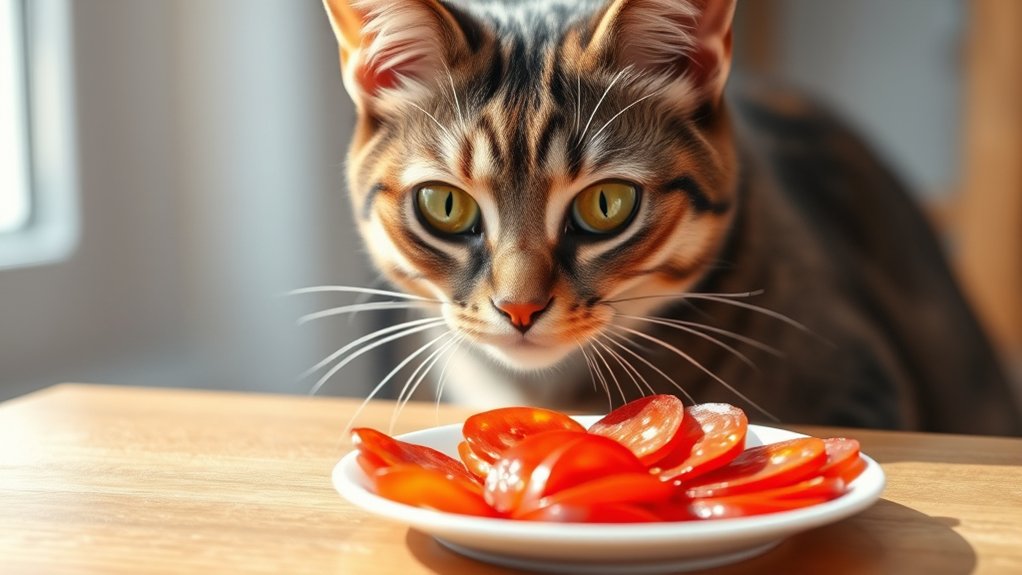
You shouldn’t let your cat eat pepperoni because its high sodium, fat, and toxic ingredients like garlic and onion can harm their health. It can cause vomiting, diarrhea, kidney strain, and even heart issues.
If your cat accidentally eats pepperoni, watch for symptoms and consult your vet if needed. Choosing safer, vet-approved treats guarantees your cat stays healthy and happy.
To keep your pet safe, it helps to understand why processed meats pose risks and how to prevent exposure. That way, you can make better choices for your furry friend’s diet.
Why Pepperoni Is Unsafe for Cats
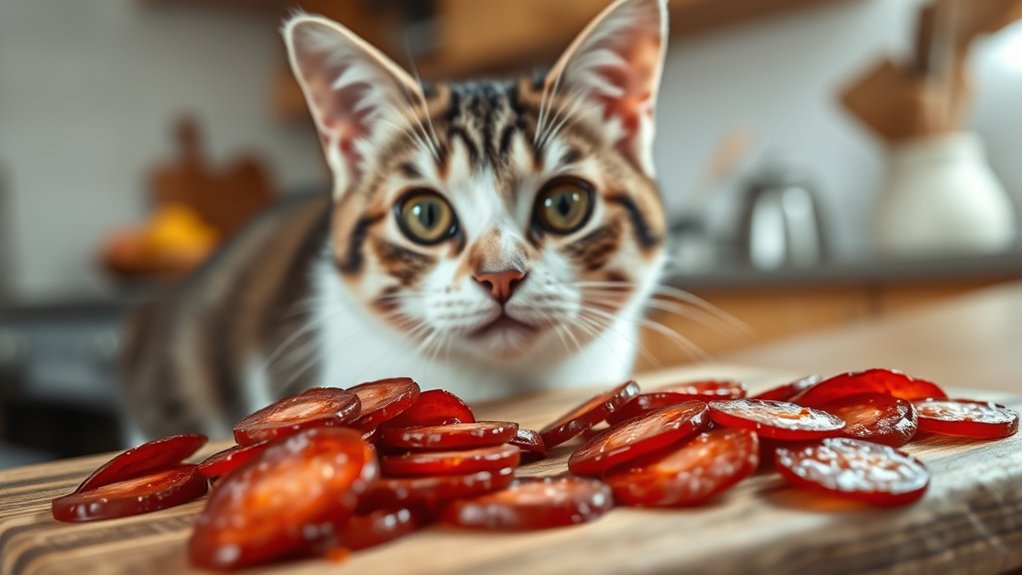
Although pepperoni might seem like a tasty treat, you should avoid giving it to your cat because it contains high levels of sodium, preservatives, and harmful ingredients like garlic and onion.
Pepperoni’s high-fat content can lead to obesity and pancreatitis, which are serious health concerns for your feline friend.
Cats have a low tolerance for processed foods, and the additives and spices in pepperoni often cause gastrointestinal upset, making your cat uncomfortable.
More importantly, some ingredients in pepperoni are toxic to cats and can cause severe reactions.
To keep your cat healthy and safe, it’s best to steer clear of pepperoni entirely.
Instead, offer them treats designed specifically for their sensitive digestive systems and nutritional needs.
Your cat will thank you for it!
Harmful Ingredients in Pepperoni That Affect Cats
When you consider feeding pepperoni to your cat, it’s important to understand the harmful ingredients it contains that can negatively impact their health.
Pepperoni, a type of processed meat, is loaded with high fat and sodium levels that can strain your cat’s body. This can potentially lead to obesity and pancreatitis.
Also, many pepperoni brands include spices toxic to cats, such as garlic and onion. These ingredients may cause anemia and digestive issues.
Preservatives like nitrates and nitrites, common in processed meats, pose further risks by increasing cancer susceptibility in cats.
Plus, artificial colorings and flavorings often added to pepperoni can upset your cat’s digestive system.
Knowing these harmful ingredients helps you protect your feline friend from avoidable health problems. So, it’s best to keep pepperoni away from your cat’s diet.
Symptoms of Pepperoni Poisoning in Cats
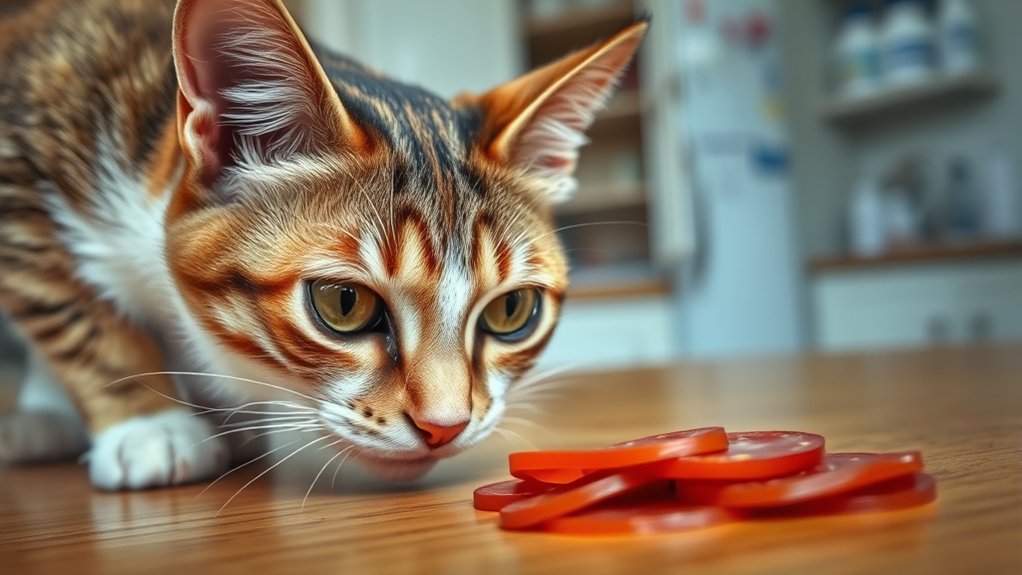
If your cat consumes pepperoni, you might notice symptoms like vomiting, diarrhea, and abdominal pain caused by the high fat and sodium content.
Pepperoni can cause serious gastrointestinal upset, so recognizing the symptoms of pepperoni poisoning early is really important.
You may also observe drooling and pale gums due to garlic and onion toxicity. Increased thirst and frequent urination can signal salt poisoning.
Lethargy and weakness might show up from anemia or dehydration.
There’s also the risk of potential hemorrhagic gastroenteritis, which results in severe digestive distress.
These signs indicate that your cat’s health is at risk. So, it’s important to understand that pepperoni poisoning requires prompt veterinary intervention to prevent complications.
If you see these symptoms, don’t delay seeking professional care. Getting help quickly is the best way to guarantee your cat’s safety and recovery.
What to Do If Your Cat Eats Pepperoni
If your cat eats pepperoni, the first thing you should do is keep a close eye on them.
Watch out for any signs of distress, like vomiting or if they seem unusually tired. If you notice any of these symptoms getting worse, or if your cat stops eating or drinking, don’t hesitate to give your vet a call.
In the meantime, make sure your cat has plenty of fresh water to stay hydrated.
Keep them comfortable and relaxed while you watch for any changes in their behavior. It’s always better to be safe and get professional advice if you’re unsure.
Immediate Symptom Monitoring
Although pepperoni might seem like a harmless treat, you should closely monitor your cat for symptoms such as vomiting, diarrhea, or lethargy after ingestion. Immediate symptom monitoring is essential to catch early signs of gastrointestinal distress or other health issues.
Watch your cat carefully for vomiting, diarrhea, or refusal to eat or drink within 24-48 hours. Also, keep an eye out for signs of salt poisoning like extreme thirst, increased urination, or tremors.
Unusual lethargy or changes in behavior could also indicate discomfort. And if you notice any worsening or persistence of symptoms, it might be time to get veterinary attention.
Cats can react differently to processed foods, so staying vigilant helps you respond quickly and protect your pet’s health. If symptoms arise, it’s a good idea to keep notes to share with your vet for proper care.
When To Seek Vet
When your cat consumes pepperoni, you should promptly observe its behavior and physical condition for any signs of distress. Due to the high sodium content in pepperoni, symptoms like excessive thirst, tremors, or incoordination might indicate salt poisoning.
If your cat shows vomiting, diarrhea, lethargy, or refuses to eat, it could be experiencing dietary distress. These signs warrant immediate attention.
You should consult a veterinarian if your cat exhibits severe symptoms such as profuse vomiting or pale gums. Also, if it has eaten a large quantity of pepperoni, it’s best to get professional advice.
A vet can provide necessary treatments, including fluid therapy, to flush toxins from your cat’s system. Prompt professional guidance guarantees your cat’s safety and helps prevent complications from pepperoni ingestion.
Supportive Home Care
Since pepperoni contains high levels of salt and fat, you should closely monitor your cat after ingestion for any signs of discomfort like vomiting, diarrhea, or lethargy.
These symptoms may indicate gastrointestinal distress or salt toxicity.
To support your cat at home, take these steps: monitor symptoms carefully and note any changes in behavior or appetite.
Provide fresh water constantly to prevent dehydration.
Offer bland, easily digestible food if mild digestive upset occurs.
Also, keep pepperoni and other processed human foods out of reach to maintain a balanced diet.
If your cat refuses to eat or drink, or shows severe symptoms like tremors, seek veterinary care immediately.
Your prompt attention can help prevent complications and guarantee your cat’s safety.
When to See a Vet After Your Cat Eats Pepperoni
If your cat shows symptoms like vomiting, diarrhea, or lethargy after eating pepperoni, you should contact a veterinarian right away.
These signs may indicate gastrointestinal distress that needs prompt veterinary evaluation to prevent complications.
Also, watch for symptoms of salt poisoning such as excessive thirst, increased urination, or tremors, which require immediate attention.
If your cat refuses to eat or drink for over 24 hours, consult your vet to avoid dehydration.
Behavioral changes like howling, hiding, or signs of abdominal pain and constipation also signal the need for professional care.
Acting quickly guarantees your cat receives the right treatment and helps avoid serious health issues after ingesting pepperoni.
Don’t hesitate to seek help when you notice these warning signs.
Healthy Treat Alternatives to Pepperoni for Cats
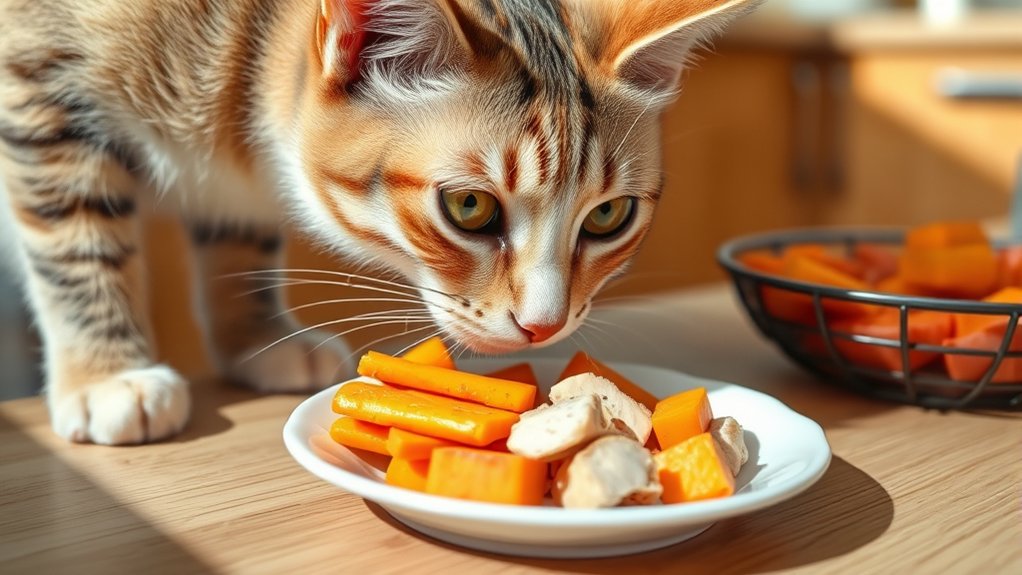
You can totally treat your cat with safe homemade goodies like cooked chicken. It’s tasty and much better for them than pepperoni.
Plus, there are vet-approved snacks made just for cats, designed to keep them healthy and happy.
These options give your furry friend important nutrients without the risks that come with feeding them pepperoni.
Safe Homemade Cat Treats
Although pepperoni might seem like a tasty treat, it’s best to skip it and offer your cat safe homemade alternatives instead.
Providing cat-friendly treats that meet your feline’s nutritional needs guarantees they stay healthy and happy.
You can make healthy homemade cat treats using simple, wholesome ingredients. Consider these options:
- Cooked chicken or fish, rich in essential proteins and nutrients
- Freeze-dried meat snacks, offering concentrated animal protein without additives
- Small pieces of cat-safe fruits like blueberries, which are low-calorie and antioxidant-rich
- Safe vegetables such as cucumbers, providing a crunchy, hydrating snack in moderation
Always avoid harmful ingredients like garlic, onions, and excessive salt.
Vet-Approved Snack Options
When selecting treats for your cat, choosing vet-approved options guarantees their health and safety while satisfying their cravings. Healthy treat alternatives like cooked chicken or fish provide high-quality protein essential to meet your cat’s nutritional requirements.
Freeze-dried meat snacks, such as chicken or turkey, offer nutrient-dense, additive-free options that align perfectly with a species-appropriate diet. You can also introduce small pieces of cat-safe fruits like blueberries for vitamins and antioxidants or crunchy vegetables like cucumbers for hydration and variety.
Furthermore, store-bought treats formulated specifically for cats guarantee balanced nutrition without harmful fillers.
Introducing New Foods Safely to Your Cat
Before offering your cat any new food, it’s important to introduce it gradually in small amounts. This way, you can keep an eye out for any adverse reactions or digestive issues.
When introducing new foods, you should research the safety of the food thoroughly to avoid harmful ingredients. It’s also a good idea to consult with your veterinarian, especially if your cat has health concerns.
Make sure to observe your cat closely for signs like vomiting, diarrhea, or refusal to eat.
Keeping a record of new foods and any reactions can help you spot potential problems early on.
Tips to Protect Your Cat From Harmful Human Foods
Since many human foods contain ingredients that can harm your cat, it’s crucial to keep processed items like pepperoni well out of their reach.
To protect your cat’s best health, avoid offering human foods that pose potential risks, such as onions, garlic, grapes, and chocolate. Stick to high-quality cat food or safe, vet-approved treats like cooked chicken or freeze-dried meat.
Educate yourself on harmful foods and monitor your cat’s behavior closely for any signs of distress, like vomiting or lethargy.
If you’re unsure about certain foods, consult your veterinarian for tailored advice. By establishing clear boundaries around human foods and prioritizing balanced cat food, you’ll help guarantee your feline stays safe and healthy without unnecessary exposure to harmful ingredients.
How Pepperoni Can Cause Kidney and Heart Issues in Cats
You’ve got to be careful with pepperoni because it’s loaded with sodium, which can really put a lot of strain on your cat’s kidneys.
On top of that, all that salt can bump up their blood pressure.
Plus, the preservatives and additives found in pepperoni aren’t great either—they might cause damage to your cat’s heart if they’re exposed over time.
Knowing these risks is super important to help keep your furry friend’s heart and kidneys in good shape.
High Sodium Impact
Although a single slice of pepperoni might seem harmless, its high sodium content, about 31.6 mg per slice, can quickly exceed your cat’s daily sodium needs and lead to serious health risks. High sodium in your cat’s diet can strain their kidneys and heart, impacting their overall well-being.
Cats are particularly vulnerable to these effects due to their unique physiology. Consuming pepperoni regularly introduces excessive fat and salt, which can worsen these risks. It strains kidneys, increasing the risk of hypertension and kidney damage.
It can also cause symptoms like lethargy, vomiting, and excessive thirst. There’s also a higher chance of cardiovascular problems and heart disease. Plus, it disrupts the balance of electrolytes that are essential for healthy bodily functions.
Preservatives and Additives
When you feed your cat pepperoni, the preservatives and additives in it can seriously harm their kidneys and heart.
Pepperoni contains nitrates and nitrites as preservatives and colorings, which may increase cancer risks and disrupt your cat’s delicate system. These additives, combined with high sodium levels, can exceed your cat’s sodium requirements, putting extra strain on their kidneys and potentially causing digestive disturbances.
Also, ingredients like garlic and onion, often found in pepperoni, are toxic to cats. They can damage red blood cells and lead to anemia.
Feeding pepperoni regularly exposes your cat to these harmful substances, increasing the risk of serious health issues.
To protect your cat’s well-being, it’s best to avoid giving them pepperoni or any processed meats containing these dangerous preservatives and additives.
Keeping your furry friend safe means sticking to foods made just for them.
Cardiovascular Strain Risks
Beyond the harmful preservatives and additives, the high sodium and fat content in pepperoni can seriously strain your cat’s heart and kidneys. Feeding pepperoni to cats risks causing cardiovascular stress and long-term health issues.
Here’s how pepperoni impacts your cat’s cardiovascular health:
High sodium levels can elevate blood pressure, leading to hypertension and kidney strain. Excessive fat contributes to weight gain, increasing the risk of heart disease and pancreatitis. Spices like garlic and onion damage red blood cells, worsening heart and kidney function.
Regular intake can lead to chronic kidney disease and heart failure over time. To protect your cat’s cardiovascular health, avoid giving pepperoni and opt for safer, low-sodium treats. Your cat’s well-being depends on mindful feeding choices.
Preventing Future Exposure to Pepperoni and Processed Meats
Since pepperoni and other processed meats contain harmful preservatives and high sodium levels, it’s important to keep them well out of your cat’s reach to prevent accidental ingestion.
Preventing future exposure starts with educating everyone in your household about the dangers of feeding cats human foods, especially those with toxic ingredients like garlic or onion.
Try setting up a designated feeding area stocked only with species-appropriate options. This helps minimize the risk of your cat nibbling on unsafe items.
Keep an eye on your cat’s eating habits, and if you notice any signs of distress, don’t hesitate to consult your veterinarian.
To satisfy your cat’s cravings safely, offer healthy alternatives like cooked chicken or freeze-dried meat treats.
This way, their diet stays both safe and enjoyable without the processed meats and harmful preservatives. It’s all about keeping your furry friend happy and healthy!
Frequently Asked Questions
Can Pepperoni Affect a Cat’s Behavior or Mood?
Yes, pepperoni can affect your cat’s behavior and mood. Its high sodium and spices often act as stress triggers, causing digestive upset that leads to mood changes like irritability or lethargy.
You might notice shifts in your cat’s behavior, such as hiding or howling, which reflect discomfort.
These reactions can also change their food preferences, making them wary of certain treats.
Always watch for signs of distress to keep your cat comfortable and happy.
It’s important to pay attention so you can help your furry friend feel their best.
Is Pepperoni Toxic to Kittens as Well as Adult Cats?
Like a storm upsetting calm seas, pepperoni disrupts both kittens’ digestion and adult cats’ health. Its ingredients, high sodium, garlic, and spices, are toxic to your feline friends.
Kittens, with their delicate systems, suffer more severe effects.
To keep your cat safe, avoid pepperoni and offer safe alternatives like plain cooked chicken or specially formulated cat treats. These support their nutritional needs without risking harm.
How Much Pepperoni Is Considered a Dangerous Amount for Cats?
You should avoid giving your cat any pepperoni serving size, as even a small amount can exceed their dietary restrictions. Just one or two slices might cause problems because of the high sodium, fat, and harmful additives.
Instead, go for safer alternatives like plain cooked chicken or turkey. These options are much better for your furry friend’s health.
Keep an eye out for signs of toxicity such as vomiting, diarrhea, or lethargy. If you notice anything unusual, contact your vet right away.
It’s always better to be safe than sorry!
Are There Any Breeds More Sensitive to Pepperoni’s Effects?
About 20% of cats, especially sensitive breeds like Siamese and Burmese, experience digestive issues when eating pepperoni.
You should watch out for these breeds since they face higher health risks due to pepperoni’s fat and sodium content.
Older cats or those prone to obesity also need extra caution.
Instead of risking their health, you can offer alternative treats made specifically for cats.
This way, they stay safe and happy without upsetting their digestion.
Can Pepperoni Cause Allergic Reactions in Cats?
Yes, pepperoni ingredients can trigger feline allergies, causing symptoms like itching, vomiting, or diarrhea.
The preservatives, spices, and high fat content often lead to digestive issues in cats. If your cat shows any signs of discomfort after eating pepperoni, it’s best to avoid giving it again.
Instead, choose alternative treats specifically made for cats.
These are safer and less likely to cause allergic reactions or digestive problems. Your furry friend will thank you!
Conclusion
So, while it might seem like a tasty treat, giving your cat pepperoni is ironically one way to make their meal anything but purr-fect. Those spicy, salty slices could harm their heart and kidneys, turning a snack into a health hazard.
You care about your feline friend, so skip the pepperoni and stick to safe foods. After all, protecting your cat’s health is way more rewarding than a quick, risky nibble.