Is Aloe Vera Toxic To Cats – Safety Warning Guide
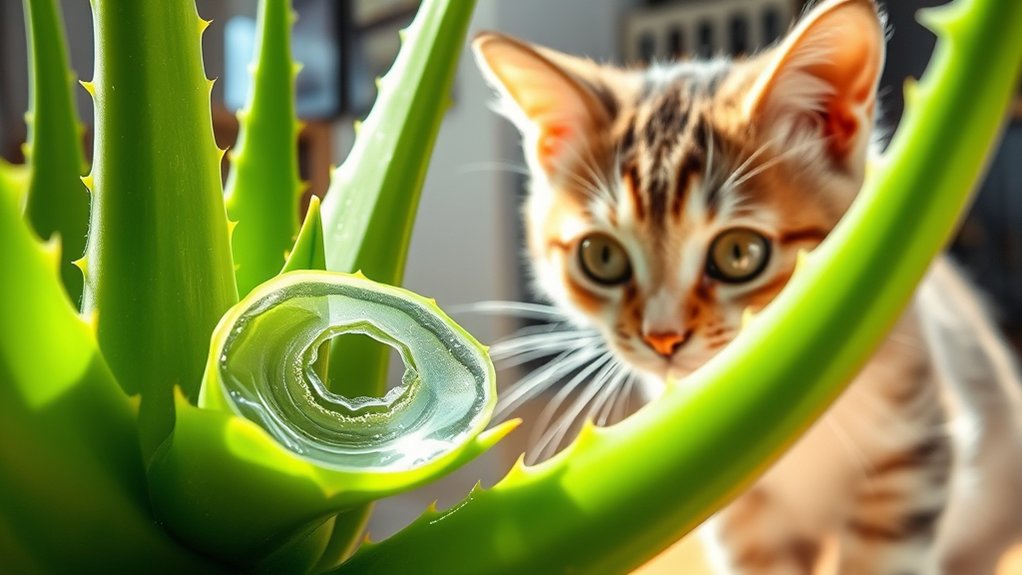
Yes, aloe vera is toxic to your cat and can cause serious gastrointestinal issues, even in small amounts. The yellowish latex sap in the outer leaf is the most dangerous, causing vomiting, diarrhea, and lethargy.
If your cat eats any aloe, remove access immediately and contact a vet. Do not induce vomiting.
Avoid using aloe topically, as your cat may ingest it while grooming. To keep your cat safe, consider safer plant options. Also, learn how to prevent exposure and recognize symptoms.
What Are the Symptoms If My Cat Eats Aloe Vera?
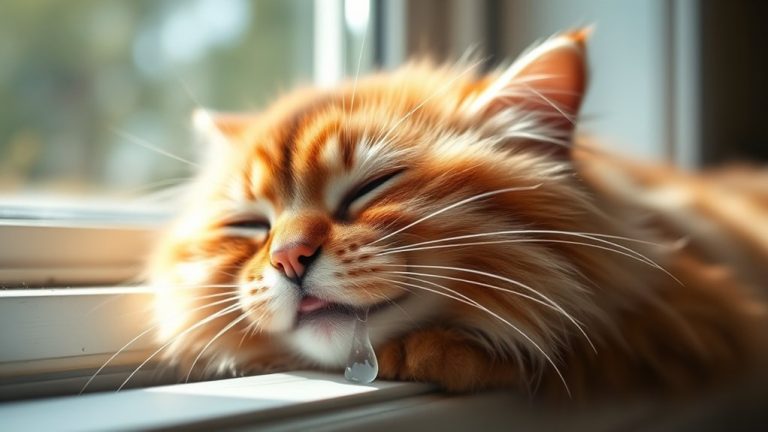
What should you watch for if your cat eats aloe vera? Aloe poisoning in cats often causes clear symptoms such as vomiting, diarrhea, drooling, and lethargy.
These signs result from the toxic compounds, especially the yellowish-white latex sap found in the aloe leaf.
Even small amounts of the inner gel can trigger gastrointestinal upset, so you need to monitor your cat closely.
Abdominal cramps and changes in urine color might also appear, indicating a more serious reaction.
If you notice any of these symptoms or suspect your cat has ingested aloe, don’t hesitate.
Call your vet promptly. Early recognition of aloe poisoning in cats is vital to guarantee they receive timely care and avoid complications.
Your vigilance can make all the difference.
What Should I Do Immediately If My Cat Eats Aloe Vera?
If your cat eats aloe vera, act quickly by removing the plant from their reach to prevent them from eating more. Aloe vera is toxic to cats, so it’s important to figure out how much your cat has eaten.
Keep an eye out for symptoms like vomiting, diarrhea, or drooling.
Don’t try to make your cat vomit unless your vet tells you to. It mightn’t be necessary, especially if your cat only ate a small amount. The best thing to do is contact your veterinarian or call the ASPCA Poison Control hotline for advice on what to do next.
Getting prompt veterinary care is really important to handle any potential toxicity and keep your cat safe.
To avoid this happening again, make sure all aloe plants and products are stored somewhere your cat can’t reach.
Why Is Aloe Vera Toxic to Cats?
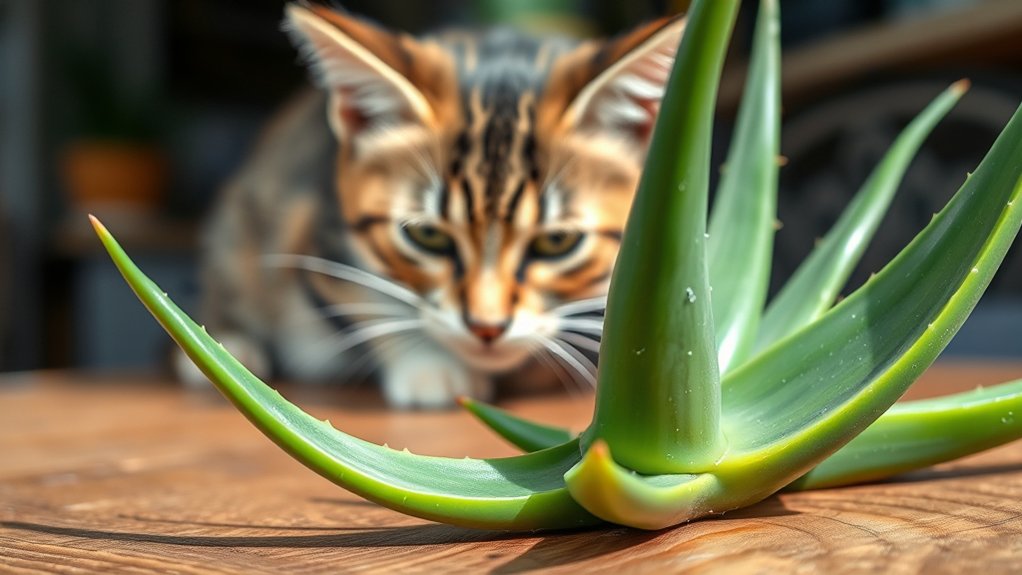
Because aloe vera contains toxic compounds like saponins and anthraquinones, it can seriously irritate your cat’s digestive system. This can cause symptoms such as vomiting and diarrhea. Cats can’t properly metabolize these chemicals, making even small amounts potentially dangerous.
This toxicity leads to poisoning, which may also include drooling, abdominal cramps, and depression. Veterinary experts, including the ASPCA, classify aloe vera as toxic to cats. So any ingestion demands prompt attention.
Understanding why aloe vera is toxic helps you protect your feline friend from harm. By recognizing these compounds’ effects and your cat’s sensitivity, you can prevent poisoning and keep your pet safe.
Always monitor your cat closely if exposure occurs, and seek veterinary care immediately.
Which Aloe Vera Plant Parts Are Most Dangerous to Cats?
You should know that the yellowish-white latex sap found in the outer leaf is the most toxic part of aloe vera for your cat. If your cat ingests it, it can cause severe stomach irritation.
Now, the clear inner gel is a bit less harmful, but it can still be risky, especially if your cat eats a larger amount.
Toxic Latex Sap
While the clear inner gel of the aloe vera leaf is less harmful, the yellowish-white latex sap found in the outer layer poses the greatest danger to your cat. This toxic latex sap contains compounds that can cause severe gastrointestinal distress, including drooling, vomiting, and diarrhea.
Cats can’t effectively process these chemicals, making even small amounts hazardous. Chewing on the aloe vera plant increases the risk, as most poisoning cases in cats result from exposure to this sap.
Though processed aloe products are somewhat safer, they still carry risks. Since aloe vera is among plants toxic to cats, you must keep the entire plant, especially the toxic latex sap, well out of your pet’s reach to prevent accidental ingestion and guarantee their safety.
Inner Gel Risks
Though the yellowish-white latex sap of aloe vera poses the greatest threat to your cat’s health, the clear inner gel shouldn’t be overlooked.
If your cat ate the inner gel, it can still cause mild gastrointestinal upset. While less toxic than the latex, the inner gel may trigger symptoms such as vomiting, diarrhea, and drooling once symptoms appear.
It’s important to monitor your cat closely if you suspect ingestion. Promptly recognizing these signs allows you to seek veterinary care before complications arise.
Remember, even though the inner gel is safer than the sap, it’s best to prevent your cat from accessing any part of the aloe plant to avoid unnecessary health risks.
Keeping aloe out of reach is the safest approach.
Direct Chewing Hazards
Because chewing directly on the aloe vera plant exposes your cat to the yellowish-white latex sap, it poses the highest risk of toxicity. This sap, found in the outer leaf, contains toxic compounds like saponins and anthraquinones that can cause severe gastrointestinal upset. The plant material’s toxicity is concentrated here, making it the most dangerous part for your cat.
While the clear inner gel also carries some risk, its effects tend to be milder, such as vomiting or diarrhea. Still, any aloe exposure requires caution.
Veterinary experts, including the ASPCA, strongly recommend keeping all aloe parts out of your cat’s reach to prevent accidental ingestion.
Being proactive in managing access to this toxic plant material is essential for your cat’s safety and well-being. So, it’s a good idea to keep the aloe out of reach and watch for any signs if your cat does get curious. Better safe than sorry!
How Much Aloe Vera Is Harmful to Cats?
Even a little bit of aloe vera can upset your cat’s stomach, leading to vomiting or diarrhea.
So really, no amount is completely safe. The yellow latex sap is the most dangerous part, but if your cat eats any part of the plant, you should keep a close eye out for symptoms.
If your cat ends up eating more than just a tiny nibble, it’s best to call your vet right away for guidance and care.
Toxic Amount Threshold
When your cat nibbles on aloe vera, it doesn’t take much to cause gastrointestinal irritation because of the plant’s toxic compounds, especially in its latex sap.
The exact toxic amount isn’t precisely defined, but even small bites from aloe plants can upset your cat’s digestive system.
Eating a larger amount really raises the risk of severe symptoms like vomiting and diarrhea. So, you should always treat any ingestion seriously and keep a close eye on your cat.
Processed aloe products might be less harmful, but toxicity can still vary, so it’s best to be cautious.
If your cat does consume a large amount of aloe, it’s important to get veterinary care right away.
Early intervention is key to preventing complications and helping your cat recover quickly.
Don’t wait to seek help if you notice any signs of illness after aloe exposure.
Symptoms By Dose
Understanding how much aloe vera your cat has ingested helps you recognize the potential severity of symptoms. Even small amounts can upset your cat’s stomach, causing vomiting and diarrhea. This happens because the latex sap, the most toxic part of aloe vera, irritates their digestive system.
While the inner gel is less harmful, it’s still not considered aloe vera safe for cats. As the dose increases, symptoms by dose become more severe: excessive drooling, loss of appetite, and lethargy may appear with moderate ingestion.
Large amounts can cause abdominal cramps and even organ damage, demanding immediate veterinary attention.
Monitoring how much aloe your cat consumes is vital, as the symptoms by dose guide your response to guarantee your cat’s health and safety.
Safe Exposure Limits
Although aloe vera is popular for its healing properties in humans, it offers no safe exposure level for cats. Even small amounts of the aloe plant can irritate your cat’s digestive system, causing vomiting and diarrhea.
The most toxic part is the latex sap found in the outer leaf, and ingesting even a tiny quantity can trigger severe gastrointestinal upset. Processed aloe products might be somewhat less harmful, but they still pose risks.
If your cat chews or swallows raw aloe leaves, you must seek immediate veterinary care.
Because cats are curious and can access high places, it’s essential to keep all aloe plants well out of their reach to prevent accidental ingestion and protect their health.
Is Aloe Vera Gel Safe If My Cat Licks or Touches It?
How safe is aloe vera gel if your cat licks or touches it? Aloe gel is less toxic than the latex sap found in aloe leaves, but it’s not harmless.
Aloe vera gel is less toxic than aloe leaf sap but still poses risks to cats.
Even small amounts can cause gastrointestinal upset in cats, leading to drooling, vomiting, and diarrhea.
If your cat grooms itself after coming into contact with aloe gel, ingestion can happen, which increases the risk of toxicity and irritation.
Because of these risks, you should avoid letting your cat lick or touch aloe gel.
If you suspect your cat has ingested any aloe gel, watch for symptoms closely and seek immediate veterinary advice.
Protecting your cat from aloe exposure is essential to prevent potentially serious health issues.
Can I Use Aloe Vera on My Cat’s Skin or Wounds?
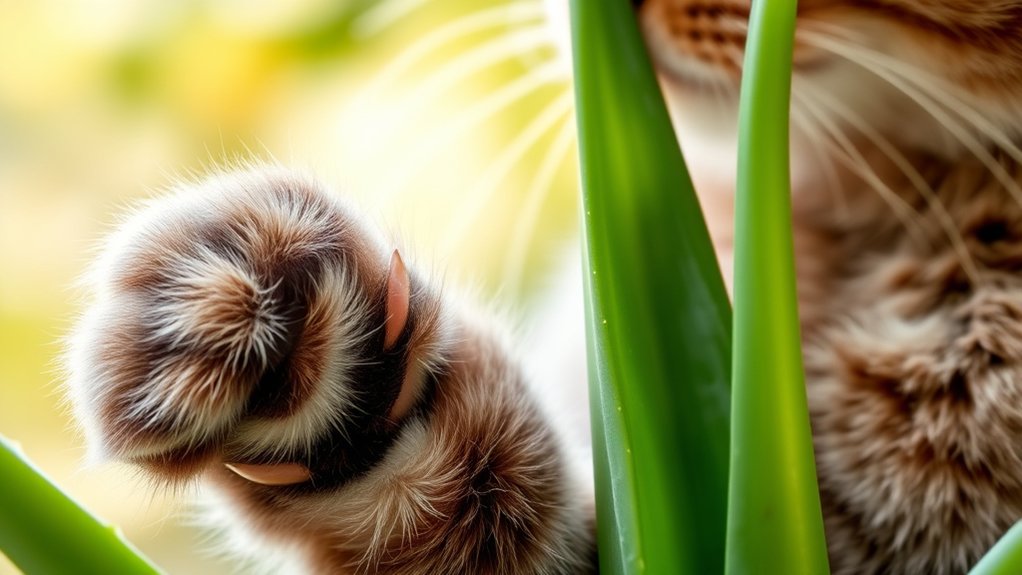
Why should you avoid applying aloe vera directly to your cat’s skin or wounds? The aloe plant contains compounds that are toxic to cats.
Since they groom themselves, topical products can be ingested, causing gastrointestinal upset.
Even the gel, though less toxic than the latex, can irritate feline skin and worsen wounds.
No veterinary-approved aloe treatments exist for cats, which shows the risks involved.
Applying aloe near sensitive areas like eyes or ears may lead to discomfort or inflammation.
Instead of using aloe, rely on cat-safe alternatives recommended by your veterinarian to treat skin issues or wounds.
Protect your cat by avoiding aloe-based topical products.
And always seek professional advice for safe, effective care.
How Can I Prevent My Cat From Eating Aloe Vera?
To keep your cat safe, try placing aloe vera plants somewhere they just can’t reach—think locked rooms or high shelves.
Cats are great climbers, so you’ve got to be a step ahead!
Another idea is to swap out your aloe vera for plants that are safe for cats, like spider plants or Boston ferns.
This way, you reduce the temptation for your furry friend.
Taking these simple steps helps protect your cat, and you don’t have to give up your love of greenery.
Secure Plant Placement
Although cats are naturally curious and agile climbers, you can protect them from aloe vera toxicity by placing all aloe vera plants well out of their reach.
Secure plant placement is essential to prevent your cat from accessing the actual aloe plant. Consider using high shelves, locked cabinets, or rooms your cat can’t enter to store these toxic plants safely.
Regularly inspect your home for fallen leaves or debris that might tempt your cat.
If you want to maintain greenery, opt for cat-safe plants like spider plants or Boston ferns to avoid risk altogether.
Provide Safe Alternatives
Since cats are naturally curious and often nibble on plants, providing safe alternatives is essential to prevent aloe vera ingestion. You should replace the aloe leaf, which is toxic to cats, with cat-safe plants like spider plants, Boston ferns, or catnip.
These plants satisfy your cat’s natural urge to chew without risking poisoning.
Always keep aloe vera and related products securely out of reach, using locked cabinets or rooms if necessary, since cats can climb to access high places.
Regularly monitor your cat’s behavior for signs of interest in potentially harmful plants.
Staying informed about which plants are toxic and which aren’t helps you maintain a safe, pet-friendly environment.
Taking these steps protects your cat’s health while allowing them to explore safely.
What Are Safe Plant Alternatives to Aloe Vera for Cats?
Wondering which plants you can safely keep around your cat instead of aloe vera? Choosing plants that are safe for cats is essential to prevent health risks while maintaining a green home.
Here are three excellent alternatives:
- Spider Plant. This resilient plant thrives indoors and is non-toxic to cats, making it a safe choice.
- Boston Fern. Its lush foliage adds beauty without posing any danger to your feline friend.
- Cat Grass. Specifically grown for cats, it supports digestion and satisfies their natural chewing instincts.
Each of these plants offers a safe, attractive option to replace aloe vera.
What Are Common Myths About Aloe Vera Toxicity in Cats?
How much do you really know about aloe vera’s effects on your cat? A common pet myth is that only the outer leaf is toxic, but both the latex sap and inner gel can cause true aloe poisoning.
You might think processed aloe products are safe, yet they still carry risks. Many believe a small amount won’t harm your cat, but even minimal ingestion can trigger vomiting and diarrhea.
Another misconception is that applying aloe vera topically is harmless; however, cats may ingest it during grooming, leading to toxicity. Some also assume certain varieties, like Aristaloe aristata, are safe, but these are toxic, too.
Understanding these myths helps you protect your feline friend from avoidable aloe-related dangers.
Frequently Asked Questions
Can Aloe Vera Toxicity in Cats Be Treated at Home Without a Vet?
You shouldn’t rely on home remedies to treat aloe vera toxicity in your cat. If you notice symptoms like vomiting or diarrhea, it’s essential to seek veterinary care immediately.
Aloe ingestion often requires professional intervention. Home treatments can be ineffective or even unsafe. So, it’s best not to try handling this on your own.
Prevention is key. Keep aloe plants out of your cat’s reach to avoid any exposure.
Always prioritize your cat’s health by consulting a vet instead of attempting at-home cures. It’s the safest choice for your furry friend.
How Long Does Aloe Vera Poisoning Last in Cats?
The symptoms duration of aloe vera poisoning in cats typically lasts from a few hours up to several days, depending on how much your cat ingested and their sensitivity.
With prompt veterinary treatment, like inducing vomiting and IV fluids, the recovery timeline is usually 24 to 48 hours. Treatment options are essential to speed healing and prevent complications.
Always monitor your cat closely, as some symptoms might persist longer even after initial care.
It’s important to stay attentive and follow your vet’s advice to ensure your cat gets better soon.
Are Certain Cat Breeds More Sensitive to Aloe Vera Toxicity?
No, there aren’t any sensitive breeds when it comes to aloe vera toxicity. It affects all cats similarly.
You should watch for toxicity symptoms like vomiting and diarrhea, regardless of breed.
Since individual reactions can vary, it’s wise to take preventive measures by keeping aloe plants well out of reach.
Your vigilance guarantees your cat’s safety, no matter their breed. This helps you avoid unnecessary distress and health issues.
Can Aloe Vera Cause Long-Term Health Issues in Cats?
Yes, aloe vera can cause long-term health issues in your cat despite its well-known aloe vera benefits for humans.
Ingesting this toxic plant can harm your cat’s digestive health, leading to chronic vomiting, diarrhea, and dehydration.
Repeated exposure stresses the kidneys and damages the gastrointestinal tract over time.
You should prioritize toxic plant identification in your home to protect your cat.
And if you ever suspect your cat has ingested aloe vera, make sure to seek immediate veterinary care.
Is Aloe Vera Toxicity Common in Outdoor Cats?
Aloe vera toxicity is sadly more common than you’d think in outdoor cats, thanks to their curious feline dietary habits.
These natural explorers often nibble on plants without knowing the dangers, and aloe ranks high among common plant dangers they face.
If your outdoor cat behaves like a little botanist, it’s essential to keep aloe plants out of reach.
Taking these precautions helps protect your cat from unpleasant toxicity symptoms and keeps them safe.
Conclusion
If your curious cat nibbles on aloe vera, symptoms like vomiting or lethargy can quickly appear, just like the sudden sharpness of aloe’s spiky leaves. Acting fast is essential to keep your feline safe.
Remember, the gel inside might soothe humans but harms your cat. Keep aloe out of reach and choose safer plants.
By understanding these risks, you’re protecting your pet with care and confidence. This way, their curious nature stays harmless.