
Are Roses Safe For Cats – What You Should Know
Roses aren’t toxic to your cat, so their petals and leaves won’t poison them. However, watch out for thorns that can cause painful injuries. Also, avoid pesticides or flower food, which can be harmful if ingested.
Mild stomach upset might occur if your cat nibbles on roses, but serious issues are pretty rare. Taking simple precautions helps keep your furry friend safe and comfortable.
You’ll find helpful tips on preventing risks and caring for your cat around roses ahead. It’s all about keeping your pet happy and healthy while enjoying those beautiful blooms.
Are Roses Toxic To Cats?

Wondering if roses pose a danger to your cat? Good news: roses are non-toxic to cats, so the petals and leaves themselves won’t poison your feline friend.
However, roses toxic to cats isn’t the whole story. The thorns can cause painful injuries if your cat chews on them or gets scratched.
More importantly, pesticides and flower food often applied to roses can be harmful if ingested, leading to potential poisoning.
While nibbling on a few petals might cause mild digestive upset like vomiting or diarrhea, serious issues are rare.
Still, it’s essential to keep an eye on your cat around roses. If you notice any unusual behavior or signs of discomfort, don’t hesitate to contact your veterinarian for advice and care.
What Happens If Your Cat Eats Rose Petals Or Leaves?
Although rose petals and leaves aren’t toxic to cats, eating them can still cause mild stomach upset, such as vomiting or diarrhea. Roses are generally non-toxic, so your cat won’t face poisoning risks from nibbling on petals or leaves. However, consuming large amounts may lead to temporary digestive discomfort.
Since the taste of rose petals is often unappealing, many cats only nibble occasionally, which reduces the chance of stomach upset.
Still, it’s important to keep an eye on your cat after any plant ingestion. If you notice persistent vomiting, diarrhea, or signs of distress, it’s a good idea to consult your veterinarian promptly.
Preventing Rose Thorn Injuries In Cats
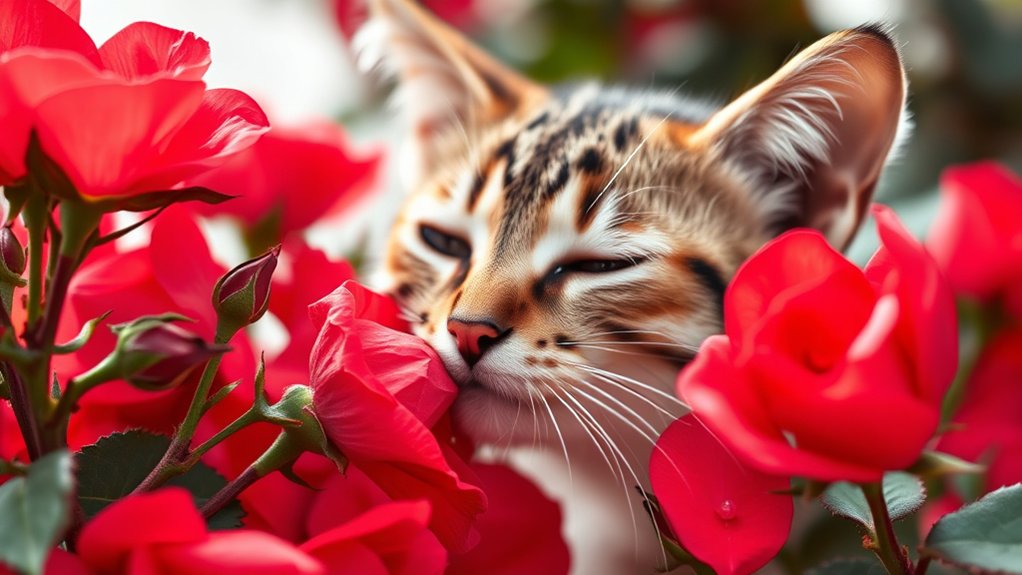
You can protect your cat from painful rose thorn injuries by carefully handling and trimming thorny stems before bringing roses indoors.
It’s a good idea to keep those sharp parts out of your cat’s reach. Also, make a habit of regularly checking for any stray thorns in places your cat likes to hang out.
If your cat does show signs of discomfort or happens to get injured, be sure to clean the wound right away and consult your vet.
Thorn Injury Prevention
Since rose thorns can cause painful cuts or puncture wounds in your cat’s mouth, paws, or eyes, it’s essential to take steps to prevent these injuries. You should monitor your cat closely around roses and choose thornless rose varieties when possible to minimize risks.
Regularly check your cat for any signs of irritation, as thorn injuries can easily be hidden under fur. Prompt veterinary intervention is vital if you notice swelling, reluctance to eat, or pawing at the mouth.
| Prevention Method | Risk Reduced | Action Required |
|---|---|---|
| Thornless rose varieties | Thorn injuries | Select and plant carefully |
| Monitor your cat | Cuts or puncture wounds | Observe behavior and check fur |
| Keep roses out of reach | Eye and paw injuries | Restrict access to plants |
Safe Rose Handling
Thorn injuries can cause significant discomfort for your cat, but taking careful steps when handling roses helps prevent these risks. Always remove thorns before bringing roses into your home to avoid potential injuries to your cat’s mouth and paws.
Place roses in high or secured spots to keep thorny stems out of reach. Choosing thornless rose varieties is an excellent way to make your home safer for cats. It reduces the chance of cuts and scrapes.
Regularly monitor your cat’s behavior around roses, especially if they seem curious about chewing or playing with the flowers. If your cat does get injured by thorns, clean the wound gently with pet-safe antimicrobial wipes.
Consult a veterinarian if the injury looks serious. Prioritize safe rose handling to protect your feline friend.
Risks From Pesticides And Flower Food On Roses
You should be careful with store-bought roses because they often have pesticides and flower food that contain chemicals.
If your cat ingests them, it could be harmful. These substances, like common pesticides and fertilizers, might cause poisoning symptoms or other health problems.
Pesticide Toxicity Risks
Although roses add beauty to your home, store-bought varieties often carry pesticides and fertilizers that can harm your cat if ingested. Pesticide toxicity in cats can result from exposure to harmful chemicals like neonicotinoids and glyphosate, which are commonly used on roses. Because cats have low liver detox enzymes, even small amounts pose serious risks.
Curious cats may ingest residues from treated roses or stagnant vase water. To protect your feline friend, opt for untreated roses and always discard flower food packets safely.
| Chemical | Source | Risk to Cats |
|---|---|---|
| Neonicotinoids | Pesticides | Neurological effects |
| Glyphosate | Herbicides | Kidney, liver damage |
| Untreated roses | Organic options | Safer for cats |
Flower Food Dangers
Because many commercially sold roses come treated with pesticides and preservatives, these substances can pose serious hazards to your cat if ingested.
Flower food packets often contain toxic chemicals designed to prolong the life of cut flowers, but these same substances can cause vomiting, lethargy, or worse in cats.
Pesticides such as neonicotinoids may linger on petals and stems, increasing the risk if your cat chews or licks the roses.
Moreover, stagnant water in vases can harbor these harmful chemicals, posing further danger if your cat drinks from it.
To protect your feline friend, avoid using flower food and opt for organic roses whenever possible.
Removing flower food packets and regularly changing vase water reduces exposure to these toxic risks, keeping your cat safer and healthier.
Which Roses Are Toxic To Cats?
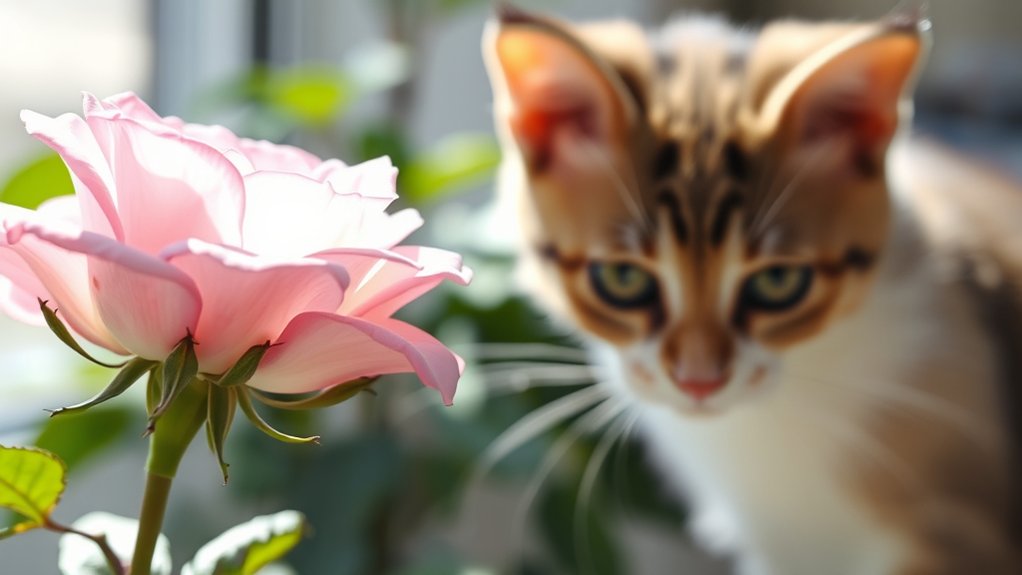
Which roses pose a threat to your cat’s health? While most roses are not toxic to cats, some plants with “rose” in their name can be harmful. Desert Rose and Christmas Rose are examples of roses poisonous to cats.
Also, pesticides in your lawn or on cut flowers can pose risks if your cat chews on them. Here’s a quick guide:
| Rose Type | Toxicity to Cats | Key Concern |
|---|---|---|
| Desert Rose | Toxic | Contains toxins harmful if ingested |
| Christmas Rose | Toxic | Can cause severe symptoms |
| Moss Rose | Toxic | Vomiting, tremors possible |
| Garden Roses | Not toxic to cats | Generally safe, but watch for pesticides |
Always check the specific plant to keep your feline safe.
Safe Flower Alternatives To Roses For Cat Owners
If you want to brighten up your home but also keep your cat safe, picking non-toxic flowers is super important.
African violets, orchids, and snapdragons are great choices—they’re not only beautiful but also safe for indoor spaces where curious pets like to explore.
Plus, these pet-friendly blooms make awesome gifts that won’t put your cat’s health at risk. It’s a win-win!
Non-Toxic Flower Choices
When you want to brighten your home with flowers without risking your cat’s health, choosing non-toxic alternatives to roses is essential. While roses aren’t toxic, some cats can still react to thorns or pesticides.
Opt for pet-safe options like African Violets, Orchids, Snapdragons, Gerbera Daisies, or Zinnias, each non-toxic to cats and vibrant in color.
These flowers let you enjoy a fresh, cheerful space without worrying about a curious cat nibbling on harmful blooms. To further protect your furry friend, consider keeping your pets away from the flower vase area. This helps prevent accidental ingestion or spills.
By selecting safe flowers and managing their placement, you can create a beautiful, feline-friendly environment that keeps your cat safe and your home bright.
It’s all about finding that balance between beauty and safety for your furry companion.
Safe Indoor Plant Options
Choosing non-toxic flowers is a great start, but you can also enhance your indoor space with safe plants that cater specifically to cat owners. African Violets, Orchids, and Gerbera Daisies are considered non-toxic to cats and brighten your home without posing health risks.
For greenery, Spider Plants purify the air and remain safe for your curious creatures. Incorporating cat grass is especially beneficial. It satisfies your cat’s natural chewing instincts safely indoors.
When caring for these plants, always use pet-safe options for pesticides to avoid toxic exposure.
Pet-Friendly Floral Gifts
Although roses are a classic gift, they can pose risks to your feline friends. So, opting for pet-friendly floral gifts is a thoughtful choice. Choose non-toxic blooms and greenery like orchids, African violets, or spider plants to keep your home safe.
Always practice chemical awareness by selecting organic or untreated flowers to avoid pesticides. When keeping stems, avoid garden roses treated with chemicals. Herbal options such as catnip and cat grass also delight your cats safely.
| Pet-Friendly Blooms | Safe Greenery |
|---|---|
| African Violets | Spider Plants |
| Orchids | Areca Palms |
| Gerbera Daisies | Cat Grass & Catnip |
These safe flower alternatives guarantee your cats remain protected while you enjoy beautiful, pet-friendly floral gifts.
How Cats React To Roses
Since cats are often curious by nature, they might sniff or nibble on roses despite the flower’s strong scent, which usually deters them. Here’s how your cat might react around roses:
- Ingestion of petals or leaves can cause mild digestive upset like vomiting or diarrhea.
- Thorns pose a risk of cuts or scrapes to your cat’s mouth, paws, or eyes.
- Pesticides on store-bought roses can be toxic, causing lethargy or more severe symptoms.
- Some cats may avoid roses completely due to their strong smell, but curiosity can override this.
If you notice any signs of discomfort or unusual behavior after your cat encounters roses, contact your veterinarian promptly.
It’s always a good idea to keep a close eye on your furry friend around flowers. That way, you can help prevent injuries or poisoning related to roses.
Choosing And Caring For Cat-Safe Roses
When you bring roses into your home, selecting organic or untreated varieties helps reduce your cat’s exposure to harmful pesticides and chemicals. Always verify the roses are free from flower food packets and other chemical treatments. These can be toxic if ingested.
Choose organic roses without chemical treatments to keep your cat safe from harmful toxins.
For cat-safe roses, remove all thorns from the stems before displaying them. This helps prevent injuries to your cat’s paws, eyes, or mouth.
Keep roses out of your cat’s reach, especially if they show curiosity by nibbling petals or leaves. That nibbling might cause mild digestive upset.
Regularly monitor your cat’s behavior around the roses to catch any signs of discomfort early.
Treating Rose-Related Injuries In Cats
If your cat suffers a cut or scrape from rose thorns, start by gently cleaning the wound with pet-safe antimicrobial wipes to reduce the risk of infection.
After you clean the wound, closely monitor your cat for any symptoms like swelling, redness, or discharge that could indicate infection.
Minor cat injuries from thorns often heal well with proper care, but you must keep the area clean and prevent excessive licking.
It’s important to keep an eye on things so the wound doesn’t get worse.
Seek veterinary care immediately if you notice:
- Deep wounds or heavy bleeding
- Signs of infection or worsening symptoms
- Symptoms like vomiting, lethargy, or difficulty eating (possible ingestion of rose thorns)
- Suspected internal damage from swallowed thorns
Prompt attention and careful monitoring help make sure your cat recovers safely from rose thorn injuries.
Just keep calm and take things step by step.
How To Prevent Rose-Related Illnesses And Injuries In Cats
Preventing rose-related injuries and illnesses starts with keeping your cat away from potential hazards like thorns and chemicals.
Keep roses out of your cat’s reach to avoid cuts or scrapes from thorns and thorny stems. Choose organic, untreated roses to reduce exposure to harmful pesticides that could cause poisoning.
Always dispose of flower food packets immediately, as they may contain toxic substances if ingested.
Create a safe environment by placing roses in rooms your cat can’t access, minimizing the risk of accidental ingestion or injury.
Keep an eye on your cat for any signs of irritation or digestive upset, like vomiting or loss of appetite, especially after being around roses.
Taking these steps helps make sure your cat stays safe and healthy around roses.
Frequently Asked Questions
Can Rose Scents Cause Allergies in Cats?
Yes, rose scents can trigger rose allergy symptoms in cats, especially if they’ve scent sensitivity reactions. You might notice cat respiratory issues like sneezing or watery eyes.
While floral toxicity concerns are low with roses, managing allergic reactions is essential.
If your cat shows discomfort, limit their exposure and consult your vet for allergic reaction management.
Consider pet-safe alternatives with milder scents to keep your feline friend comfortable and safe. It’s always better to be cautious when it comes to your cat’s health.
Do Dried Rose Petals Pose a Risk to Cats?
Dried petals toxicity in cats is generally low, so they’re unlikely to cause serious harm. However, ingestion symptoms like vomiting or diarrhea can appear if your cat eats large amounts.
Watch their behavior closely around floral arrangements containing dried rose petals.
To keep your feline safe, consider pet friendly flowers like lavender or chamomile as safe alternatives.
Always verify dried petals haven’t been treated with chemicals, minimizing any health risks for your curious cat.
How Long Do Pesticide Residues Remain on Roses?
Pesticide residues on roses can last from several days to weeks, depending on the types of pesticides used and environmental factors like temperature and humidity.
Systemic pesticides tend to stick around longer since they’re absorbed by the plant.
You can reduce residues with thorough washing techniques, but keep in mind, it won’t remove them completely.
If you have pets, especially cats, choosing organic options is usually your best bet. They typically contain fewer harmful residues and are safer for your furry friends.
Are Rose Hips Safe for Cats to Eat?
Rose hips are generally safe for your cat in small amounts, with no rose hips toxicity reported. They offer nutritional benefits like vitamin C and antioxidants, supporting feline digestion.
However, safe consumption means giving them only occasionally to avoid digestive upset.
Always check for pesticides and consult your vet before introducing new treats.
If you’re unsure, consider alternative treats designed specifically for cats to keep your furry friend healthy and happy.
Can Cats Develop Behavioral Issues From Exposure to Roses?
Cats can indeed show subtle mood swings from floral exposure, especially if thorns or plant toxicity come into play. You might notice shifts in cat behavior like increased anxiety triggers or withdrawal, often linked to environmental stressors.
While roses aren’t overtly harmful, their scent or accidental ingestion of pesticides can prompt behavioral changes.
Keep a close eye on your feline friend, and if you spot anything unusual, consult your vet to guarantee your cat’s comfort and well-being.
Conclusion
While roses aren’t toxic to cats, about 25% of pet poison control calls involve plant-related injuries. This shows why it’s important to be cautious around your furry friend and plants.
If your cat nibbles on rose petals or gets pricked by thorns, you should act quickly to prevent discomfort or infection. Always choose pesticide-free roses and keep thorny stems out of reach.
By staying vigilant and informed, you can enjoy beautiful blooms without risking your feline friend’s health or safety. It’s all about keeping both your home and your pet safe.