Why Do Cats Groom Each Other – Behavior Explained
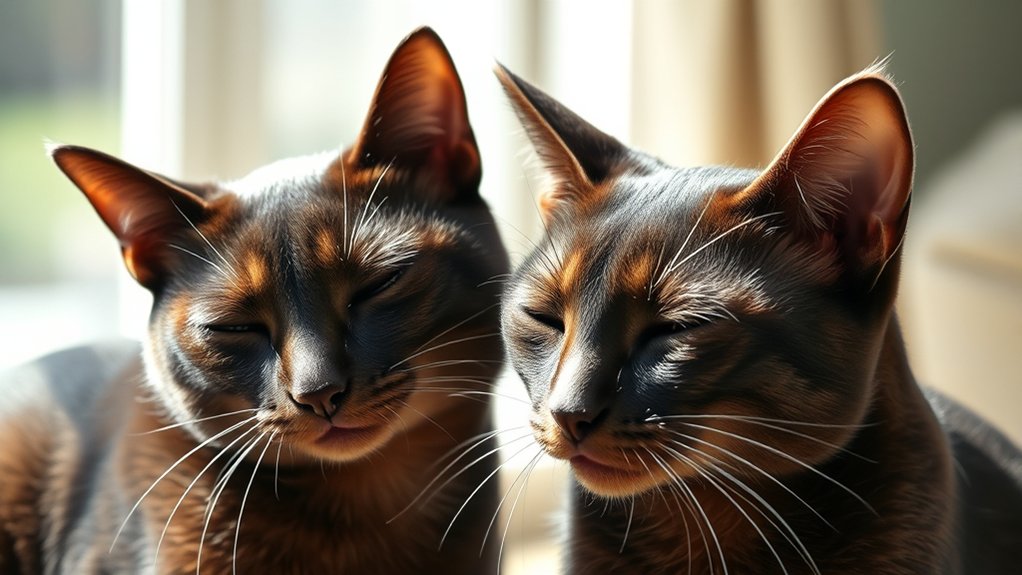
When cats groom each other, or engage in allogrooming, they’re strengthening social bonds and maintaining hygiene by cleaning hard-to-reach places. This behavior signals trust, reduces stress, and helps confirm group membership through shared scents.
Grooming also reflects social hierarchies, with dominant cats asserting status and fostering cooperation. Beyond cleanliness, it promotes emotional balance within multi-cat groups.
Exploring this behavior further reveals how grooming shapes relationships and social order among cats. It’s pretty fascinating how something as simple as grooming plays such a big role in their social lives.
What Is Allogrooming and Why Do Cats Groom?
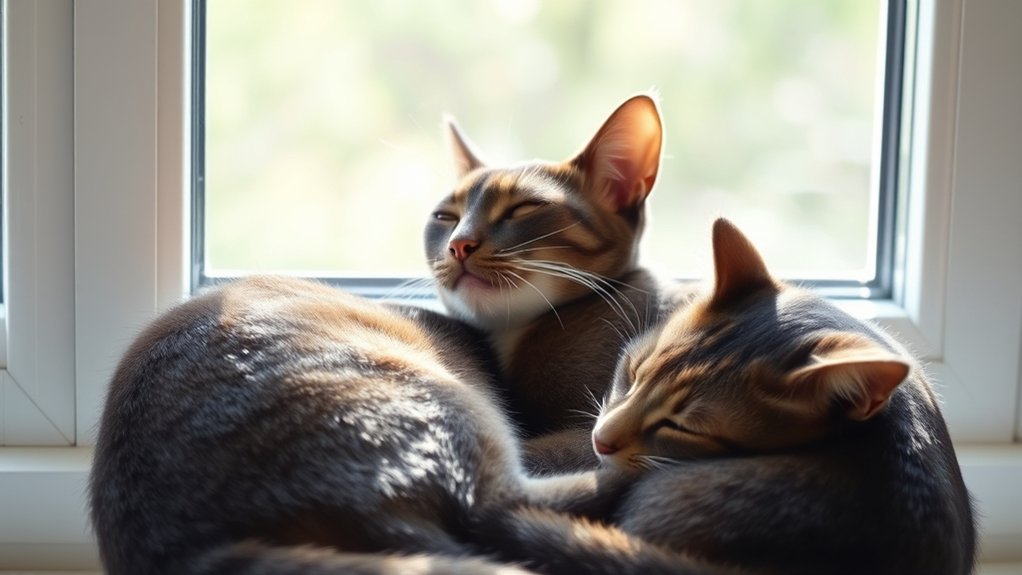
Cats engage in allogrooming, a mutual grooming behavior, to strengthen social bonds and maintain hygiene. When you see cats grooming each other, you’re witnessing more than just cleanliness. This behavior plays a big role in social bonding and establishing hierarchies within their groups.
Allogrooming targets hard-to-reach areas like the head and neck, which helps keep those vulnerable spots clean. You’ll notice cats usually start these grooming sessions by showing friendliness, like adopting a relaxed posture and purring. These actions indicate trust between the cats.
Allogrooming focuses on hard-to-reach spots and begins with friendly, trusting gestures like purring and relaxed postures.
Not only does allogrooming improve hygiene, but it also helps reduce stress and diffuse tension among cats, especially in homes with multiple cats.
Understanding these little details helps you appreciate how allogrooming supports both the physical and social well-being of cats.
How Grooming Helps Cats Build Strong Social Bonds
You’ll notice that trust and respect grow as cats groom each other back and forth. This kind of grooming really helps strengthen their social bonds.
When they share these grooming moments, it’s more than just cleaning—it’s about keeping the group together through shared scents.
Watching them do this shows just how important grooming is for their social life.
Trust And Respect
When two cats engage in mutual grooming, or allogrooming, they actively reinforce trust and respect within their social group. This behavior targets hard-to-reach areas like the head and neck, signaling a high level of comfort and acceptance.
By participating in these grooming behaviors, cats communicate non-threatening intentions and solidify social bonds. This is especially true among closely related individuals or long-term companions.
You’ll notice that grooming serves as a social tool, establishing a cat’s acceptance within a territory or family unit. Observing these interactions can reveal the underlying social dynamics, as trust is both expressed and cultivated through the exchange.
Fundamentally, grooming behaviors are pivotal in maintaining the cohesion and stability of feline social structures by fostering mutual trust and respect.
It’s pretty clear that this simple act plays a big role in how cats get along and live together peacefully.
Reciprocal Grooming Bonds
Although grooming primarily serves hygienic purposes, reciprocal grooming plays an essential role in building and maintaining strong social bonds among cats. When you see cats engaging in mutual grooming, you’re witnessing more than just cleanliness. You’re seeing trust and cooperation in action.
Reciprocal grooming strengthens social bonds by targeting hard-to-reach areas like the head and neck. This kind of care encourages cooperation between cats. It’s a way they show they’re comfortable with each other.
It also encourages friendly signals like purring and tail rubbing to start grooming interactions. Plus, it helps reduce stress and tension, especially in homes with multiple cats. This promotes harmony and peace among them.
Another cool thing is that grooming reinforces a shared scent. This creates a sense of unity and belonging within the group. Understanding this really helps you appreciate how these behaviors build stable and affectionate feline social groups.
Scent Sharing Rituals
Because grooming among cats, known as allogrooming, facilitates scent sharing, it plays an essential role in strengthening social bonds and creating a unified group identity.
When you observe cats grooming each other, they transfer their unique scents, establishing a communal smell that signals inclusion and acceptance.
This scent sharing enhances social bonds by promoting trust and reducing tension within the group. Cats often focus grooming on vulnerable areas like the head and neck, reinforcing mutual trust.
Plus, grooming sessions typically happen in relaxed environments, which helps support social cohesion.
Through allogrooming, cats communicate non-verbally, using scent sharing as a subtle yet powerful ritual to maintain group harmony and solidify their social hierarchy without aggression or conflict.
It’s pretty amazing how they do this so smoothly, right?
What Grooming Reveals About Cat Hierarchies and Dominance
You’ll notice that grooming often signals dominance. Higher-ranking cats usually assert control by grooming the lower-ranking ones.
This behavior isn’t just about cleanliness—it actually helps establish and maintain social hierarchies within multi-cat groups.
By watching these interactions closely, you can get a better sense of how cats communicate their status and navigate their social world.
It’s pretty fascinating to see how much information is shared through something as simple as grooming!
Dominance Signals Through Grooming
When cats groom each other, they’re not just cleaning fur. They’re actually communicating social rank. Grooming behaviors act as dominance signals, reinforcing the social hierarchy within groups, especially when three or more cats interact.
You’ll notice that dominant cats often groom subordinates gently. This shows a kind of consensual acknowledgment of authority. It’s like a quiet way to keep the peace. This behavior helps maintain social order without physical conflict.
Consider these points:
- Dominant cats initiate grooming to assert their rank.
- Submissive cats tolerate grooming as a sign of respect.
- The gentle nature of grooming suggests mutual understanding.
- Aggressive grooming may reveal tension or competition for status.
Hierarchy Establishment Behaviors
Grooming behaviors reveal much more than simple cleanliness. They actively shape and reflect the social order among cats. When you watch their grooming habits, you’ll notice dominant cats grooming subordinates to assert hierarchy.
Social grooming works as a subtle communication tool. It reinforces roles within the group. Dominant cats keep assertive postures, while submissive ones often lie down to show acceptance.
About 35% of grooming sessions can escalate to aggression. This highlights the underlying tension in their interactions.
| Behavior | Dominant Cats | Subordinate Cats |
|---|---|---|
| Posture | Assertive | Reclining |
| Grooming Role | Initiator | Receiver |
| Group Size | Often in groups of 3+ | Accepts grooming |
| Aggression Risk | Low to moderate | Moderate to high |
| Social Message | Status reinforcement | Respect and acceptance |
Grooming And Social Status
Although it may seem like a simple hygienic activity, grooming among cats serves as a clear indicator of social status within their groups. During grooming sessions, dominant cats often groom subordinate ones to assert dominance and reinforce the social structure.
You’ll notice that submissive cats accept this grooming as a sign of respect, confirming their position in the hierarchy.
In multi-cat households, about 35% of these interactions can escalate to aggression, which really shows how delicate the balance is between dominance and submission.
Key observations include:
- Dominant cats initiate grooming to establish control.
- Subordinate cats allow grooming to signal acceptance.
- Grooming reflects both hierarchical and affiliative dynamics.
- Variation exists across groups, with some emphasizing dominance more than others.
Grooming clearly communicates and maintains cat social hierarchies. It’s fascinating how much these little actions reveal about their social world.
How Mother Cats Teach Kittens to Groom
Because mother cats instinctively groom their kittens immediately after birth, they play an important role in teaching significant hygiene and social behaviors. You’ll notice that a mother cat’s grooming behaviors clean her kittens and stimulate crucial functions like elimination.
This early interaction not only guarantees hygiene but also strengthens social bonds, creating a secure environment for the litter. As you observe, kittens learn to groom by imitating their mother and littermates during development. This hands-on learning fosters important skills that persist beyond infancy.
Experienced mother cats often extend grooming to older offspring or other cats, reinforcing social cohesion. By exposing kittens to these behaviors early, the mother cat sets the foundation for proper hygiene and socialization essential to healthy feline interactions later in life.
How Grooming Shows Cats They Belong in the Group
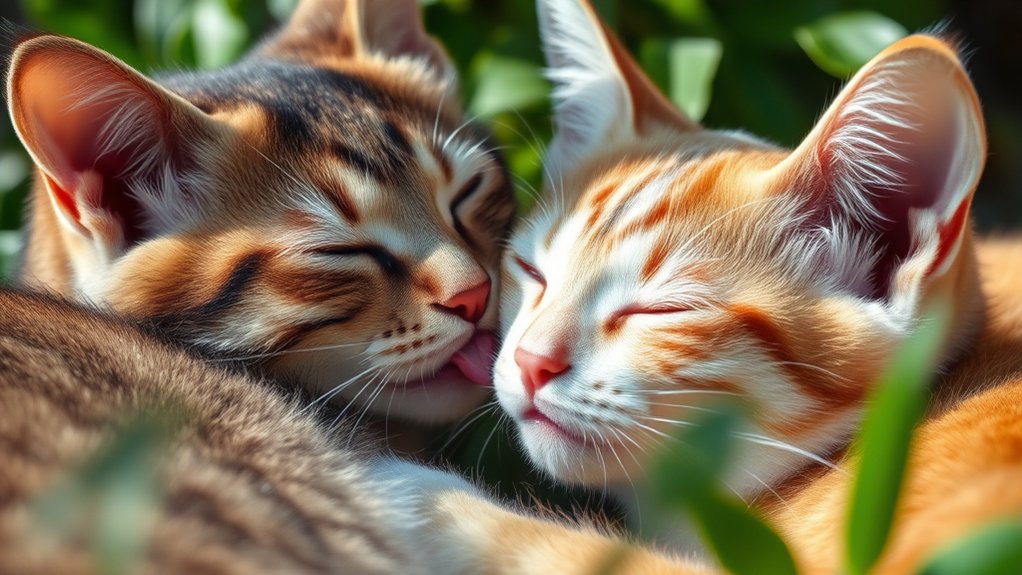
When cats engage in allogrooming, they’re doing more than just cleaning each other. They’re actively reinforcing social bonds that signal acceptance within their group.
This grooming behavior serves as a crucial social cue, confirming group membership and trust. You can see this in how cats maintain a shared scent and peaceful coexistence.
It’s pretty interesting how something as simple as grooming can mean so much to them.
Consider these key aspects:
- Grooming fosters trust by signaling non-threat among group members.
- It creates a unified group scent, reinforcing communal identity.
- Regular social grooming reduces tension, promoting harmony.
- Grooming interactions show that each cat feels secure and included.
How Grooming Helps Cats Stay Clean and Healthy
Grooming plays an essential role in maintaining a cat’s cleanliness and health by removing dirt, debris, and parasites from its fur. When you watch a cat grooming, you’ll see how they spread natural oils across their coat. This keeps their fur soft, shiny, and helps prevent matting.
Mutual grooming, also called allogrooming, lets cats reach spots like the head and neck that are hard to clean on their own. This behavior not only helps them stay clean but also strengthens social bonds. So, it’s a win-win for hygiene and friendship.
Regular grooming lowers the risk of skin infections and other health problems by keeping their fur parasite-free.
How Grooming Reduces Stress and Brings Comfort
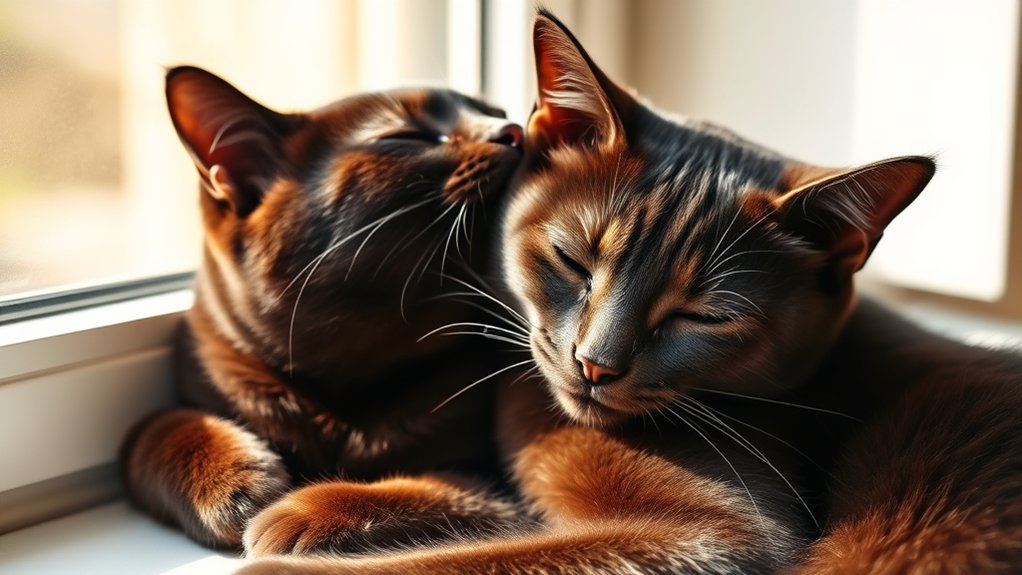
You’ll notice cats tend to groom more when they’re feeling stressed. That’s because grooming triggers the release of endorphins, which help to calm their anxiety. It’s like a little natural stress relief for them.
After a conflict or a tense situation, grooming helps to ease that tension and create a more peaceful atmosphere. So, it’s not just about cleaning—there’s a real sense of calming down involved.
And when cats groom each other, it’s more than just hygiene. Mutual grooming actually helps to strengthen their social bonds, bringing comfort and building trust within their group. It’s their way of saying, “We’re in this together.”
Soothing Endorphin Release
Cats release endorphins through grooming, which effectively reduces stress and promotes a sense of comfort and well-being.
When you observe cats groom each other, you’re witnessing a natural mechanism that calms their nervous systems and strengthens social bonds. This behavior isn’t just about cleanliness; it’s an essential ritual that fosters affection and trust.
Consider these key points:
- Grooming triggers endorphin release, lowering cortisol levels and alleviating stress.
- It reinforces social bonds, creating a safe, emotionally stable environment.
- Mutual grooming increases during stress, helping cats regain equilibrium.
- Regular grooming interactions support overall emotional health in multi-cat groups.
Conflict Tension Diffusion
Although tensions can arise in multi-cat households, mutual grooming acts as a natural way to reduce stress and promote comfort. When cats groom each other after conflicts, it helps ease the tension and shows they’re making an effort to calm down. This behavior actually triggers the release of endorphins, which helps calm anxious cats and brings back emotional balance.
You’ll often see more grooming after disputes because it plays a big role in soothing agitated cats and stopping things from getting worse. Grooming also strengthens social bonds by encouraging cooperation and care, which keeps the group stable.
When cats groom regularly, they’re basically saying, “We’re safe here together” and showing acceptance within their environment. Knowing this makes it easier to appreciate grooming as more than just cleaning.
It’s a key stress-relief tool that supports harmony and helps cats manage their emotions with each other.
Comfort Through Social Bonds
Mutual grooming not only reduces conflict tension but also plays an essential role in creating comfort through social bonds. When you see cats grooming each other, you’re watching a behavior that builds emotional comfort by releasing endorphins. These chemicals help ease stress.
This social bonding activity strengthens group cohesion and shows that the environment feels safe.
Here are some key points to consider:
- Grooming acts as a stress buffer by promoting emotional comfort through neurochemical release.
- Allogrooming serves as a form of social support, boosting well-being within the group.
- More frequent grooming means a healthy social structure where cats feel secure.
- When things get stressful, grooming usually increases to bring back harmony and calm tension.
Why Cats Groom Humans and What It Means
When your feline companion licks or nibbles your skin, it often signals more than just a random behavior. It reflects a complex social and biological communication.
A cat’s lick or nibble reveals deep social and biological communication beyond simple behavior.
Cats grooming humans serve multiple purposes: primarily, it’s a sign of affection and trust, reinforcing their social bonds and treating you like family.
Another reason is territorial marking. Cats deposit their scent through saliva, claiming you as part of their domain. This behavior often seeks your attention, signaling a desire for interaction.
Some cats groom humans out of curiosity or to enjoy the salty taste of your skin.
Understanding these reasons why cats groom humans helps you appreciate that it’s normal for cats to extend grooming beyond their species. It highlights a deep, multifaceted connection between you and your cat.
When Grooming Goes Too Far: Health Warning Signs
Cats often groom their human companions as a sign of trust and affection, but grooming behaviors can sometimes signal underlying health concerns. You need to observe your cat’s grooming habits closely, as excessive grooming may indicate health issues or stress.
Sudden changes or targeted grooming can reveal anxiety or behavioral problems. Also, aggressive behavior during grooming could escalate into conflict.
So, keep an eye out for these warning signs:
- Hair loss, bald patches, or skin irritation from over-grooming
- Increased grooming frequency or fixation on specific areas
- Growling, yowling, or signs of discomfort during grooming interactions
- Compulsive grooming behaviors requiring veterinary intervention
Monitoring these patterns helps detect potential health issues early. That way, you can ensure your cat’s well-being and prevent further complications.
How Grooming Shapes Multi-Cat Relationships and Harmony
Although grooming might seem like a simple hygienic act, it plays an essential role in shaping social bonds and maintaining harmony within multi-cat households. When cats engage in allogrooming, they communicate trust and acceptance, which reduces tension and prevents conflicts.
In a multi-cat household, dominant cats often groom subordinates to assert hierarchy while fostering security, reinforcing social structure.
Mutual grooming enhances cooperation by cleaning hard-to-reach areas, promoting well-being and affiliative behavior.
Mutual grooming strengthens bonds by reaching difficult spots and encouraging positive social interactions.
By observing these grooming interactions, you can analyze social dynamics and better manage relationships among your cats.
Understanding how grooming functions as a social tool helps you maintain balance and peace, making sure your multi-cat household thrives on trust and mutual care rather than stress and discord.
Frequently Asked Questions
Do Cats Prefer Grooming Certain Body Parts Over Others?
You’ll notice cats have distinct grooming preferences, often targeting hard-to-reach spots like the head, neck, and behind the ears. This selective grooming not only keeps them clean but also helps with social bonding by building trust in those vulnerable areas.
Plus, focusing on these spots can show territorial behavior and signal group affiliation. It’s pretty interesting how much you can learn about a cat’s social life just by watching where they choose to groom.
Understanding these patterns helps you see how cats communicate and keep social hierarchies going through mutual grooming rituals. It’s like their way of saying, “You’re part of my group.”
Can Grooming Behavior Change With a Cat’s Age?
You’ll notice grooming behavior shifts dramatically with aging effects.
Younger cats groom vigorously, while older cats slow down and focus on gentle, affectionate grooming. This change reflects evolving social bonding and can serve as health indicators.
Less frequent grooming might signal arthritis or dental issues.
In multi-cat homes, senior cats often take nurturing roles, reinforcing bonds by grooming younger companions.
Monitoring these shifts helps you understand your cats’ well-being and relationships.
How Do Indoor and Outdoor Cats Differ in Grooming Habits?
You’ll notice indoor cats groom more frequently. They use grooming to reduce indoor stress and to strengthen social bonding.
Their limited space encourages these behaviors as a way to maintain close relationships.
Outdoor cats, however, groom less often. This is because they need to stay alert while hunting and are concerned about outdoor safety.
They focus more on self-grooming to manage dirt and parasites. This shows a survival-driven grooming strategy rather than one focused on social interaction.
Does Diet Impact a Cat’s Grooming Frequency?
You might think a cat’s grooming routine depends solely on cleanliness, but dietary influences play a massive role. Nutritional deficiencies, especially in omega fatty acids, can trigger excessive grooming as cats try to soothe irritated skin.
Poor weight management and dehydration also increase grooming frequency.
When you provide balanced nutrition, your cat’s skin stays healthy, reducing stress-driven grooming. This also helps prevent overzealous licking caused by discomfort or anxiety.
Are There Breed Differences in Allogrooming Tendencies?
You’ll notice breed preferences strongly affect allogrooming tendencies. Breeds with higher social bonding instincts, like Siamese or Maine Coons, groom more often. This reflects their cooperative nature.
Environmental influences also play a role. Cats in social settings tend to groom more. On the other hand, independent breeds such as Abyssinians show less allogrooming.
Understanding these patterns helps you analyze how genetics and surroundings shape grooming behavior across different cat breeds.
It’s pretty interesting to see how both nature and nurture come into play here.
Conclusion
When cats groom each other, they’re weaving an invisible web of trust and hierarchy, much like threads in a delicate tapestry. You see, grooming isn’t just about cleanliness. It’s a powerful social tool that reduces stress, reinforces bonds, and signals belonging.
By watching this behavior, you can learn a lot about their relationships and well-being. So, next time you see allogrooming, think of it as a silent language. It’s shaping harmony in the feline world.