
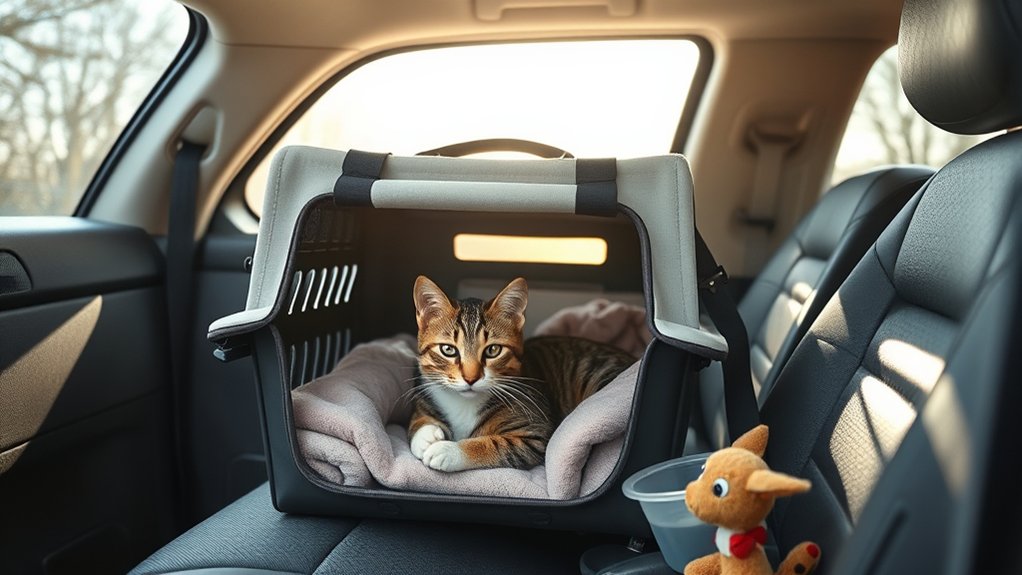
How To Ship A Cat – Safe Travel Guide
To ship your cat safely, start by checking airline and destination rules, including carrier size and health certificate requirements from a USDA-accredited vet. Prepare your cat by gradually introducing them to a well-ventilated, airline-approved carrier and guaranteeing vaccinations are current.
Pack familiar comforts, like a blanket and calming sprays, to reduce stress. Keep an eye on your cat during travel for signs of distress.
Following these steps helps secure a smooth journey for your feline friend. There’s more to explore about each phase of the process, so take your time and plan carefully.
Know Airline and Destination Cat Travel Rules
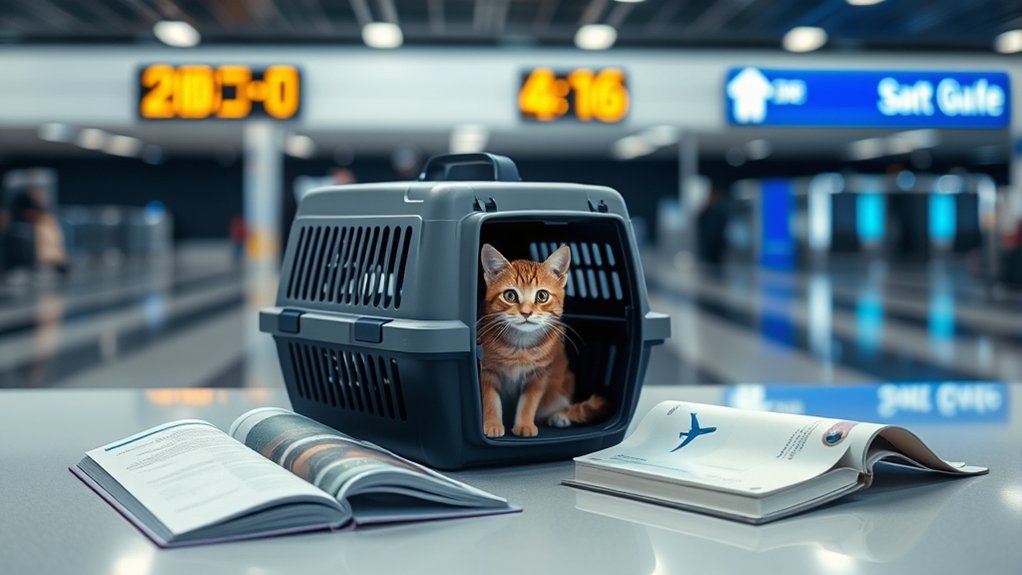
Before booking your flight, you’ll want to check the specific cat travel rules of both the airline and your destination. Each airline has unique requirements for pet travel, including carrier size and weight limits. Some restrict certain breeds, like snub-nosed cats, due to respiratory concerns.
Furthermore, many destinations require a health certificate signed by a licensed veterinarian, proving your cat is fit to travel and up-to-date on vaccinations. Microchipping may also be mandatory, especially if the chip must meet ISO standards.
To avoid unexpected delays or quarantine, confirm all airline policies and destination regulations at least 48 hours before departure.
Being proactive guarantees a smooth, stress-free journey for both you and your feline companion.
Find a USDA-Accredited Veterinarian for Travel Papers
Once you’ve confirmed the airline and destination requirements for your cat’s travel, your next step is to find a USDA-accredited veterinarian who can guide you through the health checks and paperwork needed.
Contact the veterinarian early to discuss the specific vaccinations, tests, or treatments your cat requires based on your destination. A USDA-accredited veterinarian will help you obtain the USDA-endorsed health certificate vital for international travel.
Reach out to a USDA-accredited vet early to secure essential vaccinations and the required health certificate for travel.
Scheduling the appointment well in advance is essential, as some vaccinations need time to become effective.
Keep your cat’s vaccination records and other health documentation organized and accessible to guarantee smooth processing during your cat’s journey.
Partnering with a trusted USDA-accredited veterinarian simplifies this process and helps ensure your cat’s safe and compliant travel.
It really makes the whole experience less stressful for both you and your furry friend.
Get Vaccinations and Health Certificates for Your Cat
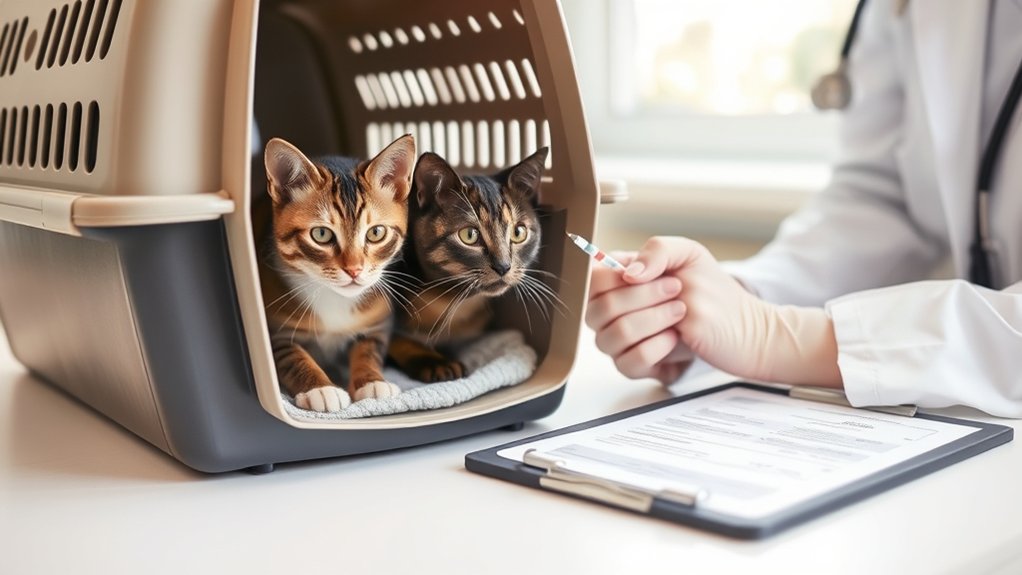
Although preparing your cat for travel involves many steps, guaranteeing they’ve the right vaccinations and health certificates is essential for a smooth journey. You need to prioritize these documents to meet legal requirements and safeguard your cat’s health.
Here’s what to keep in mind:
- Confirm your cat’s vaccinations are current, especially the rabies vaccine.
- Schedule vaccinations and health checks well ahead of your travel date.
- Obtain a health certificate from a USDA-accredited veterinarian confirming your cat’s fitness for travel.
- Verify specific health certificate requirements for your destination country.
Keep copies of all vaccinations and health certificates accessible during travel, as customs officials often request them.
This preparation helps you avoid delays and guarantees your cat travels safely and legally.
Choose an Airline-Approved Cat Carrier
You’ll want to pick a carrier that fits airline size rules—usually something soft-sided and small enough to slide under the seat.
It’s important that it has good ventilation and secure latches to keep your cat both comfortable and safe.
Also, look for durable materials so the carrier can handle the stress of travel without risking your cat’s escape.
Carrier Size Requirements
Choosing the right carrier size is essential to guarantee your cat travels comfortably and complies with airline regulations. Meeting carrier size requirements ensures smooth air transport and reduces stress for your feline friend.
Typically, airlines require a maximum carrier size of 18″ L x 11″ W x 10.5″ H for in-cabin travel. Here’s what to keep in mind:
Choose soft-sided carriers, as they compress slightly to fit under seats. For snub-nosed breeds, pick a carrier 10% larger to accommodate breathing needs.
Confirm specific dimensions and weight limits with your airline before booking. Also, verify the carrier allows your cat to stand, turn around, and lie down comfortably.
Ventilation And Security
When preparing your cat for air travel, selecting an airline-approved carrier with proper ventilation and security features is essential.
Look for carriers that meet airline size requirements, typically 18-19 inches long, 11-12 inches wide, and 10-11 inches high, so it fits comfortably under the seat.
Make sure the carrier has ventilation openings on at least two sides to provide good airflow and let your cat see outside. This helps reduce stress during the trip.
For security, choose a sturdy, escape-proof carrier with secure latches and no sharp edges to keep your cat safe throughout the journey.
Soft-sided carriers are often preferred since they can compress slightly to fit in tight spaces while still being comfortable.
It’s also a good idea to get your cat familiar with the carrier before travel. That way, the trip will go more smoothly and be less stressful for your furry friend.
Material Durability Standards
Although finding the right carrier might seem straightforward, confirming it meets material durability standards is essential for your cat’s safety and comfort during travel.
As pet owners, you must choose a carrier that complies with the International Air Transport Association (IATA) guidelines to avoid complications.
Look for these key features: constructed from heavy-duty plastic or reinforced fabric for durability, secure latches that prevent accidental openings, leak-proof bottom to handle any messes, and adequate ventilation with openings on at least two sides.
A sturdy, well-ventilated carrier designed to fit your cat’s size and weight will keep them safe and comfortable throughout the journey.
Always verify IATA approval before your trip to confirm smooth airline acceptance. It’s a small step that makes a big difference in your travel experience.
Help Your Cat Get Ready for Travel
To help your cat get ready for travel, start by gradually introducing them to their carrier. This way, it becomes a safe and familiar space for them.
Also, make sure your cat is healthy and up to date on all vaccinations before the trip.
When choosing a carrier, pick one that’s comfortable and approved by the airline if you’re flying.
You might want to consider using calming sprays or chatting with your vet about options to keep your cat relaxed during the journey.
Taking these steps can really help make travel less stressful for both you and your furry friend.
Preparing Your Cat
Since travel can be stressful for cats, you should start preparing your feline companion well in advance.
Preparing your cat involves more than just packing. It’s about easing their anxiety and making sure all requirements are met.
First, get a health certificate from your vet to confirm vaccinations and overall health. This step is essential for travel.
Next, help your cat get used to their carrier by letting them explore it several days before the trip.
You can also take short car rides to familiarize your cat with motion and reduce stress.
Consider calming aids like pheromone sprays if needed.
- Obtain a current health certificate
- Acclimate your cat to the carrier early
- Take brief practice car trips
- Use vet-approved calming products if necessary
Choosing The Right Carrier
Once your cat feels comfortable with the idea of travel, selecting the right carrier becomes a key step in ensuring their safety and comfort. Choose a carrier that meets airline specifications, offering good ventilation and enough space for your cat to stand, turn, and lie down comfortably.
For air travel, soft-sided carriers are ideal since they can compress to fit under seats. Hard-sided carriers work better for ground travel. Make sure the carrier has secure locks to prevent accidental openings.
Before the trip, let your cat explore the carrier at home and take short rides to help them adjust. Adding familiar bedding or a favorite toy inside the carrier will provide extra comfort.
Securing it during travel will minimize jostling and stress.
Managing Travel Stress
Although travel can be stressful for cats, you can help ease their anxiety by gradually acclimating them to the carrier and travel gear well before the trip. Reducing travel stress is key to a smoother journey for your feline friend.
Here’s how you can prepare:
Introduce the carrier at least a week prior, letting your cat explore it freely. Familiarize your cat with harnesses or travel gear to reduce anxiety during security checks. Use pheromone sprays or diffusers to create a calming environment inside the carrier.
Keep feeding and bathroom routines consistent before travel to minimize discomfort. If your cat is especially nervous, consult your vet about anti-anxiety options.
These steps help guarantee your cat feels safe and calm throughout the trip.
Book Direct Flights and Confirm Cat Acceptance
When you plan to ship your cat, booking direct flights is essential to reduce travel time and minimize stress for your pet. Always verify cat acceptance with the airline before booking, as pet policies vary. Notify them at least 48 hours in advance to secure accommodation and comply with regulations.
Check the carrier requirements and be mindful of travel embargoes during extreme weather. These little details can make a big difference in your cat’s comfort and safety.
| Step | Action | Why It Matters |
|---|---|---|
| Book direct flights | Choose non-stop routes | Minimizes travel time and stress |
| Confirm cat acceptance | Contact airline in advance | Guarantees your cat can travel safely |
| Verify carrier specs | Check size and ventilation | Meets airline safety standards |
| Check weather restrictions | Avoid embargo dates | Prevents travel cancellations |
Following these steps helps you ship your cat safely and comfortably. It’s all about making the journey as smooth as possible for your furry friend.
Pack Essentials to Keep Your Cat Comfortable
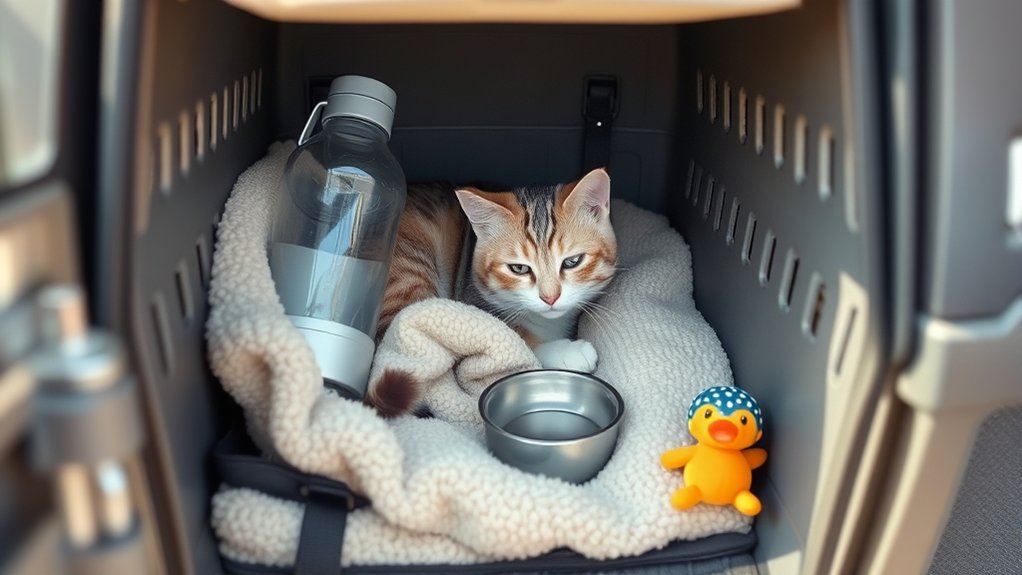
Since travel can be stressful for your cat, packing familiar and essential items helps keep them comfortable throughout the journey. Ensuring your pet has a sense of comfort reduces anxiety and makes the trip smoother.
Traveling can stress cats; familiar items ease anxiety and ensure a smoother, more comfortable journey.
Focus on bringing items that maintain hygiene, nutrition, and calmness.
Include these essentials:
- A familiar blanket or bed to provide comfort and reduce stress
- A portable litter box with litter to keep your cat clean
- Collapsible food and water bowls along with enough food for the trip
- Calming sprays or vet-approved treats to ease anxiety
Also, keep pet wipes, a leash, and your cat’s travel health certificate handy.
Thoughtful packing prioritizes your pet’s comfort and well-being, making the shipping experience safer and less stressful.
Acclimate Your Cat to Its Carrier Before Travel
Start getting your cat comfortable with the carrier at least a week before your trip. Just leave it open in a quiet spot and toss in some familiar toys or blankets.
This way, your cat can check it out on their own terms.
Try to encourage your cat to explore the carrier freely. When they do, give them treats and lots of praise. It helps them think of the carrier as a positive place.
Over time, let your cat spend more and more time inside. This will help them feel safe and secure when it’s finally time to travel.
Gradual Carrier Exposure
Although traveling can be stressful for cats, you can ease their anxiety by gradually exposing them to their carrier well before the trip. Starting at least two weeks ahead, place the carrier in a familiar spot at home, letting your cat explore on their own terms. This gradual exposure reduces anxiety and builds comfort.
To help your cat adjust, try these steps:
- Use treats, toys, or catnip inside the carrier to encourage curiosity.
- Increase the time your cat spends inside slowly, starting with short sessions.
- Practice closing the carrier door briefly, reinforcing safety with gentle praise.
- Take short car rides in the carrier to familiarize your cat with movement and sounds.
This approach helps your cat feel secure and less anxious during actual travel. It really makes a difference when they’re comfortable ahead of time.
Positive Carrier Associations
When you introduce your cat to its carrier well before travel, you create a foundation of positive associations that can greatly reduce stress.
Start several weeks in advance, letting your cat explore the carrier freely. Place treats, toys, and comfy bedding inside to encourage your cat to enter willingly.
Gradually increase the time your cat spends inside, rewarding calm behavior with praise or treats. Use pheromone sprays or calming products to create a soothing environment that eases anxiety.
Once your cat is comfortable, practice short car rides with the carrier to help them adapt to motion and sounds.
Monitor Your Cat’s Well-Being During the Flight
To keep your cat comfortable throughout the flight, you’ll need to monitor their well-being closely by making sure they’ve access to fresh water.
Also, check that their travel container stays well-ventilated to prevent overheating. It’s important to pay attention to your cat’s physical and emotional state.
Ensure your cat’s carrier is well-ventilated and monitor their physical and emotional well-being closely.
This way, you can quickly address any discomfort or stress they might be feeling. Here’s how to effectively monitor your cat’s well-being during the trip:
Check that the carrier is well-ventilated and that the temperature doesn’t go over 85°F.
Provide fresh water during layovers or whenever it’s safe to do so.
Keep an eye out for behaviors like excessive vocalization or restlessness since these can be signs of distress.
You might want to use calming pheromone sprays or talk to your vet about anxiety-relief options before you travel.
These little steps can make a big difference in keeping your cat calm and comfortable.
Prepare for Arrival: Customs, Quarantine, and Unpacking
Before you arrive at your destination, make sure you have all the required documentation ready, like health certificates and vaccination records. Customs officials will need to check these to allow your cat’s entry.
They might also inspect your cat for any signs of illness, which could affect their clearance.
Depending on the country, your cat might’ve to go through a quarantine period lasting from a few days to several weeks. It’s a good idea to prepare yourself mentally and logistically for this possibility.
Just keep in mind that it’s part of keeping your cat safe and healthy.
Once you’ve cleared customs and quarantine, introduce your cat to their new environment slowly to help reduce anxiety.
Set up a quiet, comfortable space where your cat can feel safe while you take care of any paperwork or vet checks.
Taking it step by step like this really helps make the transition smoother for your feline friend.
Frequently Asked Questions
How Do I Calm My Cat’s Anxiety After the Flight?
To calm your cat’s anxiety after the flight, start with gentle calming techniques like soft petting and speaking in a soothing voice.
Create a quiet, cozy space where your cat feels safe. Offer familiar items like their favorite blanket or toys.
Keep post flight care consistent by providing fresh water, food, and monitoring their behavior closely.
Patience is key. Give your cat time to adjust and reassure them with your presence.
Can I Ship Multiple Cats Together Safely?
You might think it’s easier to ship multiple cats together, but you can only do this safely if you follow cat shipping regulations carefully.
Using multi-cat carriers designed to prevent stress and fights is essential. These carriers provide separate compartments, giving each cat space while keeping them close.
Always double-check airline and regulatory rules to avoid surprises. Your cats’ comfort and safety depend on proper preparation and choosing the right equipment.
It might take a bit more effort, but it’s worth it to keep your furry friends happy and safe during travel.
What Temperature Is Ideal for Shipping a Cat?
You want to keep the temperature range between 65°F and 75°F when shipping your cat. This range guarantees your cat stays comfortable and safe during transit.
Make certain the carrier has good climate control to avoid overheating or chilling.
If the environment isn’t climate controlled, consider adding breathable covers or insulated liners.
Always monitor conditions closely, because your cat’s well-being depends heavily on maintaining a stable, moderate temperature throughout the journey.
Just keep an eye on things and adjust as needed to keep your furry friend happy.
How Early Should I Arrive at the Airport With My Cat?
You should arrive at the airport at least two hours before your flight when traveling with your cat. This gives you enough time to check in, pass security, and handle any unexpected issues with your cat carrier and travel essentials.
Arriving early helps reduce stress for both you and your cat, ensuring a smoother experience.
Don’t rush. Your calmness will help keep your cat calm too.
Are There Specific Foods to Avoid Before Shipping a Cat?
Yes, you should avoid rich, fatty, or new cat food choices right before travel, as they can upset your cat’s stomach.
Stick to their regular diet during pre-travel preparation, but offer smaller meals a few hours before shipping to prevent nausea.
Hydration is key, but don’t overdo water intake just before traveling.
These steps help keep your feline calm and comfortable during the journey, minimizing stress and digestive issues.
Conclusion
Shipping your cat is like steering a delicate dance. Each step demands care and attention. By knowing the rules, securing health papers, and choosing the right carrier, you’re setting the stage for a smooth journey.
Remember to ease your cat into travel, pack comfort, and keep a watchful eye on their well-being. With thoughtful preparation, you’ll transform an intimidating trip into a safe, gentle passage. This way, your feline friend lands with calm and confidence.