
Can Cats Eat Raspberries – Safe Or Harmful
You can safely give your cat small amounts of raspberries as an occasional treat, but only 1-2 berries once or twice a week. Raspberries offer antioxidants, fiber, and vitamins that support immunity and digestion.
However, overfeeding may cause gastrointestinal issues or rare allergic reactions. Always wash and cut berries to prevent choking, and keep treats under 10% of your cat’s daily calories.
Understanding these guidelines helps guarantee your cat benefits without risks. Just remember, moderation is key when it comes to treats!
What Nutrients Do Raspberries Provide Cats?

What nutrients do raspberries offer that could benefit your cat? Raspberries provide several valuable nutrients that support your cat’s health. They contain vitamin C, a powerful antioxidant that boosts immunity and protects cells from damage.
Moreover, raspberries supply vitamin K, which plays an important role in blood clotting and maintaining bone health. Their fiber content aids digestive health by promoting regular bowel movements and supporting a balanced gut. Raspberries also have trace amounts of potassium and calcium, essential minerals involved in muscle function and bone maintenance.
As a low-sugar fruit, raspberries offer these nutrients without risking excessive sugar intake. Including raspberries in your cat’s diet, in moderation, can contribute beneficial antioxidants and essential vitamins and minerals to support overall well-being.
Are Raspberries Safe for Cats to Eat?
While raspberries offer beneficial nutrients like vitamins and antioxidants, it’s important to evaluate whether they’re safe for your cat to eat. Cats are obligate carnivores, so raspberries should only be an occasional treat in small amounts.
Feeding too many raspberries can cause gastrointestinal issues, such as diarrhea or bloating, because of their high fiber content. So, it’s best to keep the servings small and infrequent.
| Factor | Recommendation |
|---|---|
| Quantity per treat | 1-2 berries |
| Frequency | Once or twice a week |
| Preparation | Washed and cut into small pieces |
What Are the Health Benefits of Raspberries for Cats?
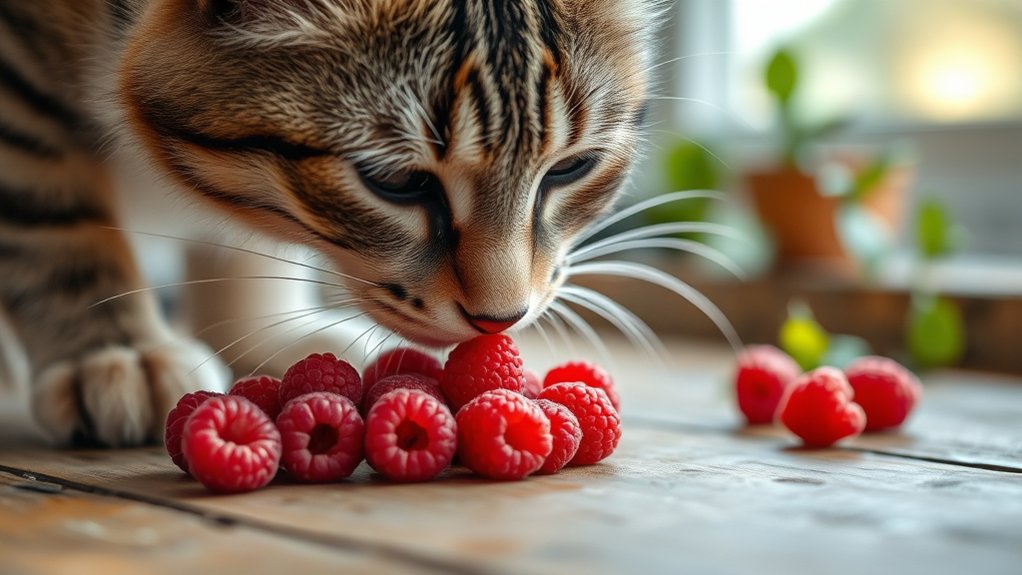
You’ll find that raspberries offer several health benefits for your cat. For starters, they provide antioxidant protection, which helps reduce cellular damage.
Plus, raspberries support the immune system because they contain essential vitamin C.
On top of that, the dietary fiber in raspberries can help with your cat’s digestive health—just be sure to give them in moderation.
Antioxidant Protection Benefits
Because raspberries are packed with antioxidants like anthocyanins, they can help protect your cat’s cells from oxidative stress and lower the risk of chronic diseases. These antioxidants combat free radicals, supporting your cat’s overall health by reducing cellular damage.
The dietary fiber in raspberries promotes regular bowel movements, enhancing digestive health and nutrient absorption.
Moreover, vitamin C contributes to immune function, while ellagic acid’s anti-inflammatory properties may further support your cat’s well-being. While raspberries aren’t a primary source of nutrients, their combination of antioxidants, dietary fiber, and vitamin C can complement a balanced diet.
This might help reduce inflammation and support digestive processes. Incorporating raspberries in moderation can consequently offer antioxidant protection benefits that help maintain your cat’s long-term health.
Immune System Support
Raspberries do more than just provide antioxidant protection. They also play a valuable role in supporting your cat’s immune system. Rich in antioxidants like vitamin C and ellagic acid, raspberries help protect feline cells from oxidative stress, enhancing immune system support.
Their anti-inflammatory properties may reduce the risk of chronic diseases such as cancer and heart disease. Plus, raspberries contain essential vitamins and minerals that contribute to overall wellness.
The high water content aids hydration, which is vital for maintaining bodily functions.
While their fiber content supports digestive health, it also indirectly benefits the immune system by promoting a healthy gut environment.
Digestive Health Aid
Although cats primarily rely on protein-rich diets, incorporating small amounts of fiber-rich fruits like raspberries can support their digestive health. When cats eat raspberries, the fiber helps promote regular bowel movements and can alleviate mild constipation. This makes raspberries a beneficial digestive health aid.
Raspberries also contain antioxidants, such as ellagic acid, that may reduce inflammation and support overall digestive well-being.
With about 85% water content, these berries contribute to hydration, which is essential for a healthy digestive system.
Their low sugar content makes raspberries a safe occasional treat that won’t spike blood sugar levels. Plus, small amounts provide vitamins C and K, which further contribute to your cat’s overall well-being.
Just remember to offer raspberries in moderation to keep nutrition balanced.
How Many Raspberries for Cats Are Safe to Eat?

You should limit your cat to one or two raspberries at a time, no more than once or twice a week, to keep their digestive system comfortable.
While cats can eat raspberries safely in small amounts, eating too many might cause digestive issues like bloating or gas because of the high fiber content. To prevent choking, always cut raspberries into halves or quarters before feeding.
Keep treat portions within 5% to 10% of your cat’s daily caloric intake. This way, you ensure their main diet stays focused on high-quality animal protein.
After introducing raspberries, watch for any reactions like vomiting or diarrhea to make sure your cat tolerates them well.
Sticking to this maximum frequency and portion size helps you offer raspberries safely without risking your cat’s health or nutrition.
It’s all about balance and keeping treats as just a small part of their overall diet.
Are There Any Risks or Allergies From Raspberries for Cats?
What potential risks should you consider before offering raspberries to your cat? While raspberries can be a healthy treat, they contain trace amounts of xylitol, which can be toxic in large quantities, so strict portion control is vital.
Overfeeding may cause gastrointestinal issues like bloating and gas due to their high fiber content. Furthermore, excessive natural sugars in raspberries could lead to weight gain and increase diabetes risk.
Although rare, some cats may experience allergic reactions, including vomiting, diarrhea, itching, or swelling. Monitoring your cat for any signs of digestive upset or allergic symptoms after feeding raspberries is important.
If you notice any adverse effects, consult your veterinarian immediately to guarantee your pet’s safety and well-being. It’s always better to be safe and keep an eye on your furry friend when introducing any new food.
What Parts of the Raspberry Plant Should Cats Avoid?
You should avoid letting your cat eat raspberry leaves because they can cause uterine contractions, which is especially risky if your cat is pregnant.
Now, the stems and canes aren’t toxic, but they can be hard for your cat to digest and might lead to some tummy troubles.
Also, keep in mind that too much plant fiber from any part of the raspberry plant could upset your cat’s digestion.
Raspberry Leaves Risks
Three parts of the raspberry plant require special caution when it comes to your cat’s health, especially the leaves. Raspberry leaves can stimulate uterine contractions, posing serious risks for pregnant cats, so you should avoid letting them consume these leaves entirely.
Although raspberry leaves are considered non-toxic, ingesting large amounts can cause digestive upset such as vomiting or diarrhea. Their fibrous nature also raises the risk of gastrointestinal blockages, which can be dangerous.
Even if your cat shows no immediate symptoms, adverse reactions may still develop over time. So, it’s better to be safe than sorry.
To keep your feline safe, it’s best to limit any part of the raspberry plant in their diet. Maintaining a balanced diet free from potentially harmful plant matter guarantees your cat’s well-being and prevents avoidable health complications.
Just keep an eye on what they eat, and you’ll be all set!
Stem And Cane Safety
Several parts of the raspberry plant, including its stems and canes, require careful consideration when it comes to your cat’s safety. While the raspberry plant is generally non-toxic to cats, consuming large amounts of stems or canes can cause digestive upset due to indigestible fibrous material.
Pregnant cats should be extra cautious, as raspberry leaves might stimulate uterine contractions. Always offer raspberry parts that are fresh and free from pesticides to avoid gastrointestinal distress.
| Part | Safety for Cats | Notes |
|---|---|---|
| Stems and Canes | Non-toxic, but risky in large amounts | Indigestible fibers may cause vomiting or diarrhea |
| Raspberry Leaves | Non-toxic, caution for pregnant cats | May stimulate uterine contractions |
| Fruit | Safe in moderation | Must be fresh and pesticide-free |
Stay vigilant to keep your cat healthy when dealing with raspberry plants.
Effects Of Plant Fiber
Although raspberry fruit is safe for cats in small amounts, the plant’s high fiber content can cause digestive issues if consumed excessively.
The leaves and stems contain indigestible fibrous material that may lead to digestive upset, including vomiting and diarrhea.
Because cats have sensitive digestive systems, even small quantities of these parts can trigger gastrointestinal distress. To keep your cat safe for feline consumption, limit plant consumption and avoid offering leaves or stems altogether.
Always monitor for adverse reactions whenever your cat encounters any part of the raspberry plant. By doing so, you can prevent potential digestive problems and guarantee your cat enjoys raspberries without harm.
How Should You Prepare and Serve Raspberries to Your Cat?
To safely prepare raspberries for your cat, start by thoroughly washing the berries under cold running water for at least three minutes. This helps remove any contaminants or pesticides.
Next, cut raspberries into halves or quarters to prevent choking hazards, especially for smaller cats.
Keep the serving size small — just one or two raspberries at a time. This way, it stays within 5% to 10% of your cat’s daily calorie intake.
Always watch your cat’s reaction after introducing raspberries. Look out for any signs of digestive upset or allergic responses.
Remember, raspberries should be an occasional treat that complements a balanced diet focused on high-quality animal protein.
To sum it up:
- Wash the fruit thoroughly to guarantee safety
- Cut raspberries to prevent choking hazards
- Limit serving size and monitor your cat’s reaction
What to Do If Your Cat Eats Too Many Raspberries
If your cat happens to eat too many raspberries, keep an eye out for signs like vomiting, diarrhea, or just acting unusually tired—these can mean their tummy is upset.
If you notice anything serious, don’t hesitate to call your vet right away so your furry friend can get the care they need.
To avoid any trouble down the road, it’s a good idea to only offer raspberries as a tiny treat now and then.
Recognizing Overconsumption Symptoms
When your cat consumes too many raspberries, you might notice symptoms like vomiting, diarrhea, or excessive drooling. This happens because of the fruit’s high fiber and sugar content. These overconsumption symptoms signal digestive distress and need your attention.
When cats eat raspberry in excess, it’s important to watch for signs like bloating, lethargy, or changes in appetite. Following the 10% rule for treats helps prevent weight gain and other adverse reactions.
Keep raspberries to 1-2 berries once or twice weekly to avoid high fiber overload.
Watch closely for persistent digestive issues and behavioral changes. And if symptoms worsen or don’t improve quickly, contact your veterinarian.
Immediate Veterinary Actions
Monitor your cat closely after it eats too many raspberries. Watch for signs like vomiting, diarrhea, or lethargy that suggest gastrointestinal distress. If you notice any severe symptoms or suspect overconsumption, contact your veterinarian immediately.
Make sure to provide detailed information about how much your cat ate and any adverse reactions you see. This helps your vet assess the situation accurately.
Keep your cat hydrated by encouraging them to drink water, which supports recovery from digestive issues.
Avoid trying to induce vomiting unless your veterinarian specifically tells you to. Doing it the wrong way can make things worse. Getting prompt veterinary care ensures your cat gets the right treatment to manage symptoms and prevent complications from eating too many raspberries.
Always prioritize professional advice when dealing with potential adverse reactions in cats. It’s the best way to keep your furry friend safe and healthy.
Preventing Future Incidents
Taking steps to prevent your cat from eating too many raspberries again can help avoid digestive upset and potential health risks. After an incident, keep an eye out for signs of gastrointestinal distress like vomiting or diarrhea.
Always make sure your cat has access to fresh water to help with digestion and flush out excess sugars.
To minimize risk, limit fruit treats to no more than 10% of your cat’s daily intake. If you notice severe reactions or signs of an allergic reaction, contact your veterinarian right away.
For preventing future incidents, consider these measures:
Monitor your cat’s daily intake closely and limit fruit treats accordingly.
Provide constant access to fresh water after any fruit consumption.
Contact your veterinarian promptly if you notice persistent symptoms or severe reactions.
How Do Raspberries Compare to Other Safe Fruits for Cats?
Although cats don’t have sweet taste receptors and may not be drawn to fruits, raspberries stand out as a safer option compared to many others due to their low sugar content and non-toxic nature.
Raspberries are good for your cat as a nutritious treat, offering dietary fiber that supports digestion, similar to other safe fruits like apples and blueberries.
Their high in fiber content aids gastrointestinal health without the risks associated with toxic fruits such as grapes or citrus.
Plus, raspberries provide hydration benefits thanks to their approximately 85% water content, which helps maintain your cat’s hydration.
When considering safe fruits for your cat’s diet, raspberries are generally safe for cats.
Can Raspberries Cause Digestive Issues in Cats?
While raspberries can be a safe treat for your cat in moderation, feeding them too many may lead to digestive problems. Cats can’t efficiently process the high sugar content or excessive fiber found in raspberries, and even a small amount can lead to bloating, gas, or diarrhea.
Moreover, raspberries contain trace amounts of xylitol, a substance toxic to cats, so portion control is really important. Overconsumption of vitamin C from raspberries can also disrupt gut balance, causing vomiting or other digestive issues.
Raspberries contain trace xylitol and excess vitamin C, so careful portion control is essential to avoid toxicity and digestive issues.
You should keep an eye out for signs of gastrointestinal distress, such as lethargy or excessive drooling, after feeding raspberries.
Key points to keep in mind:
- High sugar and fiber levels may cause digestive upset.
- Trace amounts of xylitol pose toxicity risks.
- Overconsumption of vitamin C can disrupt gut balance.
Always practice strict portion control and watch for any signs to keep your cat safe.
Frequently Asked Questions
Can Kittens Eat Raspberries Safely?
Yes, you can safely give kittens raspberries, but you need to introduce fruits gradually because kittens’ digestive systems are pretty sensitive.
Keep portion control in mind and limit raspberries to just a small part of their diet. This way, they can enjoy the nutritional benefits without any tummy upset.
Also, watch out for potential allergies and pay attention to what your kitten seems to like or dislike. Remember, every kitten has its own taste preferences.
Always prioritize high-quality kitten food first.
And it’s a good idea to check with your vet before adding any new treats or safe fruit options to their diet.
Do Raspberries Affect a Cat’s Hydration Levels?
Raspberries contain about 85% water, so they do offer some hydration benefits when given in safe portions.
Just keep in mind, these natural treats add variety to your cat’s diet and can support hydration a bit.
But they don’t replace fresh water, which is really essential for your cat’s health.
Berry toxicity is pretty rare, but if you overfeed fruit, it might cause some digestive upset.
It’s good to understand your cat’s preferences and clear up any myths about hydration.
That way, you can give balanced, safe treats without risking your cat’s health or hydration levels.
Are Frozen Raspberries Safe for Cats?
Yes, frozen raspberries can be safe for cats if you consider frozen raspberry benefits like hydration and antioxidants. Cater to your cat’s taste preferences by offering small fruit serving suggestions. Try 1-2 thawed berries at a time.
Be aware of health risks involved, such as digestive upset from excess fiber. Monitor reactions closely and respect safe portion sizes. It’s also a good idea to compare nutritional content with alternative fruits.
Always prioritize your cat’s digestive system comfort when introducing new treats. Taking it slow helps keep your furry friend happy and healthy.
Can Raspberries Interact With Cat Medications?
Yes, raspberries can interact with cat medications due to concerns about raspberry toxicity and how the medication is absorbed. You should watch for potential allergic reactions and consider your cat’s digestive health.
High fiber in raspberries may disrupt nutrient uptake.
While raspberries do offer some nutritional benefits, it’s important to follow your vet’s advice carefully.
Keep serving sizes safe and be aware of any interactions with supplements.
Monitoring the long-term effects helps ensure your cat stays healthy without risking any adverse reactions.
How Often Should Raspberries Be Introduced to a Cat’s Diet?
Imagine your cat savoring a tiny burst of fresh raspberry sweetness. Introduce these treats no more than once or twice a week to support feline digestion without overwhelming their system.
Practice strict portion control by offering just 1-2 berries. It’s important to respect your cat’s preferences and watch out for any signs of allergies.
Freshness and nutritional value make raspberries a delightful, occasional treat alternative.
Always keep an eye on how often you feed them and consider other treat options to keep your pet’s diet balanced and healthy.
Conclusion
You might not expect that sharing a few raspberries with your cat can offer a subtle boost of antioxidants and vitamins. It’s true, they’re generally safe in moderation.
While raspberries aren’t a staple, their occasional inclusion can complement your cat’s diet without harm. Just remember, too many can upset their digestion, so keep portions small.
Coincidentally, this sweet treat mirrors your care. A little goes a long way in keeping your cat happy and healthy.