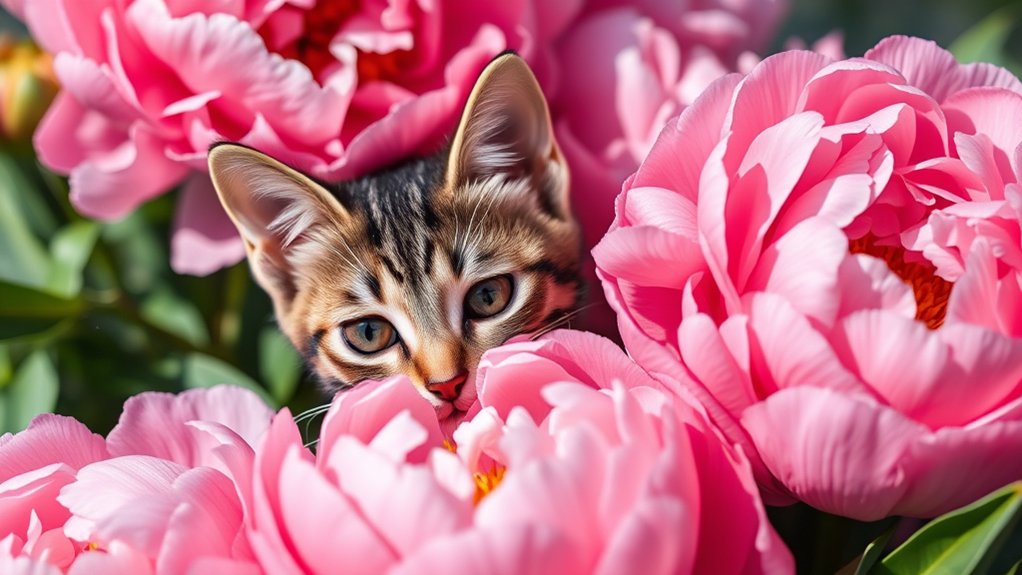
Are Peonies Poisonous To Cats – Safety Guide
Yes, peonies are poisonous to your cat because they contain paeonol, a toxin that can cause vomiting, diarrhea, and lethargy. All parts of the plant are hazardous, especially the roots and stems. Even dried peonies remain dangerous.
Symptoms usually show up within an hour, so if your cat has ingested any part of a peony, you need to act quickly. Remove any plant material from your cat’s mouth and get veterinary advice right away.
To keep your cat safe, try some practical prevention tips. You might also want to explore safer floral alternatives to protect your curious companion.
Why Are Peonies Toxic to Cats?
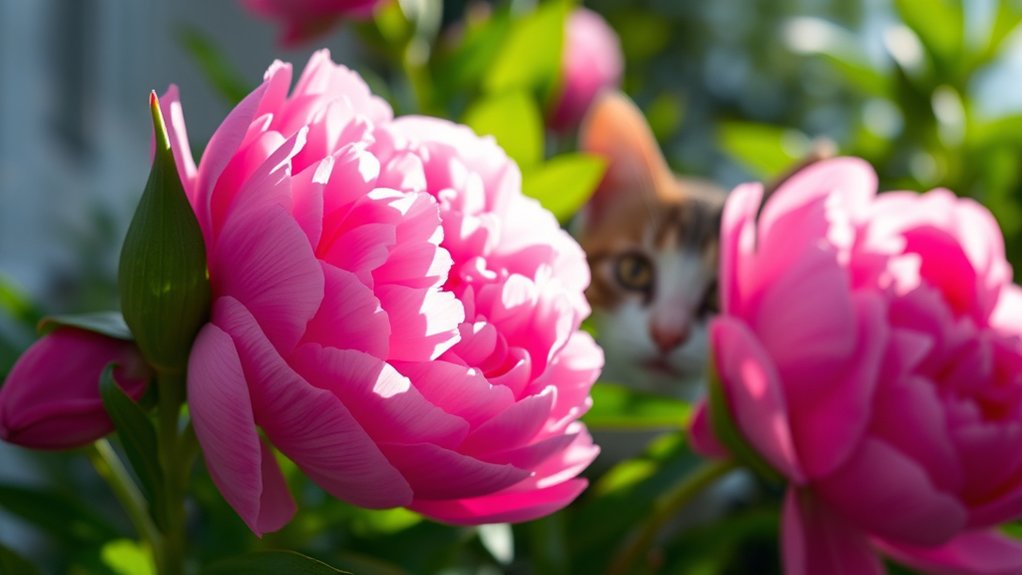
Although peonies are beautiful garden plants, they contain a compound called paeonol that’s toxic to cats and can cause serious gastrointestinal issues.
Peonies, while beautiful, contain paeonol—a compound toxic to cats causing serious gastrointestinal problems.
You need to understand that peonies toxic to cats pose a real risk due to this compound, which leads to mild to moderate toxicity. When your cat ingests any part of the plant, paeonol triggers symptoms in cats such as vomiting, diarrhea, lethargy, and depression.
These signs of gastrointestinal upset can appear within hours, making prompt attention essential. Since cats groom themselves frequently, they may unknowingly swallow peony material, increasing their risk.
Knowing why peonies are toxic to cats helps you protect your pet by recognizing early symptoms and seeking veterinary care immediately if exposure occurs.
Which Parts of Peonies Are Most Dangerous to Cats?
You should know that every part of the peony plant is toxic to your cat.
That said, the roots and stems have the highest levels of harmful compounds.
So, if your cat ends up munching on any part of the plant, you might notice symptoms like drooling, vomiting, and lethargy showing up within about an hour.
Knowing which parts are the most dangerous can really help you keep your furry friend safe.
Peony Plant Toxicity
When your cat comes into contact with peonies, every part of the plant can pose a risk.
But the roots are the most toxic and dangerous if ingested. Peony plant toxicity affects cats and dogs alike, with the harmful compound paeonol most concentrated in the stems.
You should watch for symptoms of peony poisoning such as vomiting, diarrhea, lethargy, and loss of appetite.
These symptoms often appear within an hour. Even dried or wilted peonies remain toxic, so avoid exposing your cat to any part of the plant.
Key points about peony toxicity include:
- All parts contain toxins, but roots and stems are especially harmful.
- Symptoms mainly involve gastrointestinal distress and oral irritation.
- Quick intervention is essential if your cat ingests any toxic part.
Toxicity Levels By Part
Because different parts of the peony plant contain varying levels of the toxic compound paeonol, it’s important to understand which sections pose the greatest risk to your cat. Knowing the toxicity levels by part helps you protect your pet from exposure to peonies poisonous to cats. The peony roots hold the highest toxicity, followed closely by stems.
Peony leaves contain moderate paeonol levels, while flower petals are less toxic but still unsafe. Remember, dried peonies retain toxicity as well.
| Peony Part | Toxicity Level |
|---|---|
| Peony Roots | Very High |
| Stems | High |
| Peony Leaves | Moderate |
| Flower Petals | Low |
Avoid letting your cat chew any part of the plant to keep them safe.
Symptoms From Ingestion
Although all parts of the peony plant contain the toxic compound paeonol, the roots and stems pose the greatest danger to your cat if ingested.
Symptoms of peony ingestion typically show within 30-60 minutes and mainly affect your cat’s gastrointestinal system. You need to watch for vomiting and diarrhea, which indicate gastrointestinal distress.
Lethargy is another sign to look out for. It shows your cat’s response to the plant’s toxicity. Excessive drooling is common too, as it points to irritation from peony ingestion.
Even small amounts can cause mild symptoms, but larger quantities may lead to more severe reactions. Remember, dried or wilted peonies remain toxic. So, keep all parts away from your cat to prevent any accidental ingestion.
Recognizing these symptoms early is essential to ensuring your cat’s safety. If you notice any of these signs, it’s best to act quickly and consult your vet.
Symptoms of Peony Poisoning in Cats
Peony poisoning in cats presents with a range of symptoms that you should watch for closely. The toxic compound paeonol in peonies can cause vomiting, diarrhea, drooling, and lethargy, all clear indicators of toxicity in cats.
You might also notice your cat showing decreased appetite or signs of depression after ingestion. These symptoms vary depending on how much of the plant your cat consumed and their individual sensitivity.
Vomiting and lethargy are among the most common and immediate signs. If you suspect peony poisoning, monitor your cat carefully for any changes in behavior or physical condition.
Early recognition of symptoms allows you to seek timely veterinary care, ensuring your cat recovers quickly and safely. So, keep an eye on your furry friend and don’t hesitate to get help if something seems off.
When Do Peony Poisoning Symptoms Appear?
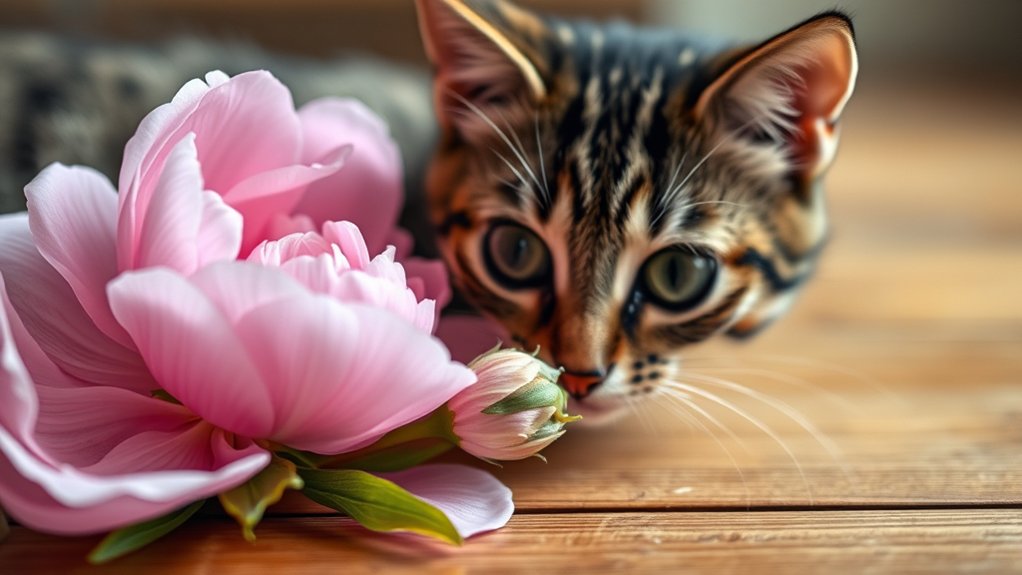
You’ll usually notice symptoms of peony poisoning in your cat within 30 to 60 minutes after they’ve eaten the plant.
So, it’s important to watch closely during this time.
Early signs to look out for include vomiting, drooling, or lethargy.
Catching these symptoms early can really help your cat recover faster.
Symptom Onset Timing
When your cat ingests parts of the peony plant, symptoms usually show up within 30 to 60 minutes. This rapid onset means you need to act quickly if you suspect peony poisoning. The severity and type of symptoms can vary based on your cat’s size and how much of the plant they ingested.
Here’s what you should keep in mind about symptom onset timing:
- Mild symptoms may appear quickly but often resolve within 12-24 hours with minimal treatment.
- More severe reactions require immediate veterinary attention to prevent complications.
- Continuous monitoring during this critical window helps catch any worsening signs early.
Understanding the timing helps you stay alert and respond promptly to protect your cat’s health after peony ingestion.
Just keep a close eye on them during this time—it really makes a difference.
Early Warning Signs
Although symptoms usually show up quickly, within 30 to 60 minutes after your cat eats peony parts, it’s essential to recognize the early warning signs promptly.
When your cat ingests the peony plant, symptoms can vary depending on how much was consumed and your cat’s sensitivity to its toxins. Early warning signs often include vomiting, diarrhea, drooling, and lethargy.
Loss of appetite is another common indicator. Mild cases may improve within 12 to 24 hours, but you shouldn’t take chances.
If your cat experiences repeated vomiting or significant lethargy, seek immediate veterinary care.
Prompt attention can prevent complications and guarantee your cat recovers safely. Being aware of these signs helps you act swiftly and protect your feline friend from serious harm.
What to Do If Your Cat Eats Peonies
If your cat eats peonies, act quickly by watching for symptoms like vomiting, diarrhea, or lethargy that can appear within 30 to 60 minutes. Peonies are toxic plants, and early recognition of symptoms is vital for your cat’s safety.
If your cat eats peonies, watch for vomiting, diarrhea, or lethargy within an hour—early action is crucial.
Here’s what you should do:
First, remove any remaining peony material from your cat’s mouth and rinse gently with clean water if your cat allows it.
Don’t try to make your cat vomit unless a vet tells you to, because that might cause more problems.
Contact your veterinarian or emergency clinic right away if your cat shows serious symptoms or if you think it ate a lot.
Getting prompt veterinary care is important to keep your cat safe and help it recover quickly.
How Vets Help Cats After Peony Poisoning
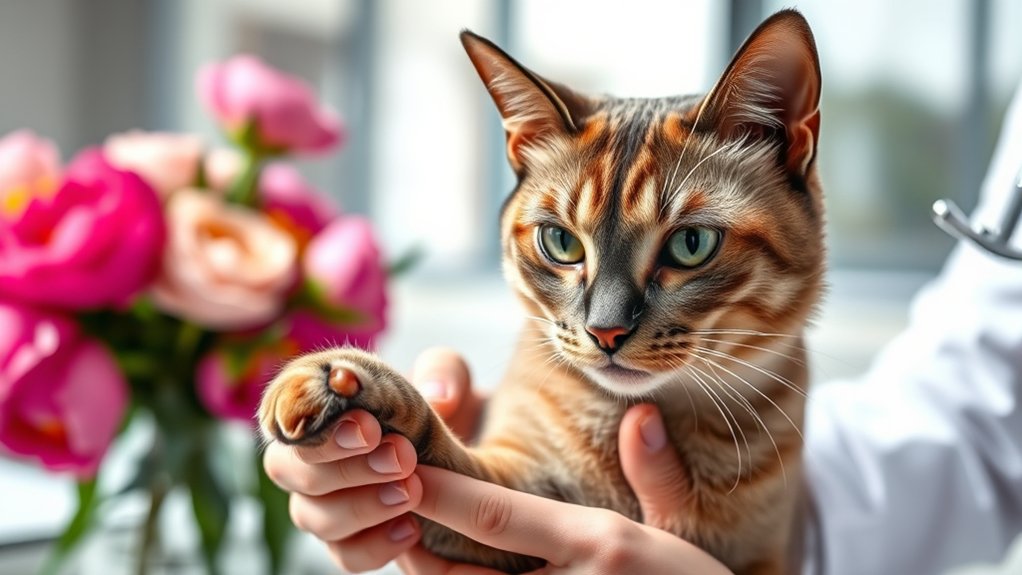
When you bring your cat to the vet after they’ve ingested peony, the vet will start by checking for symptoms like vomiting and lethargy to see how serious things are.
They might induce vomiting or give activated charcoal to help stop the toxin from being absorbed.
At the same time, they’ll keep a close eye on your cat’s vital signs and provide fluids if necessary.
Depending on how severe the situation is, your cat might be treated right there at the clinic, or the vet could give you instructions on how to care for them at home, along with follow-up support.
Immediate Veterinary Actions
Veterinarians act quickly to minimize the effects of peony poisoning in your cat by first evaluating the severity of ingestion.
As a pet owner, understanding the immediate veterinary actions can help you stay calm and informed.
- Inducing Vomiting: If ingestion is recent and significant, vets may induce vomiting to expel toxins before they cause harm.
- Activated Charcoal: Administering activated charcoal helps bind the toxins, preventing further absorption in your cat’s gastrointestinal tract.
- Supportive Care: Intravenous fluids and electrolyte management address dehydration and support recovery.
These steps form the foundation of urgent care to stabilize your cat.
Your vet’s prompt response and expertise are essential in reducing complications and ensuring a smoother recovery after peony poisoning.
It’s important to act fast and trust your veterinarian’s guidance.
Knowing what happens next can make a big difference for your furry friend.
Symptom Monitoring Protocols
Although symptoms of peony poisoning in cats often appear within 30 to 60 minutes, you’ll need to monitor your pet closely for at least 6 to 12 hours afterward to catch any signs like vomiting, diarrhea, or lethargy.
Symptom monitoring is essential because some signs may be subtle or develop gradually.
After vet consultation, your veterinarian will guide you on what common symptoms to watch for and when to seek further help.
Keeping your vet informed about changes guarantees timely adjustments in care.
This ongoing observation complements the supportive care your cat receives, helping to manage the poisoning’s effects and prevent complications.
Supportive Care Treatments
Keeping a close eye on your cat’s symptoms after peony ingestion sets the stage for effective veterinary care. Under veterinary guidance, supportive care is tailored to minimize toxin absorption and support recovery.
Vets may consider inducing vomiting to expel toxins, but only when it’s safe and appropriate. Activated charcoal is often administered to bind residual toxins, preventing further harm.
Key supportive care treatments include:
- Inducing vomiting under professional supervision to quickly remove toxins.
- Administering activated charcoal to reduce toxin absorption in the gut.
- Providing intravenous fluids and monitoring symptoms closely to maintain hydration and assess health.
Your vet will also monitor symptoms and may recommend follow-up care, including dietary adjustments. This helps ensure your cat’s recovery is smooth and safe.
How to Keep Cats Away From Peonies
If you want to protect your peonies from curious cats, setting up physical barriers like fencing or tomato cages around outdoor plants is a practical first step.
Since cats may experience adverse effects if they ingest peonies, keeping cut peonies out of your cat’s reach is crucial. Place them in high, inaccessible spots or close doors to rooms containing these flowers.
To further protect your pets, provide alternative plants such as catnip or other safe flowers to attract their attention away from peonies.
You should also engage cats with toys and activities to divert their focus from your garden’s toxic plants.
Taking these steps helps guarantee your cats stay safe while preserving the beauty of your peonies.
Are Any Peony Varieties Safe for Cats?
Can any peony varieties be considered safe for your cat? Unfortunately, no. All peonies contain paeonol, a toxic compound, so peonies can be toxic regardless of the variety.
If your cat ate any part of a peony, it’s important to watch your cat closely for symptoms like vomiting and lethargy.
Here’s what you need to know:
- Peony contains toxins mainly in the roots, but stems and leaves are also harmful.
- Even the flowers, though less toxic, can still cause mild to moderate poisoning.
- No peony variety is considered safe for cats, so avoid having them around your pet.
It’s best to choose pet-safe plants instead to keep your feline friend safe and healthy.
Safe Flower Alternatives to Peonies for Cat Owners
Since all peony varieties pose a risk to your cat, selecting safer floral options becomes a priority. You can still enjoy peonies’ charm by choosing safe alternatives that won’t harm your feline friend.
Consider pet-friendly options like thornless roses, vibrant gerbera daisies, elegant orchids, charming snapdragons, and colorful African violets. They’re all non-toxic to cats.
Choose pet-friendly blooms like thornless roses, gerbera daisies, orchids, snapdragons, and African violets for a safe, beautiful home.
These flowers add beauty to your home or garden without risking your cat’s health. Just make sure to place any blooms well out of your cat’s reach to prevent accidental ingestion.
By opting for these safe alternatives, you protect your cat while maintaining a lovely, floral environment.
This way, you can confidently enjoy flowers without compromising your pet’s safety. It’s all about keeping your furry friend safe and your space beautiful at the same time.
Handling and Displaying Peonies Safely Around Cats
While peonies bring vibrant beauty to your home, you have to handle and display them carefully to keep your cat safe. Peony plants can cause skin irritation and are toxic if ingested. So, it’s really important to be cautious around these flowers.
To protect your feline friend, consider these steps: Place cut peonies in high, secure locations or in rooms with closed doors to limit access. You can also use barriers like fencing in outdoor gardens to prevent your cat from reaching the plants.
Offering cat-safe alternatives like catnip or roses is a great way to divert their attention. Always supervise pets around peonies and watch for signs of ingestion or distress.
Proper handling of peonies means your home stays beautiful without risking your cat’s health. By taking these precautions, you’ll enjoy peonies safely while caring for your curious companion. It’s all about keeping both your flowers and your furry friend happy!
Frequently Asked Questions
Can Peony Pollen Cause Allergies in Cats?
Yes, peony pollen allergies can affect your cat, causing respiratory issues and triggering their immune response.
When your cat is exposed to pollen, you might notice symptoms like sneezing, watery eyes, or skin irritation.
It’s important to watch for these signs, especially during peony blooming seasons.
If your cat shows persistent symptoms, you should consult your veterinarian. They can help manage the allergy and protect your feline friend’s health effectively.
Are Peony Roots More Toxic Than the Flowers?
Yes, peony root toxicity is considerably higher than in the flowers. You should know the roots contain concentrated harmful compounds that can cause severe symptoms of poisoning like vomiting and diarrhea in your cat.
While flowers are less toxic, they’re still unsafe. To protect your pet, follow prevention strategies for pets by keeping all parts of peonies out of reach.
If poisoning occurs, seek treatment options available from your vet immediately.
Is Peony Toxicity Fatal to Cats Without Treatment?
Peony toxicity isn’t usually fatal to cats without treatment, but you really shouldn’t take the risk.
Symptoms like vomiting and diarrhea can get worse if you just ignore them.
Treatment options can range from simple home care to getting veterinary support, depending on how severe the toxicity is.
To keep your cat safe, think about safe alternatives like cat grass.
Also, follow prevention tips like keeping peonies out of your cat’s reach.
Acting quickly is key to making sure your cat stays healthy and safe.
Can Kittens Be More Sensitive to Peony Poisoning?
Yes, kittens can be more sensitive to peony poisoning because their immune response is still developing.
Peony ingestion symptoms like vomiting and diarrhea appear faster and can be severe.
As a pet owner, you should take precautions by keeping peonies out of reach and choosing safe flower alternatives.
Follow kitten care tips closely and seek veterinary help immediately if you notice any signs of poisoning to protect your kitten’s health effectively.
Do Peonies Affect Other Pets Besides Cats?
Yes, peonies can affect other pets besides cats.
You’ll want to watch for peony toxicity symptoms like vomiting and diarrhea in dogs, rodents, and even birds.
For pet-friendly gardening, consider safe flower alternatives to protect your furry friends.
Understanding plant safety helps you provide a secure environment.
Following peony care tips guarantees these beautiful plants don’t pose risks.
Always keep toxic plants out of reach to keep your pets safe and healthy.
Conclusion
Peonies may bloom beautifully, but they carry a hidden danger for your curious cat. Knowing which parts are toxic and spotting symptoms early can save your furry friend from harm’s grip.
By taking simple steps to keep peonies out of reach and choosing safer blooms, you’re weaving a protective garden where both beauty and safety grow hand in hand.
Trust your instincts. Your cat’s well-being blossoms when you stay informed and proactive.