Are Peace Lilies Toxic To Cats – What You Need To Know
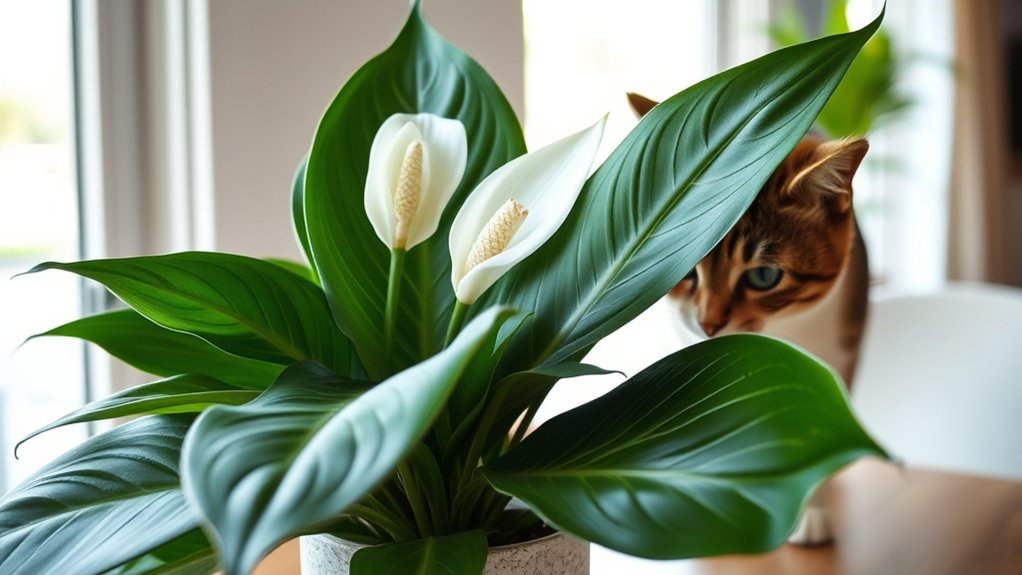
Peace Lilies aren’t deadly to cats but can cause discomfort if chewed. They contain calcium oxalate crystals, which can lead to drooling, vomiting, and mouth irritation. Usually, the symptoms are mild and don’t last long.
That said, severe swelling that affects breathing can happen, so it’s important to act quickly if you notice any signs. It’s a good idea to keep Peace Lilies out of your cat’s reach and watch for any signs of distress.
Being informed about how to handle exposure is key. You might also want to explore safer plant options to help protect your feline friend effectively.
Are Peace Lilies Harmful to Cats?
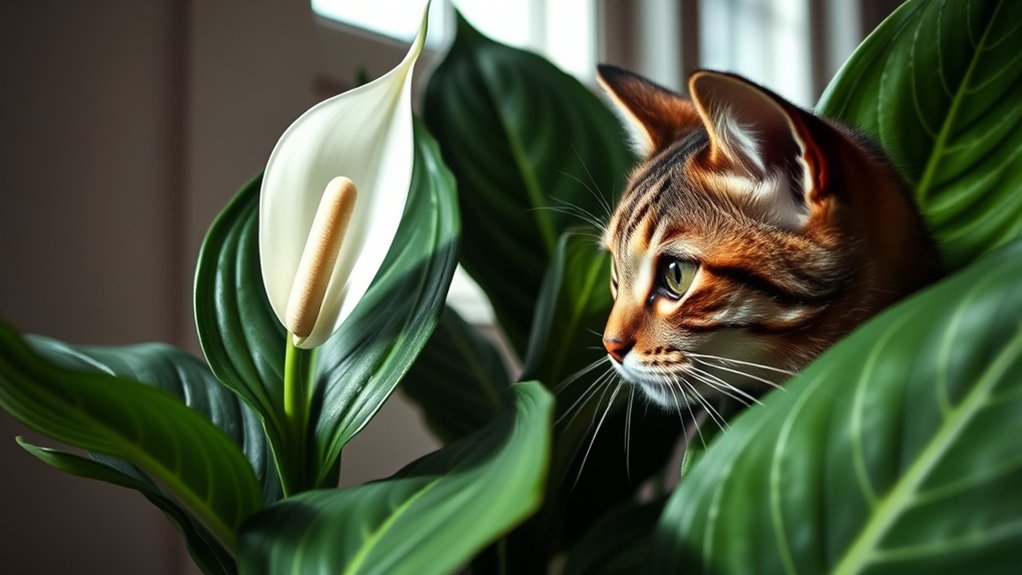
Wondering if peace lilies pose a danger to your cat? As a cat owner, it’s essential to know that all parts of the Peace Lily contain insoluble calcium oxalate crystals. These can cause immediate oral irritation and discomfort if ingested.
You might notice drooling, vomiting, or difficulty swallowing in your cat after exposure. While these symptoms are unpleasant, severe reactions are rare.
And unlike true lilies, Peace Lilies don’t cause kidney damage.
Still, any ingestion should be taken seriously. If your cat has chewed on a Peace Lily, contact your veterinarian or the Australian Animal Poisons Centre right away for advice.
Understanding the risks helps you protect your feline friend while enjoying your greenery safely.
How Cats Show They’ve Eaten Peace Lilies
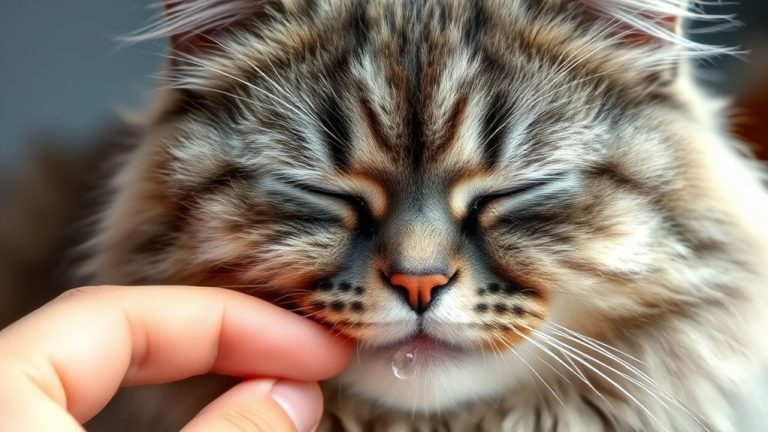
When your cat eats a Peace Lily, you’ll likely notice several clear signs almost immediately. Despite some thinking Peace Lilies are safe, these plants cause Lily Toxicity in cats, primarily due to calcium oxalate crystals. Your cat may drool excessively, lick its mouth, or even vomit.
Difficulty swallowing and oral discomfort are common, and severe cases may show swelling that affects breathing. Grooming transfers toxins from paws to mouth, which can worsen symptoms.
Here’s a quick guide to how cats show they’ve eaten Peace Lilies:
| Symptom | Description | Urgency Level |
|---|---|---|
| Drooling | Excess saliva production | Moderate |
| Vomiting | Forceful expulsion of stomach contents | High |
| Swelling | Mouth/throat inflammation | Critical |
If you see these signs, contact your vet immediately.
Key Symptoms of Peace Lily Poisoning in Cats
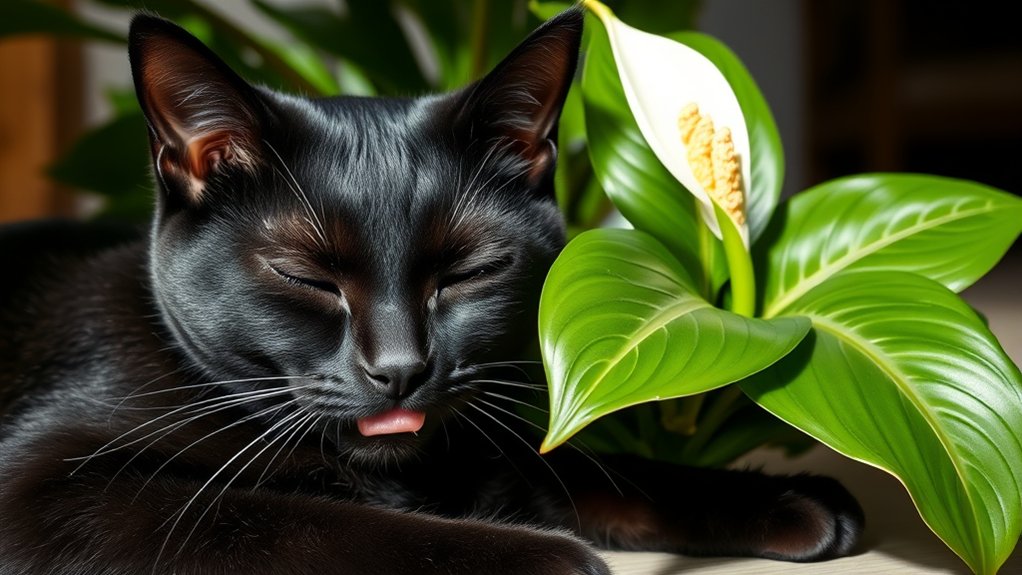
Recognizing the key symptoms of Peace Lily poisoning in your cat helps you act swiftly and effectively. When your cat chews or swallows any part of the Peace Lily, insoluble calcium oxalate crystals cause immediate burning in the mouth and tongue.
You may notice drooling, excessive licking, and vomiting soon after ingestion. In rare cases, swelling of the upper airway can lead to breathing or swallowing difficulties, which require urgent attention.
While these symptoms usually subside quickly with cool demulcents like yogurt or lactose-free milk, it’s crucial to monitor your cat closely.
Although Peace Lilies aren’t known to cause kidney failure in cats, any suspected ingestion warrants prompt veterinary consultation to rule out complications and guarantee your pet’s safety.
What to Do If Your Cat Eats a Peace Lily
If your cat eats a Peace Lily, act quickly to minimize discomfort and potential complications. Watch for symptoms like drooling, vomiting, and oral discomfort caused by calcium oxalate crystals in the plant.
Since your cat chews on the Peace Lily, it’s essential to assess the situation promptly.
Contact the Australian Animal Poisons Centre at 1300-TOX-PET (1300 869 738) for immediate advice and risk assessment.
To soothe your cat’s mouth and digestive tract, offer cool demulcents such as yogurt or lactose-free milk. Most symptoms resolve quickly, but keep a close eye on your cat.
If you notice worsening signs like difficulty swallowing or breathing, seek urgent veterinary care. Severe reactions can involve airway swelling.
Staying vigilant guarantees your cat gets the help it needs fast.
Are Peace Lilies as Dangerous as True Lilies to Cats?
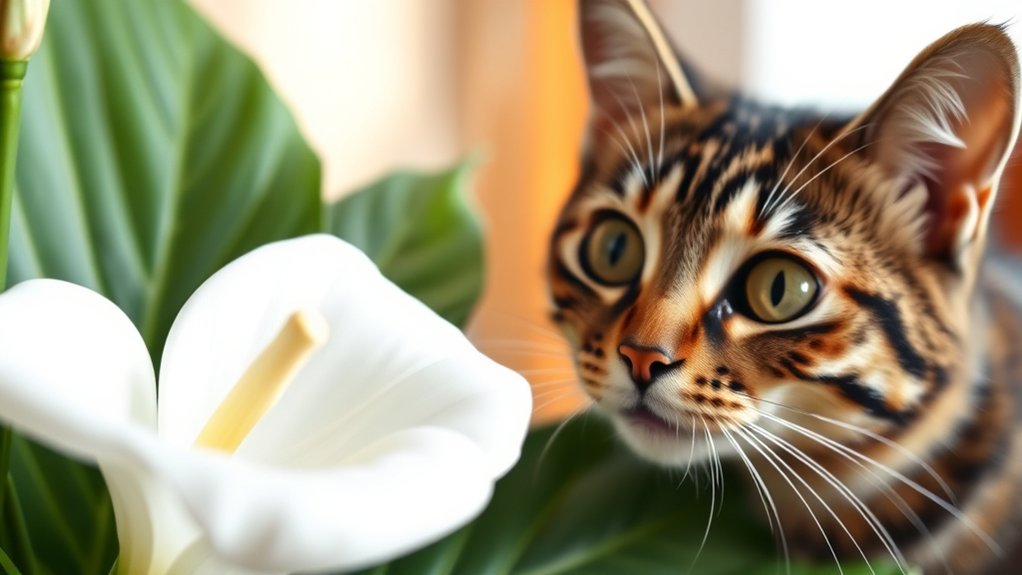
You should know that Peace Lilies and true lilies are quite different when it comes to the risks they pose to your cat.
Peace Lilies have calcium oxalate crystals, which usually just cause mild irritation if your cat nibbles on them.
On the other hand, true lilies are much more dangerous—they can lead to life-threatening kidney failure.
So, it’s really important to understand these differences in toxicity.
That way, you can respond the right way and keep your furry friend safe.
Toxicity Differences Explained
How dangerous are Peace Lilies compared to true lilies when it comes to your cat’s safety?
Peace Lilies contain insoluble calcium oxalate crystals that cause mild symptoms like oral irritation, drooling, and vomiting. While these reactions are unpleasant, they rarely escalate to severe health issues.
True lilies, on the other hand, pose a much greater threat. Ingestion can lead to acute kidney failure, which is life-threatening and demands immediate veterinary care.
Unlike true lilies, Peace Lilies don’t cause kidney damage, making them a less hazardous choice for cat owners.
Understanding these toxicity differences can help you make informed decisions and reduce unnecessary worry about your cat’s exposure to houseplants.
This way, you can keep your pet safe without panicking.
Risks Compared to Lilies
While both Peace Lilies and true lilies contain toxic compounds, Peace Lilies pose a considerably lower risk to your cat’s health.
True lilies, specifically Lilium species, are notorious for causing severe Lily Poisoning that can lead to acute failure of your cat’s kidneys, often with life-threatening consequences.
In contrast, Peace Lilies contain calcium oxalate crystals, which typically cause mild symptoms like drooling, oral discomfort, and vomiting.
These reactions are unpleasant but rarely escalate to serious complications. True lily ingestion demands immediate veterinary attention due to its rapid impact on kidney function.
Peace Lily symptoms usually resolve quickly with minimal intervention.
Understanding these differences helps you respond appropriately and reduces unnecessary panic while keeping your cat safe from true lily dangers.
Can Peace Lily Exposure Cause Long-Term Harm to Cats?
You might worry about lasting effects if your cat chews on a Peace Lily.
But the good news is, these plants don’t cause chronic harm. Usually, symptoms like drooling and vomiting clear up pretty quickly with the right care and a bit of monitoring.
Just keep an eye on your cat after they’ve been exposed, and that way you can make sure they recover fully without any long-term problems.
Potential Chronic Effects
Although Peace Lilies can cause immediate discomfort because of their insoluble calcium oxalate crystals, they don’t pose a risk of long-term harm to your cat if treated promptly.
Unlike true lilies, Peace Lilies don’t cause kidney damage or chronic conditions.
Here’s what you need to know about potential chronic effects:
- Symptoms like drooling and vomiting usually resolve quickly with treatment.
- There’s no evidence linking Peace Lily exposure to lasting health problems.
- Repeated exposure might increase sensitivity but doesn’t cause chronic illness.
- Preventing access to Peace Lilies is the best way to avoid health issues.
Recovery and Monitoring
Even if your cat shows symptoms like drooling or vomiting after chewing on a Peace Lily, these signs usually go away quickly with proper care.
Recovery tends to be pretty fast because the insoluble oxalate crystals mainly cause immediate oral irritation and don’t lead to kidney damage.
That said, it’s important to keep a close eye on your cat to make sure they don’t develop more serious symptoms like trouble swallowing or persistent drooling.
Most cats bounce back fully without any lasting effects when treated quickly.
If you notice any symptoms getting worse or lasting longer than expected, don’t hesitate to reach out to your vet for a check-up and further care.
With careful monitoring and timely attention, you can help your cat recover safely from Peace Lily exposure without any long-term harm.
How to Prevent Peace Lily Poisoning in Cats
Preventing Peace Lily poisoning in cats requires proactive steps to keep your feline safe while enjoying the beauty of these popular houseplants.
You can maintain peace in your home and protect your cat by following these essential measures:
- Place Peace Lilies on high shelves or in rooms your cat can’t access.
- Use deterrents like citrus scents or pet-safe sprays to keep your cat away from the plants.
- Watch your cat’s behavior near houseplants regularly to spot any chewing habits early.
- Educate everyone in your household about Peace Lily toxicity symptoms for quick response if ingestion occurs.
It’s all about being a little extra careful and keeping an eye out.
That way, your cat stays safe, and your home stays beautiful. Easy, right?
Cat-Safe Plant Alternatives to Peace Lilies
When you want to keep your home green without risking your cat’s health, choosing non-toxic plants is essential. Opt for cat-safe options like the Pink Christmas Cactus, which adds vibrant color without posing poisoning risks.
The Francesca Guzmania Bromeliad and Evita Vriesea Bromeliad are excellent pet safe tropical choices that require minimal care.
If you prefer greenery that also purifies the air, the Spider Plant (Chlorophytum comosum) is a popular, non-toxic option suitable for both cats and dogs. The Boston Fern (Nephrolepis exaltata) offers lush foliage and is completely safe for curious feline companions.
Handling and Placing Peace Lilies Safely Around Cats
Although Peace Lilies add elegance to your home, you need to handle and place them carefully to protect your cat from potential toxicity. Keeping your feline safe requires thoughtful placement and monitoring.
Here’s how you can manage Peace Lilies safely around cats:
- Position Peace Lilies on high shelves or in rooms your cat can’t access to prevent ingestion.
- Use pet-safe barriers or plant stands to create a physical boundary between your cat and the plants.
- Regularly observe your cat’s behavior near houseplants to catch any chewing early.
- Educate everyone in your household about Peace Lily toxicity symptoms to guarantee quick response if exposure occurs.
By doing these simple things, you can enjoy your beautiful plants without worrying about your furry friend.
It’s all about keeping a close eye and making smart choices around the house.
When to Contact a Vet or Poison Control for Peace Lily Incidents
If your cat starts drooling, vomiting, or has trouble swallowing after chewing on a Peace Lily, it’s important to get in touch with your vet or the Australian Animal Poisons Centre right away.
Symptoms usually show up within a few hours, so having emergency numbers like 1300-TOX-PET (1300 869 738) handy can really make a difference.
Even if the signs seem mild, don’t wait—getting prompt attention can help prevent more serious problems down the line.
Recognizing Severe Symptoms
Because Peace Lilies contain insoluble oxalates that cause a burning sensation, you’ll want to watch closely for severe symptoms like difficulty swallowing, swelling of the mouth or throat, and breathing problems.
Vomiting and excessive drooling are common, but if these escalate, act immediately.
Recognize these critical signs:
- Persistent vomiting combined with oral or throat swelling
- Difficulty or refusal to swallow food and water
- Labored, noisy, or rapid breathing
- Excessive pawing at the mouth or signs of intense oral pain
If your cat shows any of these symptoms after Peace Lily exposure, don’t hesitate to seek veterinary care.
Early intervention can prevent serious complications and ease your pet’s distress. Your prompt response is essential to your cat’s recovery.
Emergency Contact Information
When your cat shows signs of Peace Lily ingestion, acting quickly can make all the difference in their recovery.
Keep emergency contact information for your veterinarian and the Australian Animal Poisons Centre (1300-TOX-PET or 1300 869 738) easily accessible. If you notice symptoms like drooling, vomiting, or difficulty swallowing, call these numbers immediately for expert pet poison advice.
While severe reactions are rare, signs such as trouble breathing require urgent veterinary care.
Knowing when to contact a vet or poison control can prevent complications and guarantee your cat gets prompt treatment.
It’s really important to educate yourself on Peace Lily toxicity symptoms so you’re prepared to act swiftly. Time is critical when dealing with pet poison emergencies.
Frequently Asked Questions
How Do Peace Lilies Affect Other Common Household Pets?
Peace Lilies can affect other common household pets like dogs and small animals by causing oral irritation, drooling, and vomiting if ingested.
For pet safety, you need to recognize pet symptoms early and act quickly.
Toxic plants like Peace Lilies require careful plant care. Keep them out of reach and monitor your pets closely.
It’s really important to stay on top of this.
Understanding these risks helps you protect your furry friends and keep your home safe.
It’s all about making sure everyone stays happy and healthy.
Can Peace Lilies Cause Allergic Reactions in Cats?
No, Peace Lilies don’t cause allergic reactions in cats. Instead, the symptoms you’ll see—like drooling, vomiting, and oral discomfort—come from irritation caused by calcium oxalate crystals, not an allergy.
Allergic reactions happen when the immune system responds to proteins, and Peace Lilies don’t trigger that.
So, if your cat shows signs of distress after contact, it’s due to toxicity, not an allergy.
You should get veterinary help right away to keep your furry friend safe and comfortable.
It’s always better to be cautious when your pet’s health is involved.
Are There Any Benefits to Having Peace Lilies Around Cats?
Imagine your cat lounging peacefully in a room with a Peace Lily nearby. The benefits overview shows these plants improve air quality and humidity, helping your cat breathe easier and stay comfortable.
You should still take safety precautions, like placing the plant out of reach, since it’s mildly toxic if chewed.
How Quickly Do Symptoms Appear After a Cat Eats Peace Lilies?
Symptoms usually appear within minutes to a few hours after your cat eats peace lilies.
You’ll likely notice drooling, oral burning, and vomiting quickly. Symptom severity can vary, but severe reactions like airway swelling, though rare, need urgent care.
Don’t wait. Seek veterinary treatment options promptly to guarantee your cat’s safety.
Acting fast can help manage symptoms effectively and prevent complications. It really shows you care about your furry friend’s well-being.
Can Peace Lily Toxicity Be Diagnosed With a Home Test?
Oh, wouldn’t it be great if home test accuracy for peace lily toxicity existed? Unfortunately, it doesn’t. You can’t rely on a simple home test to diagnose your cat’s poisoning because toxicity symptoms overlap with many other issues.
Instead, watch for signs like drooling or vomiting and seek immediate veterinary care.
Vets rely on physical exams and history, not home kits, to guarantee your cat gets the right treatment fast.
Conclusion
If your curious cat munches on a peace lily, it’s like releasing a tiny green storm inside them. They might start drooling, pawing at their mouth, or worse. Don’t wait for a disaster. Act fast and keep these plants out of paw’s reach.
Remember, peace lilies aren’t as deadly as true lilies, but they’re still trouble. Stay vigilant and choose safer plants. And if anything seems off, call your vet. Your furry friend’s health is worth every second of your attention.