Why Is My Cat Sneezing – Causes And When To Worry
If your cat is sneezing occasionally, it’s usually harmless. It’s just their way of clearing irritants like dust or pollen.
But if your cat is sneezing frequently or persistently, especially with yellow or green discharge, loss of appetite, or lethargy, it could be a sign of infections or dental issues. These problems might need veterinary care.
Environmental irritants and allergies can also trigger sneezing. Understanding these causes and knowing when to worry helps you act quickly.
That way, you can keep your cat comfortable and healthy. There’s more to explore about proper diagnosis and treatment options.
Common Causes of Cat Sneezing
While occasional sneezing in cats can be harmless, understanding the common causes is crucial to address any underlying issues promptly.
Cat sneezes often stem from upper respiratory infections, with feline herpesvirus affecting up to 90% of cats and causing recurring symptoms. These infections inflame the nasal passages, making sneezing a frequent response.
Environmental irritants like dust, pollen, smoke, strong cleaning products, or perfumes can also provoke sneezing by irritating sensitive nasal tissues.
Moreover, inhaled foreign objects such as grass or lint may cause persistent sneezing due to nasal discomfort.
Dental disease, especially infected tooth roots, can extend inflammation to the nasal passages, triggering sneezing during or after eating.
Recognizing these common causes helps you respond effectively and guarantee your cat’s comfort and health.
When Is Cat Sneezing Normal or Concerning?
Even though occasional sneezing in cats is usually harmless and helps clear irritants from their noses, you should pay close attention when sneezing becomes frequent or is accompanied by other symptoms.
If your cat is sneezing persistently, it could point to a more serious cause of sneezing, such as an upper respiratory infection or dental issue.
Watch for nasal discharge, especially if it’s yellow or green, as this often signals bacterial infection requiring veterinary care.
Yellow or green nasal discharge in cats often indicates a bacterial infection needing veterinary attention.
Persistent sneezing combined with coughing, lethargy, or loss of appetite is concerning and needs prompt veterinary evaluation.
By monitoring the sneezing patterns and any additional signs, you’ll better understand when your cat’s sneezing is normal and when it’s time to seek professional help.
Just keep an eye on things, and don’t hesitate to reach out to your vet if you’re worried.
Symptoms That Signal Serious Sneezing Issues
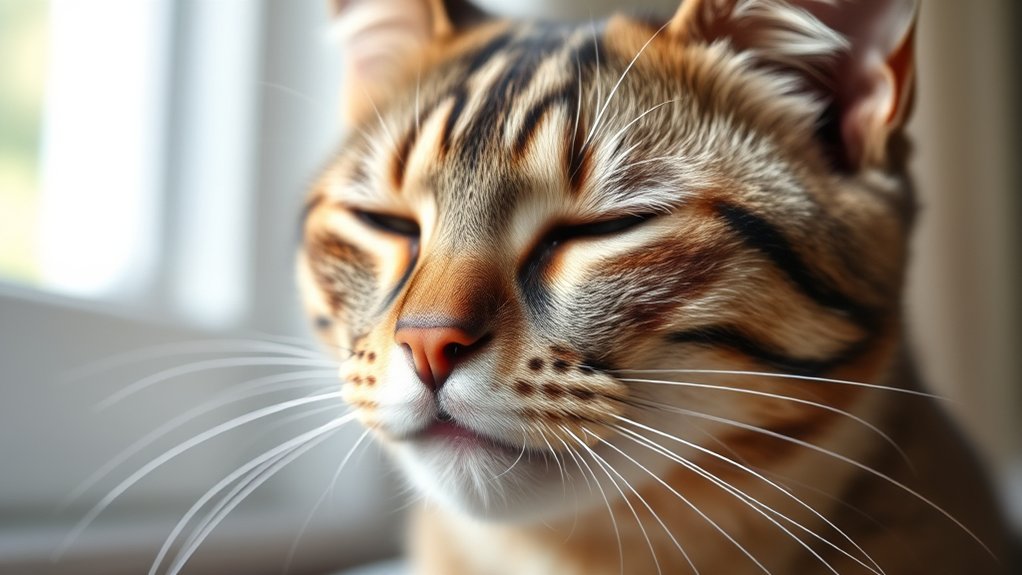
If your cat keeps sneezing for more than a few days or you notice unusual nasal discharge, that’s definitely something to pay attention to.
Also, if your furry friend starts eating less or seems off—like being really tired or losing weight—it could mean there’s a more serious health issue going on.
Catching these signs early is super important because it helps you get your cat the care they need right away.
Persistent Sneezing Patterns
When your cat sneezes persistently, especially with nasal discharge or coughing, it often points to underlying respiratory infections that need your attention.
Sneezing cats showing frequent respiratory symptoms over several days, worsening in intensity or accompanied by lethargy and loss of appetite, require prompt veterinary evaluation.
You should watch for signs like difficulty breathing or pawing at the face, which can indicate inflammation or foreign bodies in the nasal passages.
In kittens, elderly, or immunocompromised cats, these persistent sneezing patterns may signal serious conditions such as upper respiratory infections or dental disease.
Monitoring changes in sneezing frequency or severity helps identify underlying causes early.
This way, your cat receives timely treatment and relief from discomfort.
Nasal Discharge Concerns
How can you tell if your cat’s nasal discharge signals a serious problem? Pay close attention to its color and consistency.
Thick, yellow, or green nasal discharge often points to bacterial infections, while clear discharge might suggest allergies or environmental irritants.
If you notice blood in the nasal discharge, seek immediate veterinary evaluation, as this could indicate trauma or a severe condition.
Persistent nasal discharge combined with sneezing, coughing, or lethargy also warrants a thorough veterinary check to rule out respiratory infections.
Monitoring changes in your cat’s nasal discharge helps identify patterns related to allergies or other triggers.
Early recognition and timely veterinary care can make all the difference in managing your cat’s health effectively and preventing complications.
Appetite And Behavior Changes
Although sneezing alone might seem minor, changes in your cat’s appetite and behavior can signal a more serious underlying issue. A loss of appetite combined with persistent sneezing often points to infections like upper respiratory issues or dental disease. Both of these need veterinary attention.
Behavioral changes, such as increased lethargy, hiding, or unusual aggression, also raise red flags. Pay close attention if sneezing comes with nasal discharge, especially if it’s yellow, green, or bloody. This usually suggests a bacterial infection that requires prompt care.
Excessive grooming or pawing at the mouth can indicate dental problems contributing to sneezing. Monitoring these symptoms helps you catch serious conditions early.
That way, your cat gets the veterinary attention they need for a swift recovery.
How Do Upper Respiratory Infections Cause Sneezing?
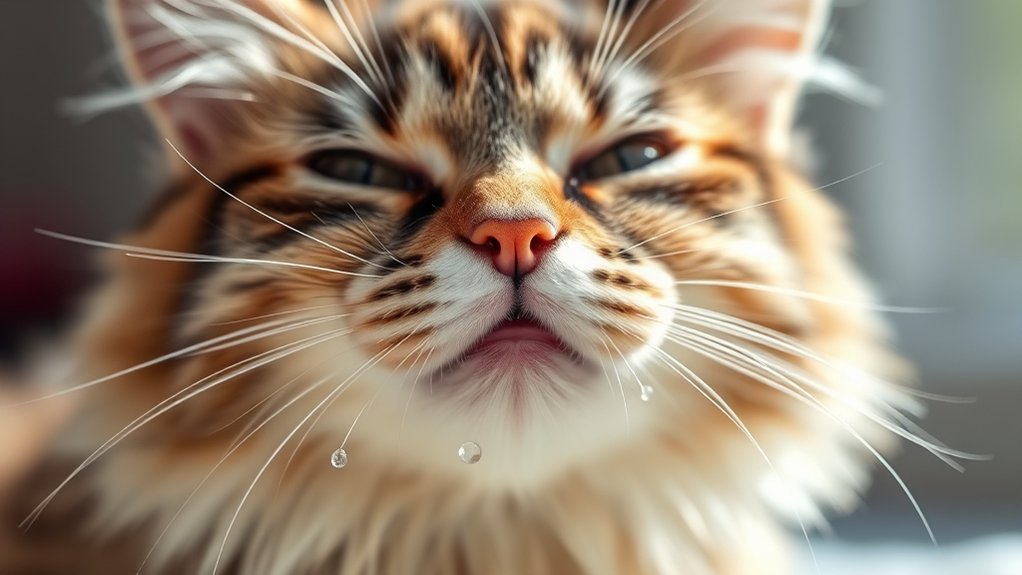
When your cat catches an upper respiratory infection, viruses like feline herpesvirus cause inflammation in their nasal passages.
This irritation triggers sneezing, which is a natural reflex to help clear out whatever is bothering their nose.
On top of that, sometimes secondary bacterial infections can make things worse by producing thick nasal discharge.
This extra mucus makes your cat sneeze even more as their body tries to get rid of it.
Knowing how the inflammation and infection work together can help you understand why your cat is sneezing and when it might be time to seek treatment.
Viral Infection Mechanisms
Since upper respiratory infections (URIs) in cats primarily stem from the feline herpesvirus, you’ll notice sneezing as a natural reflex triggered by inflammation in the nasal passages.
These viral infections cause swelling and increased mucus production in your cat’s nasal tissues, which irritates the sensitive lining. This irritation prompts repeated sneezing, a common symptom aimed at expelling the excess mucus and viral particles.
Because URIs are caused by viruses, they directly impact the mucosal surfaces, disrupting normal airflow and causing discomfort.
Understanding this mechanism helps you recognize why sneezing is more than just a minor annoyance. It signals your cat’s immune response to viral invaders in the upper respiratory tract.
Secondary Bacterial Impact
Viral infections in your cat’s upper respiratory tract often set the stage for secondary bacterial involvement, which can worsen sneezing and other symptoms.
When bacteria like Bordetella or mycoplasma invade after an initial upper respiratory infection, they can cause increased sneezing due to irritated nasal passages. You might also notice thick, often yellow or green nasal discharge, which usually means there’s a secondary bacterial infection.
These symptoms can stick around longer and might even develop into chronic rhinitis. Without timely treatment, there’s also a greater risk of complications like pneumonia.
These secondary bacterial infections thrive because the viral infection weakens your cat’s natural defenses, allowing bacteria to multiply.
Inflammation and Symptoms
Although upper respiratory infections often start quietly, they quickly cause inflammation in your cat’s nasal passages. This leads to frequent sneezing as their body tries to clear irritants. The feline herpesvirus is a common culprit behind these infections, triggering inflammation that results in symptoms like persistent sneezing and nasal discharge.
You might also notice coughing or difficulty breathing if the inflammation worsens. Kittens, elderly, or immunocompromised cats are especially vulnerable because their immune systems struggle to fight off the infection.
Sometimes, secondary bacterial infections follow, increasing nasal discharge and prolonging sneezing due to further inflammation.
Recognizing these signs early is key. With timely antiviral or antibiotic treatment, plus anti-inflammatory care, you can help reduce your cat’s discomfort and prevent complications from these upper respiratory infections.
Can Allergies Trigger Sneezing in Cats?
When your cat starts sneezing frequently, allergies might be the cause you need to contemplate. Allergies in cats can mimic human hay fever, causing sneezing, itchy eyes, and nasal discharge. Typically, the nasal discharge is clear rather than thick or colored.
Common allergens include pollen from outdoor plants, dust mites found in bedding or carpets, mold spores in damp areas, and indoor irritants like smoke or strong scents.
Allergic sneezing can happen seasonally or year-round, depending on the allergen. It’s important to watch if the nasal discharge stays clear because that often points to allergies rather than an infection.
If you notice this, it’s a good idea to consult a veterinarian. They can accurately diagnose the cause and help create a treatment plan, which might include antihistamines or changes in the environment to reduce your cat’s exposure.
Can Dental Problems Cause Cat Sneezing?
If your cat is sneezing a lot, it might actually be because of dental problems, like infected tooth roots. These can irritate their nasal passages and cause all that sneezing.
You might also notice other signs, like bad breath or your cat pawing at their mouth. Those are pretty clear hints that something’s up with their teeth.
Getting these issues checked out and treated, along with regular vet visits, can really help ease the sneezing and stop things from getting worse.
Dental Disease And Sneezing
Because dental disease can cause inflammation near the nasal passages, it can trigger sneezing in your cat. Bacteria from infected teeth may spread to the nasal cavity, leading to sneezing and nasal discharge.
If your cat shows signs like bad breath or pawing at the mouth along with sneezing, dental disease might be the cause. Untreated dental issues can worsen, potentially causing respiratory problems.
Here’s what you should do:
- Monitor your cat for sneezing and nasal discharge.
- Check for signs of dental disease, like bad breath or mouth discomfort.
- Schedule regular dental check-ups.
- Seek veterinary evaluation promptly if sneezing occurs with dental symptoms.
Early diagnosis helps prevent complications and guarantees your cat gets the right treatment.
Tooth Root Infections
Dental disease doesn’t just affect your cat’s mouth; it can also lead to tooth root infections that irritate the nasal passages and cause sneezing. When infected roots penetrate nearby nasal tissues, they trigger inflammation and discomfort. This often results in nasal discharge and persistent sneezing.
Bacteria from dental disease may also cause secondary upper respiratory infections, making these symptoms worse. You might notice your cat pawing at its face, having foul breath, or being reluctant to eat. These are all signs that mean it’s time to see the vet.
Ignoring tooth root infections can lead to chronic rhinitis and more serious respiratory problems. By recognizing these symptoms early and getting veterinary care, you can help your cat avoid prolonged discomfort.
Plus, you’ll protect its overall health.
Treatment For Dental Issues
When your cat shows signs of sneezing linked to oral discomfort, addressing the underlying dental issues promptly is essential. Dental infections can irritate the nasal passages, causing sneezing and sometimes respiratory issues.
Here’s what you should do:
First, schedule veterinary care immediately to diagnose the dental problem. Follow the prescribed treatments, which may include antibiotics or tooth extraction. It’s important to stick to the vet’s advice for the best results.
Also, maintain regular dental check-ups to prevent recurring infections. Keep an eye on your cat for signs like bad breath or reluctance to eat, which often come along with sneezing.
Ignoring dental issues risks spreading infection and worsening respiratory symptoms. By staying vigilant and proactive with veterinary care, you can help relieve your cat’s sneezing and protect their overall health.
When Should You Take Your Cat to the Vet for Sneezing?
How do you know if your cat’s sneezing needs a vet’s attention? If sneezing lasts more than a few days, it could mean there’s an underlying health issue that needs professional care.
Keep an eye out for other symptoms like thick nasal discharge, coughing, or wheezing. These signs mean it’s time for a vet visit.
If your cat is also losing appetite, dropping weight, or acting lethargic along with sneezing, don’t wait to contact your vet.
Kittens, senior cats, and those with existing health problems are more vulnerable and should be seen sooner rather than later.
It helps to keep a detailed record of sneezing episodes and any other symptoms you notice. This makes it easier for your vet to figure out the cause and suggest the best treatment.
Timely vet visits will keep your cat healthy and comfortable.
How Do Veterinarians Diagnose Cat Sneezing Causes?
Why do veterinarians take such a thorough approach to diagnosing sneezing in cats? Sneezing can stem from various causes, so pinpointing the exact reason guarantees proper care.
They begin with a detailed physical examination, checking the nasal passage and teeth for visible issues.
Then, they may use diagnostic imaging to identify structural problems or foreign bodies. To explore deeper, rhinoscopy allows direct visualization of the nasal passage, helping detect infections or tumors.
Finally, a nasal flush collects samples for lab analysis to confirm infections or other conditions.
Here’s how vets diagnose sneezing causes:
- Conduct a physical examination
- Use diagnostic imaging (X-rays, CT scans)
- Perform rhinoscopy for internal inspection
- Collect samples via nasal flush for lab testing
This thorough process helps guarantee your cat gets the right diagnosis.
What Treatments Help Cats That Keep Sneezing?
Although persistent sneezing in your cat can be frustrating, several effective treatments can help ease their discomfort and tackle the root causes. Your vet might prescribe antibiotics if a bacterial infection is involved, which can quickly reduce sneezing and nasal discharge.
Antihistamines are another option; they help manage inflammation from allergies or irritants, though they don’t fix the underlying problem. Sometimes, a nasal lavage done under anesthesia can clear out debris from the nasal passages and temporarily reduce sneezing.
Using humidifiers or nebulizers at home adds moisture to the air, which can ease nasal congestion and irritation.
If your cat has severe or chronic issues like tumors or dental disease affecting the nasal area, surgery might be needed. With the right treatment, you can help your cat breathe easier and cut down on sneezing episodes effectively.
How to Prevent Sneezing and Keep Your Cat Healthy
Reducing your cat’s sneezing starts with creating a clean, safe environment that limits exposure to common irritants and allergens.
To prevent sneezing in cats and keep them healthy, you should:
- Regularly clean your home to minimize dust and allergens.
- Monitor the environment for irritants like strong perfumes or cleaning products and remove them.
- Confirm your cat’s vaccinations are up-to-date to protect against respiratory infections.
- Schedule annual veterinary check-ups to detect and address health issues early.
Using air purifiers can also help reduce airborne allergens.
By actively managing these factors, you can considerably lower your cat’s risk of sneezing and respiratory discomfort.
Staying attentive to your cat’s environment and health supports their overall well-being and comfort.
It’s all about keeping their space safe and making sure they get the care they need.
Frequently Asked Questions
Can Certain Cat Breeds Be More Prone to Sneezing?
Yes, certain cat breeds are more prone to sneezing due to breed susceptibility tied to genetic factors.
For example, brachycephalic breeds like Persians have shorter nasal passages, which can increase respiratory issues and sneezing triggers.
Environmental influences, like allergens, can make symptoms worse, especially in sensitive breeds such as Russian Blues.
You should keep an eye on your cat and watch for any changes in their sneezing patterns.
It’s a good idea to schedule regular vet check-ups to manage these risks and keep your pet comfortable.
That way, you can catch any problems early and help your cat stay healthy.
Does Indoor vs. Outdoor Living Affect a Cat’s Sneezing Frequency?
Yes, your cat’s sneezing frequency definitely varies with indoor vs. outdoor living.
Indoor cats often react to indoor allergens like dust or mold, while outdoor cats face more outdoor pathogens from environmental factors.
Seasonal changes also hit outdoor cats harder, increasing sneezing during pollen-heavy times.
Your cat’s lifestyle differences directly impact these triggers.
Can Stress or Anxiety Cause My Cat to Sneeze?
Yes, stress triggers can cause your cat to sneeze by heightening sensitivity to environmental factors like allergens. This can lead to allergy symptoms or even mimic mild respiratory infections.
You might notice behavioral changes alongside sneezing, such as restlessness or hiding.
While stress-induced sneezing isn’t usually serious, it’s important to keep an eye on your cat. If the sneezing sticks around or other symptoms pop up, it’s a good idea to check in with your vet.
They can help rule out infections and tackle both stress and health concerns effectively.
Are There Home Remedies to Soothe a Sneezing Cat?
Oh, sure, your cat’s sneezing is the perfect excuse to turn your home into a mini spa! You can try steam therapy with a humidifier. Humans and cats both enjoy the benefits.
Saline solution drops help clear nasal passages, while herbal remedies might soothe mild irritation.
Don’t forget allergy management by reducing dust and strong scents around your cat.
These simple steps can comfort your furry friend without a vet visit, unless symptoms worsen.
How Long Does a Typical Sneezing Episode Last in Cats?
A typical sneezing duration in cats usually lasts just a few seconds to a minute. Common triggers include dust, allergens, or mild irritants from the environment.
Age factors can make kittens and older cats more sensitive, leading to more frequent sneezing.
If you notice longer sneezing episodes or other symptoms, it could signal health implications needing vet attention.
Keep an eye on environmental influences to help reduce sneezing bouts. It’s always better to be cautious when it comes to your furry friend’s health.
Conclusion
If your cat’s sneezing seems occasional and mild, it’s likely nothing to worry about. However, persistent or severe sneezing could signal infections or allergies needing attention. While some believe dust or strong scents alone cause sneezing, it’s usually a combination of factors, including immune response.
Paying close attention to symptoms and seeking timely vet care guarantees your furry friend stays comfortable and healthy. You’re not overreacting—your cat’s wellbeing matters.