

How Many Teeth Do Cats Have – Complete Dental Guide
Adult cats have 30 permanent teeth, including incisors, canines, premolars, and molars. These replace 26 baby teeth by about eight months.
Kittens start teething around two to three weeks old, and their baby teeth fully appear by six to eight weeks. You can gently lift your cat’s lips to count and check their teeth regularly for dental issues.
Proper dental care and diet are key to keeping their teeth and gums healthy. Understanding cat teeth helps you take better care of their oral health.
How Many Teeth Do Adult Cats Have?

Adult cats have a total of 30 permanent teeth, each serving a specific purpose. In your cat’s mouth, you’ll find 12 incisors at the front, perfect for gripping and grooming.
Next to these are 4 sharp canines, vital for grasping prey. Behind these lie 10 premolars and 4 molars, which handle slicing and crushing food.
Understanding this teeth count helps you monitor your cat’s dental health effectively. Adult teeth replace the 26 baby teeth between 4 to 7 months of age, completing your cat’s permanent dental set.
Knowing your cat’s adult teeth count aids in tracking dental health and development.
Maintaining these permanent teeth is essential for your cat’s overall well-being. Healthy teeth support proper eating habits and prevent oral diseases common in cats.
How Many Teeth Do Kittens Have and When Do They Appear?
Kittens start developing their baby teeth at around 2 to 3 weeks old, beginning with the incisors. By three weeks of age, the first incisors typically emerge, marking the start of their dental development.
You’ll notice that by six to eight weeks, kittens usually have a full set of 26 baby teeth, including incisors, canines, and premolars. These teeth are essential for their early eating and grooming habits.
As your kitten grows, you’ll see their baby teeth begin to fall out between three and six months old, making room for the adult teeth to come in.
Adult cats eventually have 30 permanent teeth that replace the baby teeth by eight months of age, completing the change to a full adult set.
How to Safely Check and Count Your Cat’s Teeth
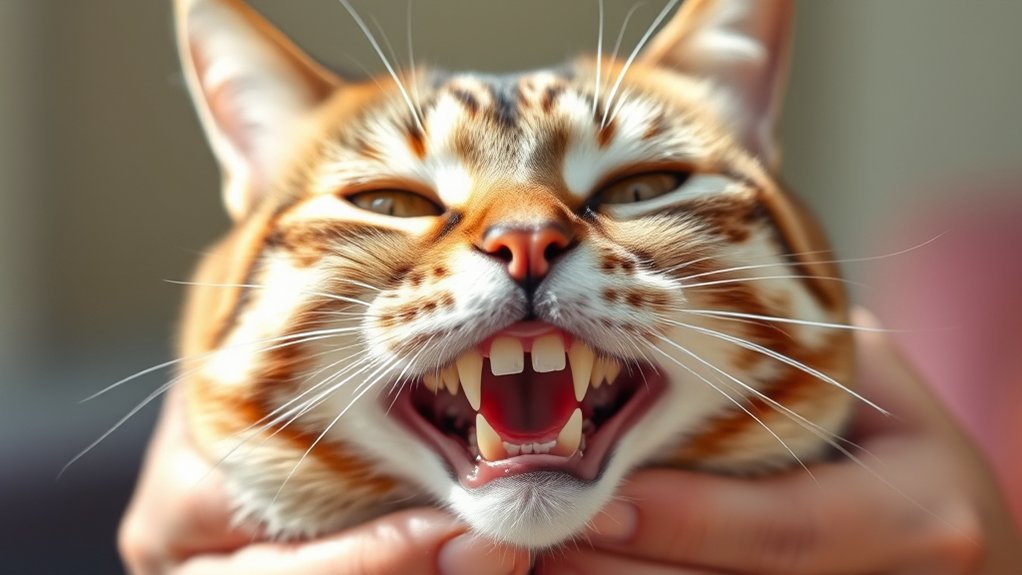
To safely check your cat’s teeth, gently hold their head and lift their lip to expose the teeth without causing any stress.
Start by counting the 12 little incisors first. Then, you can move on to the canines, premolars, and molars.
Take your time and stay calm throughout the process.
This way, you’ll be able to spot any dental issues early on and keep your kitty’s smile healthy.
Preparing Your Cat
Checking your cat’s teeth safely involves a few careful steps to keep both you and your pet comfortable.
Begin by gently holding your cat’s head and softly lifting their lips to expose the teeth without causing distress. It helps to be in a well-lit area for clear visibility.
Before inspecting, wipe their teeth with a soft cloth to remove food debris, making dental care easier.
Remember, kitten teeth differ from adult cats, so tailor your approach accordingly.
Watch your cat’s behavior closely; if they seem uncomfortable, pause and try again later.
Regular checks help you spot early signs of dental issues like missing teeth or gum disease.
With patience and care, you can make these checks a smooth part of your cat’s routine dental care.
Counting Teeth Tips
When you examine your cat’s mouth, gently lifting their lips while they stay calm will make counting their teeth easier and less stressful for both of you.
Start by counting the 12 incisors, six on the top and six on the bottom, at the front. Then check the four canines next to the incisors before moving on to the premolars and molars.
Adult cats have 30 teeth in total. So if you notice any missing teeth during your inspection, it could mean past dental issues or extractions.
Regularly inspecting and counting your cat’s teeth helps you keep an eye on their dental health. This way, you can spot problems early and get veterinary care if needed.
Taking this careful approach makes sure your cat stays comfortable and safe throughout the process.
What Are the Different Types of Cat Teeth and Their Functions?
You’ll notice cats have four types of teeth, and each one has its own special job. For example, incisors are great for grooming and gripping their prey.
Then there are the canines, which are sharp and perfect for holding onto what they catch.
Premolars and molars come into play when it’s time to eat. They work together to bite, grind, and crush food efficiently.
Incisors And Their Role
Cats have 12 incisors, six on the upper jaw and six on the lower. These teeth play an essential role in gripping and cutting their food. They’re small and sharp, perfect for their needs.
These are actually the first teeth to come in when kittens are young, usually showing up as baby teeth around 2 to 4 weeks old. Incisors aren’t just for eating though—they’re super important for grooming too. Cats use them to remove loose fur and debris from their coats.
Keeping those incisors healthy is key to overall dental health. When incisors are in good shape, it helps make sure the other teeth are aligned and working properly.
Plus, their precision means cats can catch and eat prey effectively.
Canines For Gripping
Four sharp canines, two on the upper jaw and two on the lower, serve as your cat’s primary tools for gripping and holding onto prey. These teeth are the longest in your cat’s mouth. They’re designed specifically for puncturing and tearing flesh, which is vital for a carnivore’s survival.
Beyond hunting, canines also help with grooming. They allow cats to grasp and pull fur during self-cleaning. Keeping these teeth properly aligned and healthy is important for effective dental function and hunting efficiency.
| Tooth Type | Location | Function |
|---|---|---|
| Canines | Upper & Lower Jaw | Gripping, puncturing prey |
| Incisors | Front of Jaw | Nipping, grooming |
| Premolars | Behind Canines | (Discussed later) |
| Molars | Back of Jaw | (Discussed later) |
| Total Teeth | 30 | Complete dental count |
Premolars And Molars
Ten premolars and four molars make up the back teeth that play essential roles in your cat’s ability to process food.
In your cat’s mouth, premolars are positioned toward the front of the back teeth and are sharp, designed specifically for slicing and grinding flesh. Molars, located further back, are broader and flatter, enabling efficient crushing and grinding.
These premolars and molars are part of the 30 permanent teeth your cat develops during dental development. They reflect your cat’s carnivorous diet.
Each tooth type in your cat’s mouth serves a distinct function, with premolars aiding in tearing meat and molars ensuring thorough grinding.
Understanding these teeth helps you appreciate how well-adapted your cat’s dental structure is for hunting and consuming prey.
It’s pretty amazing how every tooth has a job that supports their survival.
When Do Kittens Lose Their Baby Teeth and Get Adult Teeth?
Although kittens are born without teeth, they begin developing their baby teeth around two to three weeks of age. By six to eight weeks, they usually have a full set of 26 deciduous teeth.
Kittens start growing baby teeth at 2-3 weeks and have a full set by 6-8 weeks.
You might wonder when kittens lose their baby teeth and get their adult teeth. This teething process typically starts between three to six months, as adult teeth gradually replace the baby teeth.
Here’s what to expect:
- Baby incisors erupt first, followed by canines and premolars.
- Adult teeth develop beneath baby teeth during the teething process.
- By six to seven months, all 30 permanent teeth usually emerge.
- Keep an eye out for any retained baby teeth to prevent dental issues like crowding.
Understanding this process will help you manage your kitten’s dental health more effectively.
It’s all part of making sure your little furball stays happy and healthy!
Why Do Some Kittens Have “Double Teeth”?

You might notice your kitten has “double teeth” when their baby canines don’t fall out as their adult teeth come in.
Basically, the old baby tooth sticks around instead of making way for the new adult tooth. This can cause some crowding in their mouth, which might affect how the adult teeth line up later on.
Retained Baby Canines
Kittens sometimes develop what looks like “double teeth” when their baby canines don’t fall out as expected. This happens because retained baby canines remain alongside the emerging adult teeth, disrupting normal dental development.
Here’s what you should know:
Retained baby canines occur when adult canines are slow to emerge, causing both sets to coexist. Double teeth can lead to overcrowding, increasing the risk of dental plaque buildup.
Over time, this condition may complicate oral hygiene and cause discomfort. If baby teeth don’t fall out naturally, veterinary intervention is often necessary to prevent further issues.
Monitoring your kitten’s teeth is essential. If you spot double teeth, consult your vet promptly to guarantee proper dental health.
Dental Crowding Effects
When baby teeth don’t fall out as adult teeth emerge, it creates dental crowding, often seen as “double teeth.” This happens most frequently with the baby canines, which can linger longer than other teeth, causing two teeth to share the same space.
Dental crowding can lead to tight spacing, increasing the risk of plaque buildup and gum irritation. While some mild gum redness is normal during teething, persistent inflammation or discomfort should prompt a veterinary evaluation.
Genetics and breed traits, especially in short-muzzled cats, can make dental crowding more common due to limited space for adult teeth.
Monitoring your kitten’s dental development guarantees early intervention if needed, helping maintain healthy teeth and prevent complications linked to dental crowding.
Common Dental Problems in Kittens and Adult Cats
Although dental problems can affect cats of all ages, kittens and adults face distinct challenges that require attention. You should watch for common dental problems that vary by age group.
- Retained baby teeth in kittens can cause crowding and misalignment of adult teeth. This can lead to further dental issues down the line.
- Excessive drooling in kittens often signals teething discomfort or oral pain.
- Periodontal disease affects up to 80% of cats over three years old. It causes inflammation and can lead to tooth loss.
- Resorptive lesions, which are painful enamel erosions, frequently appear in adult cats. These require prompt veterinary care.
Regular check-ups help detect these issues early since cats often hide dental pain well.
Easy Dental Care Tips for Kittens and Adult Cats
Keeping your cat’s teeth healthy starts with consistent care at home. For kittens, begin dental care early by gently touching their lips and introducing brushing with pet-safe toothpaste. Keep brushing sessions short to avoid overwhelming them.
For adult cats, maintain regular brushing to effectively reduce plaque buildup. Always provide fresh water to help clear food debris and support oral hygiene.
Regular brushing and fresh water are key to reducing plaque and maintaining your adult cat’s oral health.
While dry kibble can assist in minimizing plaque, it doesn’t replace brushing.
Regular veterinary check-ups are essential for both kittens and adult cats. They allow early detection and treatment of dental issues before they become serious.
How Diet Affects Your Cat’s Dental Health
Since diet directly influences your cat’s oral environment, choosing the right foods plays an essential role in maintaining dental health. A proper diet supports strong teeth and reduces plaque buildup, which promotes overall oral health.
Here’s how diet affects your cat’s dental well-being:
- High-protein, low-carb diets mimic natural eating habits. This helps reduce plaque and keeps gums healthy.
- Dry kibble aids in mechanically cleaning teeth but can’t replace regular brushing.
- Sugary or carb-rich foods increase the risk of dental problems like periodontal disease.
- Dental chews specifically designed for cats help manage plaque and tartar buildup effectively.
Also, making sure your cat stays hydrated helps wash away food particles. This further protects teeth and gums.
When Should You See a Vet for Your Cat’s Teeth?
How do you know when it’s time to take your cat to the vet for dental care? If your cat shows signs of dental pain, like excessive drooling, pawing at the mouth, or reluctance to eat, it’s vital to schedule a vet visit.
Bad breath that doesn’t improve with regular dental care also signals a problem.
Furthermore, watch for missing teeth or retained baby teeth beyond six months, as these require veterinary assessment.
Cats over three years old should have regular check-ups since periodontal disease affects 80% of them.
Look for gum redness, swelling, or bleeding, which are clear signs you need a vet’s help.
Knowing how many teeth cats have and monitoring their condition helps you catch issues early and maintain your cat’s oral health.
Frequently Asked Questions
Can Cats Get Cavities Like Humans?
Yes, cats can get cavities like humans, though it’s less common. You should watch for tooth decay symptoms and signs of discomfort, such as bad breath or difficulty eating.
To keep your feline’s teeth healthy, focus on cavity prevention tips like regular brushing and using oral care products designed for cats.
Maintaining good feline dental hygiene through routine check-ups and proper care helps prevent plaque buildup and keeps cavities at bay.
How Long Does a Dental Cleaning Take for Cats?
Think of a dental cleaning duration like a well-timed concert, usually lasting 30 minutes to an hour.
You’ll see how essential feline tooth care is as your vet removes plaque and tartar, making sure dental hygiene stays front and center.
Watch for signs of dental issues beforehand and follow post-cleaning care advice closely.
This timely routine keeps your cat’s smile healthy and pain-free. It also helps prevent future complications.
Are Dental Treats Effective for Preventing Tooth Decay?
Yes, dental treats can be effective in preventing tooth decay by supporting your cat’s oral hygiene. When your cat chews these treats, it helps mechanically reduce plaque and tartar buildup. This offers chewing benefits that contribute to cat dental health.
Using veterinary-approved dental treats as part of a preventive care routine can enhance oral hygiene, but it doesn’t replace regular tooth brushing or professional check-ups.
Can Dental Issues Affect My Cat’s Overall Health?
You might think gum disease just causes bad breath, but it can seriously harm your cat’s overall health!
Poor oral hygiene can lead to infections that spread beyond the mouth, affecting essential organs. If untreated, tooth extraction might be necessary.
Regular dental exams catch problems early, preventing pain and extensive damage.
Is Anesthesia Safe for Cats During Dental Procedures?
Yes, anesthesia is generally safe for cats during dental procedures when a qualified vet handles it.
They perform a thorough pre-anesthesia evaluation and risk assessment to tailor anesthesia types to your cat’s needs.
During the procedure, they provide careful recovery monitoring, making sure your cat’s vital signs stay stable.
Post-anesthesia care helps your cat recover comfortably and quickly. This minimizes complications and promotes overall health after dental treatment.
Conclusion
So, your cat has about 30 teeth, more than you probably expected, right? While they might not be asking for floss or mouthwash, their dental health is just as important as yours. Ignoring those tiny teeth won’t make any problems disappear.
In fact, it might invite trouble. So, keep an eye on their chompers. Brush when you can, and don’t hesitate to see the vet, because even the fiercest feline needs a little dental TLC.