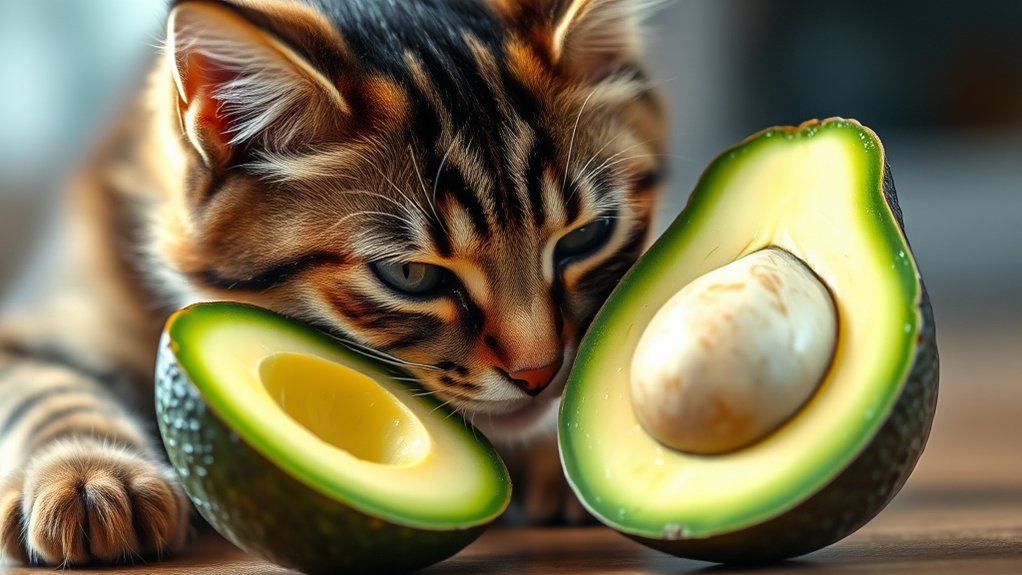
Can A Cat Eat Avocado – Toxicity, Risks, And Facts
You can give your cat small amounts of avocado flesh, but avoid the skin, pit, and leaves. These parts contain persin, a toxin that’s harmful to cats.
Overfeeding avocado or feeding your cat guacamole and avocado oil can increase risks like digestive upset and pancreatitis. It’s best to stick to about one tablespoon, and only infrequently.
Keep an eye out for vomiting or diarrhea. If your cat shows any symptoms, contact your vet right away.
Knowing these risks helps you keep your pet safe and healthy. There’s more to learn ahead, so let’s dive in!
Can Cats Eat Avocado?
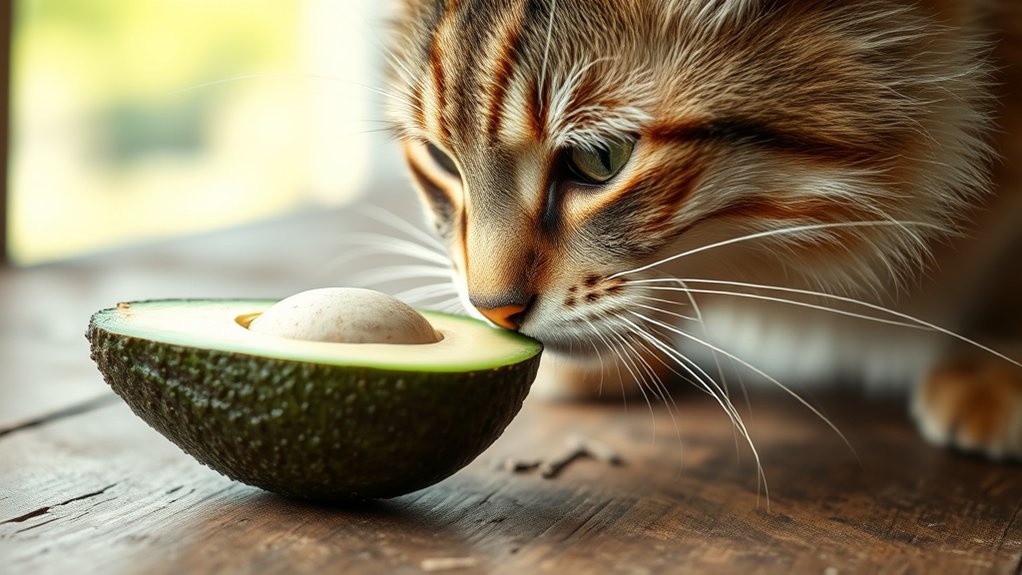
Wondering if your cat can safely enjoy avocado? Cats can eat avocados, but only in small amounts and with caution. The avocado flesh itself is generally safe, but it’s high in calories and fat, so overfeeding can lead to gastrointestinal upset or weight issues.
However, you must avoid the skin, pit, and leaves entirely, as they contain persin, a toxin harmful to cats. Even small exposure to persin can cause vomiting, diarrhea, and lethargy.
Guacamole and avocado oil are also unsafe due to additional harmful ingredients and fat content.
Before introducing avocado or any new food, it’s best to consult your veterinarian to make sure it’s okay for your cat’s diet and health. Moderation and professional advice are really key to keeping your feline friend safe.
What Makes Avocado Toxic to Cats?
Three main factors make avocados toxic to cats: persin, the pit, and the skin.
Persin is a natural toxin found in the avocado’s skin, leaves, and pit, posing significant health risks to cats. While the avocado flesh contains lower persin levels, the toxin concentration in other parts is high enough to cause symptoms such as vomiting, diarrhea, lethargy, and abdominal pain if ingested.
Persin in avocado skin, leaves, and pit can cause serious symptoms in cats if ingested.
The avocado pit also presents a serious choking hazard and can cause intestinal obstruction, further endangering your cat’s health.
Because of these dangers, veterinary professionals strongly advise against feeding any part of an avocado to cats. Understanding these toxic components helps you protect your cat and avoid potential health complications linked to avocado consumption.
Can Cats Safely Eat Avocado Flesh?
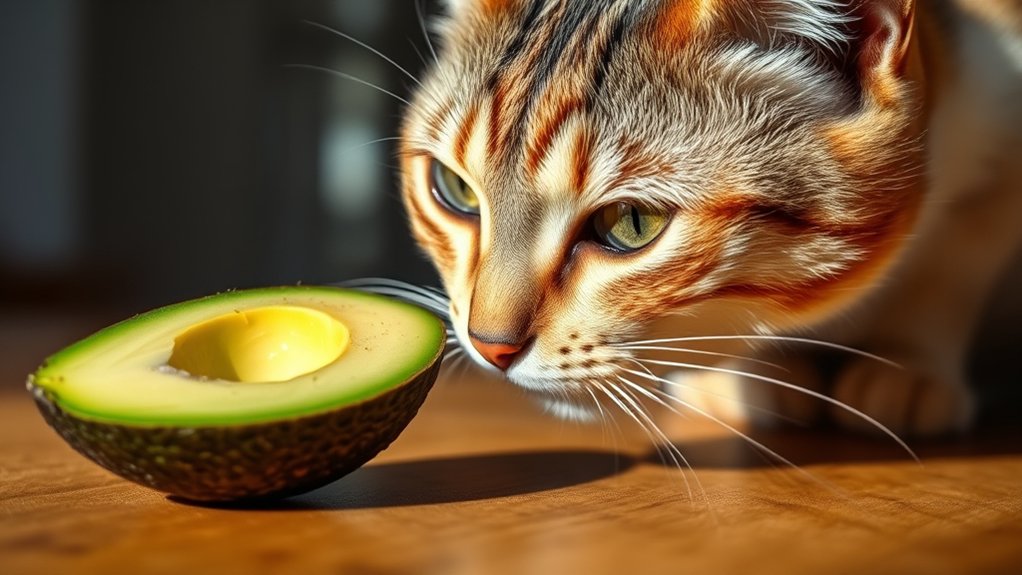
While the skin and pit of avocados contain harmful levels of persin and pose choking risks, the flesh itself has much lower persin content, making it generally safe for cats in very small quantities. You can offer your cat a tiny bite, about one tablespoon (15 grams), infrequently to avoid unnecessary weight gain.
Although avocado flesh isn’t likely to cause severe toxicity, it doesn’t provide significant nutritional benefits for your cat either. Always monitor your cat closely after feeding avocado flesh, as individual sensitivities to persin can vary.
Keeping portions small guarantees safety while minimizing any potential digestive upset. Remember, only the flesh is safe; avoid any other parts of the avocado.
Feeding small amounts occasionally keeps your cat safe and healthy.
Which Parts of Avocado Should Cats Avoid?
Because certain parts of the avocado contain high levels of persin, you should keep your cat away from the skin, pit, and leaves. These parts pose serious health risks, including toxicity and gastrointestinal upset.
Specifically, you need to be cautious about the avocado skin, which has a higher persin concentration than the flesh. The avocado pit is a choking hazard and can also cause intestinal obstruction. Leaves contain persin that’s toxic to cats.
Also, watch out for any scraps or remnants that could be accidentally ingested. It’s important to keep all avocado parts out of your cat’s reach to prevent exposure.
Avoiding these parts helps protect your cat from vomiting, diarrhea, and lethargy caused by persin toxicity.
Always dispose of avocado waste properly and monitor your cat closely to guarantee their safety.
Why Are Guacamole and Avocado Oil Risky for Cats?
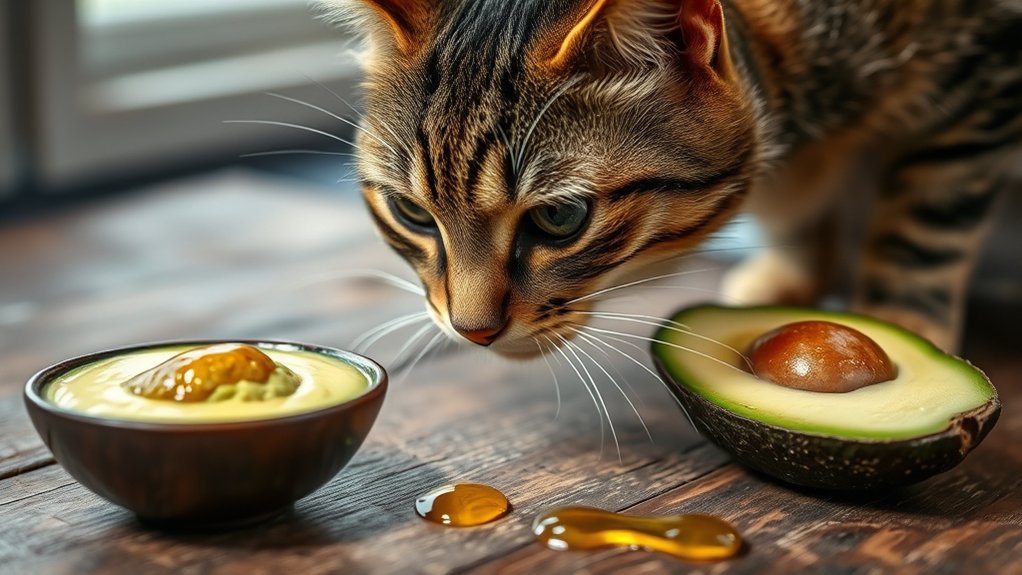
Even though avocado flesh can be safe in small amounts, guacamole and avocado oil pose significant risks to your cat. Guacamole contains harmful ingredients like onions and garlic that cause gastrointestinal upset and toxicity.
Its high-fat content can also trigger pancreatitis, leading to serious health problems such as severe stomach pain and digestive distress.
Avocado oil, despite being a concentrated form, carries similar dangers. Even small quantities can induce gastrointestinal issues or pancreatitis in sensitive cats.
All components commonly found in guacamole contribute to these risks, making it a hazardous choice for your feline friend.
To protect your cat’s well-being, you should completely avoid feeding them guacamole or avocado oil. These foods can result in serious health complications.
How Much Avocado Is Safe for Cats to Eat?
You can safely give your cat up to one tablespoon of avocado flesh every now and then.
Just be sure to avoid the skin and pit completely. It’s a good idea to introduce it slowly and keep an eye out for any signs of tummy trouble, like vomiting or diarrhea.
And of course, always watch how your cat reacts and check with your vet before making avocado a regular treat.
Recommended Serving Size
While small amounts of avocado can be safe for cats, you should limit their intake to no more than one tablespoon (15 grams) of avocado flesh per serving. This cautious approach helps avoid complications from avocado’s high fat content.
Remember, cats and dogs metabolize fats differently, so moderation is key. Always monitor your cat closely after feeding to catch any adverse reactions early.
Also, you must keep all other parts of the avocado, like the skin, pit, and leaves, completely out of reach to prevent toxicity and choking hazards.
Before adding avocado to your cat’s diet, it’s a good idea to consult your veterinarian for tailored advice.
- Offer only a small amount of avocado flesh per serving
- Avoid avocado skin, pit, and leaves entirely
- Monitor your cat for any signs of discomfort
- Be mindful of the fruit’s high fat content
- Consult your veterinarian before feeding avocado
Frequency Of Feeding
Limiting the amount of avocado your cat consumes per serving is just one part of feeding it safely. The frequency of feeding avocado should be minimal, given its high fat and calorie content. You should offer avocado only as an occasional treat, making sure it complements, not replaces, regular cat food. That’s because regular cat food remains your cat’s primary nutrition source.
Always give small amounts, no more than one tablespoon per serving, to minimize health risks. Remember, the skin and pit of the avocado are toxic and must be kept out of reach at all times.
Even with small servings, it’s important to watch for any reactions after feeding. By controlling both the quantity and frequency of feeding, you help maintain your cat’s health while safely including avocado as a rare indulgence.
It’s all about balance and keeping your furry friend safe and happy.
Monitoring For Reactions
Although avocado flesh contains low levels of persin, feeding your cat more than one tablespoon at a time can cause gastrointestinal upset such as vomiting or diarrhea.
To keep your cat safe, closely monitor their reactions after they eat avocado. Here’s what you should do:
Limit avocado servings to one tablespoon (15 grams) per feeding.
Watch for gastrointestinal symptoms like vomiting or diarrhea for several days.
Prevent access to avocado skin, pit, and leaves due to higher persin levels and choking risk.
If your cat shows any signs of distress, contact your veterinarian immediately.
It’s also a good idea to keep a log of feeding times and reactions to help track your cat’s tolerance. That way, you’ll know exactly how your cat is handling the avocado over time.
What Are the Signs of Avocado Poisoning in Cats?
You should watch for common symptoms like vomiting, diarrhea, and lethargy.
These signs usually point to some gastrointestinal distress after your cat has eaten avocado.
Also, keep an eye out for loss of appetite and abdominal pain, as these can be warning signs too.
If things get worse, like difficulty breathing or a faster heartbeat, you’ll want to get your cat to the vet right away.
Those symptoms can mean the situation is more serious.
Common Symptoms Overview
Three key symptoms often signal avocado poisoning in cats: vomiting, diarrhea, and abdominal pain. These symptoms stem from persin, a toxin responsible for the avocado’s toxicity. If your cat has ingested avocado, watch closely for additional signs that indicate gastrointestinal upset or more serious complications.
Common symptoms to monitor include lethargy and loss of appetite, persistent vomiting or diarrhea, and signs of abdominal discomfort. In severe cases, you might also notice respiratory difficulties and an increased heart rate.
There’s also a risk of stool obstruction if your cat swallows avocado skin or the pit.
If you notice any of these symptoms, don’t wait—consult your veterinarian immediately. Early detection and treatment are essential to prevent serious health issues related to avocado toxicity in cats.
Gastrointestinal Distress Signs
Recognizing the signs of gastrointestinal distress can help you respond quickly if your cat consumes avocado. Common signs of avocado poisoning include vomiting, diarrhea, and abdominal pain. These symptoms reflect gastrointestinal upset that usually happens shortly after ingestion.
You might also notice a loss of appetite and lethargy, which means your cat is struggling to digest the avocado. These symptoms are often linked to persin toxicity, a harmful compound found in avocado.
If your cat shows any of these gastrointestinal distress signs, it’s important to act promptly. Early veterinary intervention can prevent complications and help your cat recover safely.
Monitoring for these signs of avocado poisoning allows you to protect your cat’s health. This way, you can avoid further risks associated with avocado exposure.
Severe Toxicity Indicators
Although mild symptoms like vomiting and diarrhea often indicate initial avocado toxicity in cats, more severe signs demand immediate attention. If your cat shows worsening symptoms after avocado ingestion, you need to act quickly and consult a veterinarian.
Severe toxicity can involve abdominal pain indicating intense gastrointestinal distress. Difficulty breathing could signal respiratory complications. Increased heart rate is a sign of cardiovascular stress.
You might also notice lethargy and weakness beyond normal fatigue. In rare cases, there could be development of pancreatitis or heart damage.
These symptoms suggest a dangerous reaction to avocado toxicity in cats. It’s important to monitor your pet closely for several days after exposure to catch any delayed symptoms.
Prompt veterinary intervention guarantees the best outcome if avocado poisoning occurs.
What to Do If Your Cat Eats Avocado?
If your cat happens to eat avocado, start by quickly removing any remaining pieces from its mouth to prevent further ingestion of the toxic skin or pit. Then, contact your veterinarian or animal poison control immediately, providing details about the amounts of avocado consumed.
Even though small amounts of avocado flesh may not be fatal, it can still cause gastrointestinal upset. Keep a close eye on your cat for symptoms like vomiting, diarrhea, lethargy, or breathing difficulties.
Taking prompt action can prevent severe complications and help keep your cat safe.
| Action | Reason |
|---|---|
| Remove avocado pieces | Prevent ingestion of toxic skin and pit |
| Contact veterinarian | Assess risk based on amounts of avocado |
| Monitor symptoms | Detect gastrointestinal upset or toxicity |
Frequently Asked Questions
Can Avocado Affect a Cat’s Coat or Skin Health?
Avocado effects on your cat’s coat or skin health are minimal and risky. While avocado offers some nutritional benefits like healthy fats and antioxidants, these come from plant-based dietary sources, which don’t meet your cat’s obligate carnivore needs.
Overfeeding can cause skin allergies or worsen coat condition due to obesity or gastrointestinal upset.
For pet safety, it’s best to avoid avocado and focus on animal protein-rich foods that truly support healthy skin and coat.
Are Certain Cat Breeds More Sensitive to Avocado Toxicity?
You shouldn’t worry about cat breed sensitivity to avocado, as no breed-specific toxicity is proven.
Instead, focus on individual cat reactions, since some cats might show avocado symptoms like digestive upset.
Avocado nutrient absorption varies among felines, but breed differences don’t seem to impact sensitivity.
Always watch for signs of feline digestive issues after avocado exposure, regardless of breed.
Reactions depend more on each cat’s unique health than on breed-specific factors.
How Does Avocado Toxicity Compare Between Cats and Dogs?
When comparing avocado toxicity between cats and dogs, you’ll find cats are more vulnerable due to their sensitive feline digestion and reaction to avocado ingredients like persin.
Dogs tolerate small amounts better but can still show common symptoms like gastrointestinal upset.
You should watch for pet allergies and avoid feeding avocado altogether.
Prevention tips include offering safe alternatives like cooked pumpkin or sweet potato to keep your pet healthy and safe from toxicity risks.
Can Avocado Interact With Medications My Cat Is Taking?
Yes, avocado components like persin can cause medication interactions affecting your cat’s health.
These interactions may alter how drugs are metabolized, potentially leading to toxicity symptoms or reduced medication efficacy.
The high-fat content also raises dietary concerns, especially for cats with gastrointestinal issues.
To avoid complications, it’s best to consult your veterinarian before introducing avocado into your cat’s diet.
Veterinary advice is essential to guarantee safe treatment and overall wellbeing.
Is Avocado Toxicity in Cats Reversible With Treatment?
You’ve heard that prevention is better than cure, and that’s true with avocado poisoning symptoms in cats.
Yes, avocado toxicity is reversible with treatment if you seek veterinarian recommendations promptly. Treatment options available typically include hydration and anti-nausea meds.
Recovery timeframes vary but are usually quick with care. Long term effects are rare if treated early.
Always follow prevention methods to avoid exposure and keep your cat safe.
Conclusion
You might picture your curious cat sniffing a creamy slice of avocado, but it’s best to keep that fruit out of reach. While small amounts of avocado flesh aren’t highly toxic, the pit, skin, and products like guacamole can pose serious risks.
Stay vigilant for signs of poisoning, and if your cat does nibble avocado, act quickly. Protect your feline friend by choosing safer treats and avoiding avocado altogether.