How Long Can A Cat Stay In A Carrier – Safe Travel Limits
You shouldn’t keep your cat in a carrier for more than 4 to 6 hours if they’re healthy adults. For kittens under six months, limit it to 2 to 3 hours with regular breaks. During longer trips, plan breaks every 2 to 4 hours for hydration, stretching, and comfort.
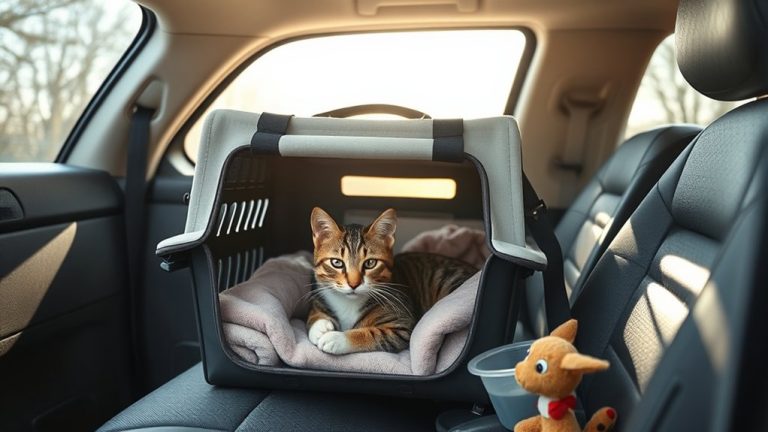
Use a spacious, well-ventilated carrier with familiar items to reduce stress. Understanding these limits and preparing properly helps keep your cat safe and calm throughout travel.
Explore ways to enhance their travel experience further.
How Long Can a Cat Safely Stay in a Carrier?
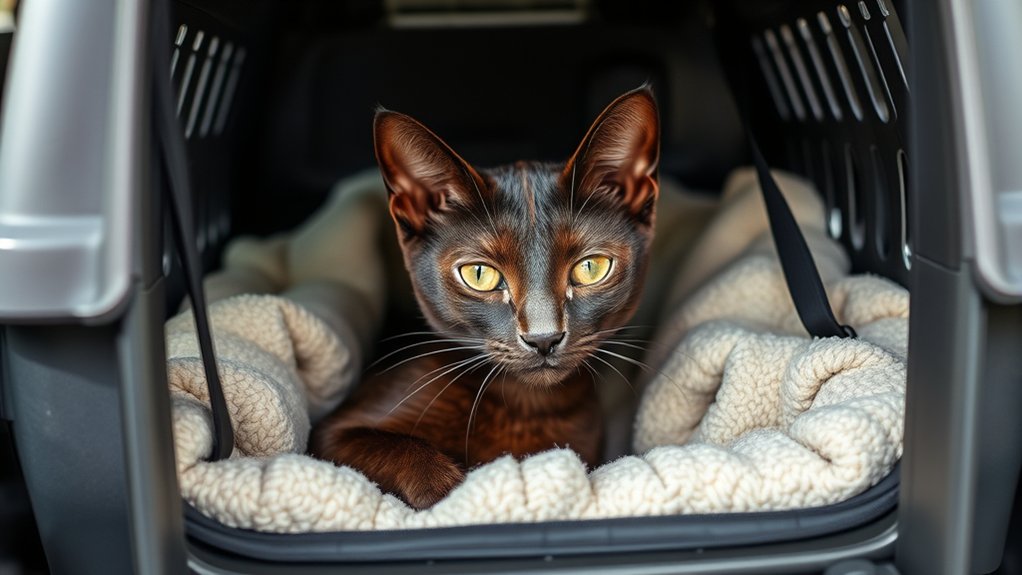
While healthy adult cats can safely remain in a carrier for up to 4-6 hours, you should limit time for kittens under six months to 2-3 hours. This is because their smaller bladders and greater stress sensitivity make longer confinement tougher on them.
For healthy adult cats, it’s important to plan breaks every 2-4 hours during longer trips. These pauses help reduce stress and anxiety. Senior cats or those with health concerns especially need these breaks to hydrate and use the litter box.
Continuous confinement beyond 6 hours without breaks can raise cortisol levels, which increases discomfort. To keep your cat comfortable, watch for signs of distress like excessive vocalizing or panting.
Using these travel tips can help you balance safe carrier time with your cat’s physical and emotional needs, making the journey smoother for both of you.
Managing Carrier Time for Short and Medium Trips
Although short trips of up to an hour usually pose little challenge for cats familiar with their carriers, managing carrier time becomes more critical during medium trips lasting between one and six hours.
When you travel with your cat in a carrier on medium trips, limit the total time to 4-6 hours. Provide breaks every 2-3 hours for your cat to stretch, use the litter box, and access food and water. This helps reduce stress and prevents anxiety, especially in kittens and senior cats who need more frequent stops.
Always verify the carrier is comfortable and familiar, as this greatly improves your cat’s travel experience.
Proper management of carrier time during medium trips keeps your cat safe, calm, and comfortable throughout the journey.
Handling Extended Travel Over 6 Hours
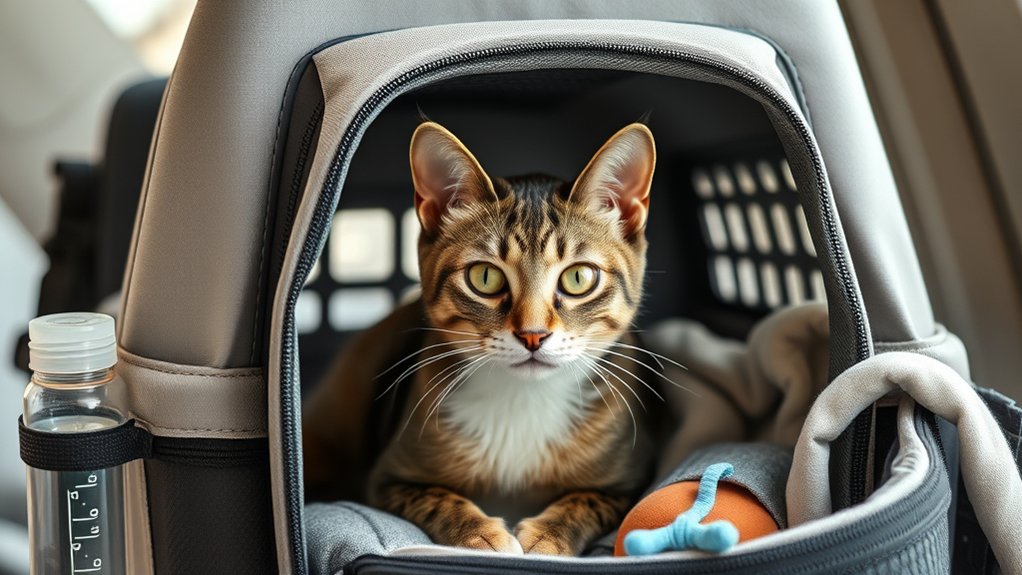
Traveling for over six hours requires careful planning to keep your cat comfortable and calm. Your cat shouldn’t remain in a carrier continuously for more than 6 hours without breaks to prevent stress and anxiety. So, make sure to follow these key steps.
First, schedule regular breaks every 2-4 hours for hydration, litter box use, and stretching. Use a spacious carrier with ventilation on at least two sides to guarantee comfort.
During breaks, allow your cat to safely roam inside the vehicle to reduce stress.
Also, keep a close eye on your cat for signs of distress like panting or excessive vocalization. If you notice any, you might need to adjust your travel plans.
Preparing Your Cat and Carrier for Long Trips
You should start by gradually getting your cat used to the carrier.
Try adding familiar items inside to make it feel safe and cozy.
When it’s time to travel, pack all the essentials like bedding, a litter tray, and water to keep your cat comfortable throughout the trip.
Oh, and don’t forget to consider calming aids—they can really help reduce stress, especially during those long journeys.
Carrier Acclimation Techniques
When preparing your cat for long trips, acclimating them to the carrier is essential to reduce stress and guarantee a smoother journey.
Effective carrier acclimation techniques include:
- Place the carrier in a familiar area and let your cat explore it freely over several days.
- Use positive reinforcement by offering treats to encourage your cat to enter the carrier voluntarily.
- Line the carrier with familiar bedding or an unwashed piece of clothing to provide comfort and security.
- Practice short trips, gradually increasing duration, to help your cat adjust to travel conditions.
Additionally, consider using pheromone sprays inside the carrier to create a calming environment.
These methods collectively minimize anxiety and prepare your cat for safe, stress-free travel.
It’s all about making the carrier a comfortable and inviting space so your cat feels safe, not trapped.
With a little patience and these simple steps, travel time can become a much more pleasant experience for both of you.
Essential Travel Supplies
Although preparing your cat for a trip starts with acclimating them to the carrier, assembling the right travel supplies guarantees their comfort and safety throughout the journey. Make sure the carrier is spacious and well-ventilated.
Pack a travel litter tray with familiar litter, plus a litter box alternative for on-the-go needs. Don’t forget to bring waste bags for easy cleanup.
Keep your cat hydrated with bottled water and a spill-proof bowl or clip-on water bottle. It’s also a good idea to include familiar toys and a piece of unwashed clothing for scent comfort. Soft bedding will help your cat rest better during the trip.
| Supply | Purpose | Tips |
|---|---|---|
| Travel litter tray | Manage waste | Use familiar litter |
| Waste bags | Clean accidents | Pack extra |
| Hydration supplies | Keep cat hydrated | Spill-proof or clip-on bottles |
| Familiar toys | Reduce anxiety | Choose favorites |
| Soft bedding | Provide comfort | Wash regularly |
Stress Reduction Strategies
Because cats can become easily stressed during travel, gradually acclimating them to the carrier is essential for reducing anxiety. You want your cat to associate the carrier with comfort, not fear.
To effectively prepare for long trips, follow these stress reduction strategies:
- Introduce the carrier several days before travel, placing treats and familiar items inside to encourage exploration.
- Use a well-ventilated, sturdy carrier that lets your cat stand, turn, and lie down without restriction.
- Incorporate familiar bedding or an unwashed piece of your clothing to provide soothing scents.
- Consider calming aids or pheromone sprays designed for cats to ease anxiety before and during travel.
Practicing short trips in the carrier will further acclimate your cat. This helps minimize stress and ensures safer, more comfortable travel.
How Temperature Affects Cat Carrier Safety
If you keep your cat’s carrier above 80°F, you risk causing overheating, which can lead to dangerous symptoms like panting and drooling.
Cats struggle to cool down through panting and mainly rely on grooming and cool surfaces to regulate their temperature. The safe temperature range during travel is 68°F to 79°F.
Cats primarily use grooming and cool surfaces to stay comfortable, as panting is not very effective.
Anything above 90°F puts your cat at serious risk of heatstroke. Prolonged exposure to high temperature in the carrier increases stress and can result in life-threatening conditions.
To protect your cat, avoid leaving the carrier in direct sunlight and provide shaded, well-ventilated areas.
Lightly misting your cat with cool water during breaks can help reduce heat stress.
Always monitor the carrier’s temperature closely to guarantee your cat’s safety throughout travel. It’s really important to keep an eye on things so your furry friend stays comfortable and safe.
Special Considerations for Kittens and Senior Cats
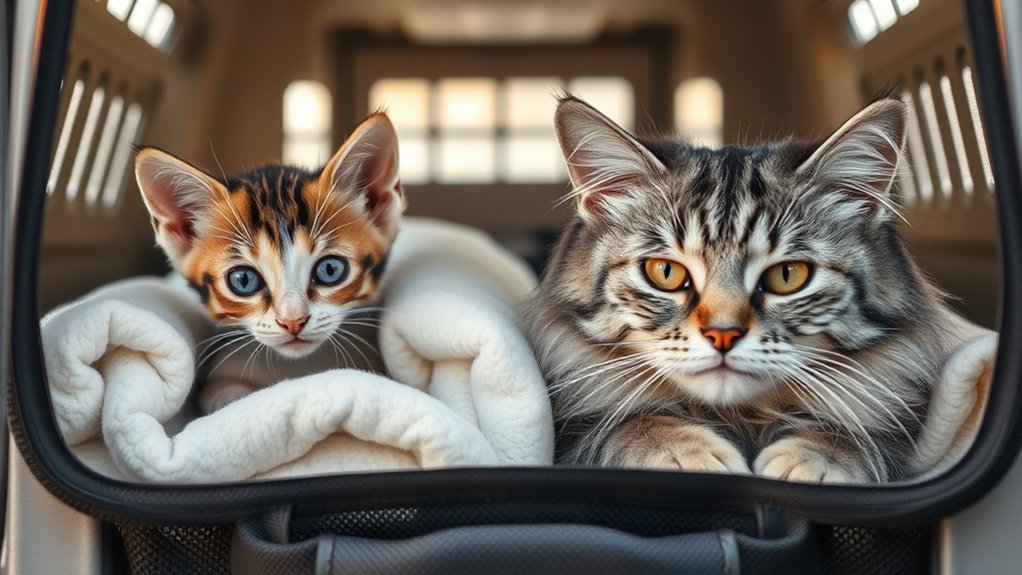
You really shouldn’t keep kittens under 6 months in a carrier for more than 2-3 hours. Their bladders are delicate, and they tend to get more anxious than older cats.
As for senior cats, they need breaks every 2-4 hours to stay hydrated and comfortable, especially if they’ve any health issues.
It’s important to watch their behavior closely because both kittens and senior cats can show stress in pretty subtle ways. So, keeping an eye on them can make a big difference!
Kittens’ Carrier Time Limits
When traveling with kittens under six months old, you should limit their time in a carrier to 2-3 hours because their bladders are smaller and they get stressed more easily.
To make sure the trip is safe and comfortable, follow these key guidelines.
Take breaks every 2 hours so they can drink water and use the litter box. This helps keep them from getting uncomfortable.
Also, keep the temperature steady and cozy to avoid stressing them out.
Never leave kittens in carriers overnight. They need room to stretch and access to food and water.
It’s also a good idea to get them used to their carrier before you travel. This can help reduce their anxiety and make them more comfortable with the carrier.
Senior Cats’ Travel Needs
Although senior cats often share some travel needs with kittens, their health challenges require special attention during trips. Senior cats need breaks every 2-4 hours to eat, drink, and use a litter box. Staying too long in a carrier can be stressful for your cat.
A vet check before traveling makes sure your senior cat’s health is stable for the journey. Use a spacious, well-ventilated carrier with familiar scents to help reduce anxiety. It really makes a difference.
Keep an eye out for signs of stress like panting, vocalizing, or withdrawal. Those can tell you when your cat needs a break or some extra comfort.
| Aspect | Senior Cats’ Needs |
|---|---|
| Break frequency | Require breaks every 2-4 hours |
| Carrier size | Spacious, allows movement |
| Stress relief | Familiar scents reduce anxiety |
| Health precautions | Vet check before travel |
| Signs of stress | Panting, vocalizing, withdrawal |
How to Spot Stress and Discomfort in Your Cat
How can you tell if your cat is stressed or uncomfortable while in a carrier? Recognizing signs of stress early is essential to guarantee their comfort and safety.
Keep a close eye on their behavior, especially during long trips. Some key signs to watch for include excessive vocalization, panting, or restless movements—these usually indicate anxiety or discomfort.
If your cat tries to escape or starts trembling, it’s a clear sign they urgently need a break.
Also, if they withdraw from interaction or refuse to drink water, it means they’re feeling overwhelmed by stress.
It’s a good idea to check on your cat every 2 to 3 hours. This helps ensure they stay hydrated and comfortable, which is especially important for senior or ill cats.
Tips to Make Cat Carrier Travel Comfortable and Safe
Five essential tips can greatly improve your cat’s comfort and safety during carrier travel.
First, choose a carrier for 4-6 hours that’s well-ventilated and spacious enough for your cat to stand, turn, and lie down.
Next, gradually acclimate your cat by placing familiar bedding and treats inside days before travel.
Always secure the carrier with a seatbelt in the car to keep your cat safe and confined.
During road trips lasting longer than 2-3 hours, plan breaks to offer food, water, and use the litter. This is absolutely necessary to prevent discomfort.
Finally, use calming aids like pheromone sprays to reduce anxiety.
Following these tips helps you keep your cat comfortable and safe throughout the journey. It really makes a difference when you prepare ahead!
Frequently Asked Questions
What Type of Carrier Is Best for Airline Travel With Cats?
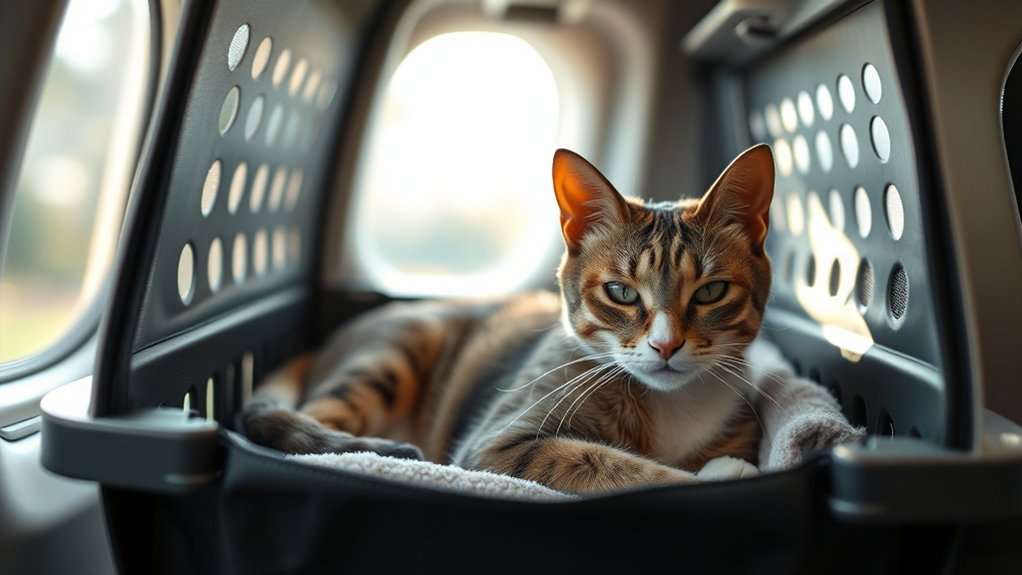
For airline travel, you want cat carrier types that meet airline regulations, focusing on travel size to fit under seats.
Choose carriers made from sturdy plastic or metal materials for durability and ventilation. Look for secure features like reliable locking mechanisms to keep your cat safe during the flight.
Always double-check that the carrier is airline-approved to avoid any last-minute issues.
This way, you can guarantee a comfortable, secure journey for your feline companion. It really pays off to be prepared ahead of time!
Can I Leave Food or Water in the Carrier During Travel?
Don’t leave food or water in the carrier during travel. It’s like inviting a storm inside a tiny ship. For your cat’s comfort and to keep stress down, avoid spills and motion sickness by withholding food.
Offer water during breaks depending on how long you’re traveling. This helps meet their hydration needs without making a mess. You can also adjust their feeding schedule around your trip to keep them calm and healthy.
For overnight journeys, use spill-proof bottles. This way, your feline stays hydrated without any mess to clean up.
How Do I Clean a Cat Carrier After a Trip?
After each trip, clean your cat carrier promptly to keep travel hygiene in check.
Start by removing bedding and tossing out any soiled materials to stop odors from building up.
Next, use a mild pet-safe disinfectant or a vinegar-water mix to scrub all the carrier’s surfaces thoroughly.
Make sure to rinse everything well so no residue is left behind that could bother your cat.
Let the carrier air dry completely before you store it away.
Don’t forget to check the carrier regularly for any damage and replace parts if needed.
Keeping up with cleaning like this helps make sure your cat stays safe and comfortable on every trip.
Is It Safe to Sedate a Cat for Carrier Travel?
Sedating a cat for carrier travel isn’t a one-size-fits-all solution.
Think of it like giving a driver a foggy windshield. Sedation risks can cloud your cat’s behavior and health.
Always follow vet recommendations and dosage guidelines to avoid adverse effects.
Instead, try alternative calming methods like pheromone sprays or familiar toys first.
Remember, sedation can alter your cat’s behavior.
What Are the Best Calming Products for Anxious Cats in Carriers?
The best calming products for anxious cats in carriers include calming sprays and pheromone diffusers. These mimic natural scents to help reduce stress.
Using anxiety blankets or soft carriers lined with familiar bedding can really boost comfort and security.
Herbal remedies like chamomile or valerian supplements also help soothe your cat’s nerves.
When you combine these with a soft carrier, it creates a calming environment. This makes travel less stressful and safer for your feline friend.
Conclusion
So, you want to keep your cat cozy in a carrier without turning it into a feline prison? Remember, cats aren’t fans of marathon stays in tight spaces. Think hours, not days.
Manage trips wisely, watch for stress signals, and adjust for temperature and age. Treat that carrier like a first-class suite, not a detention cell.
After all, your cat deserves a travel experience that’s safe, comfortable, and far from a cat-astrophe.