Can Cat Eat Marshmallow – Why It Is Not Ideal
You shouldn’t give your cat marshmallows because they can’t taste sweetness and get no nutrients from them. Marshmallows pose choking hazards, upset their digestion, and may cause vomiting, diarrhea, or even obesity due to high sugar.
Their spongy texture can be risky if swallowed improperly. Instead, consider safer treats and create an enriching environment to satisfy your cat’s curiosity.
Understanding these risks and alternatives helps keep your feline friend healthy and happy.
Why Cats Are Curious About Marshmallows
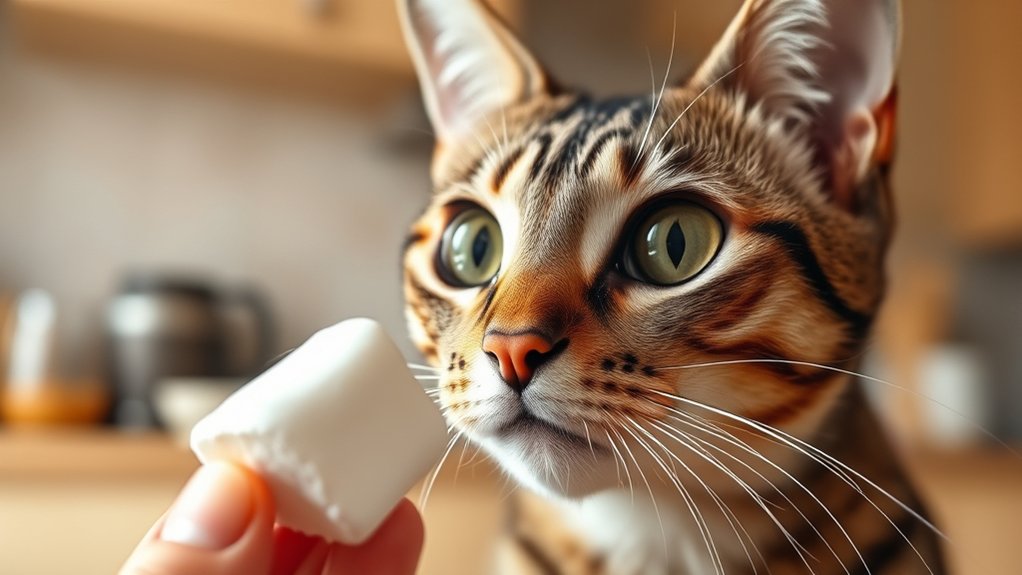
Why do cats seem drawn to marshmallows despite their inability to taste sweetness? Cats are curious creatures, and their curiosity without a sweet taste often leads them to investigate marshmallows.
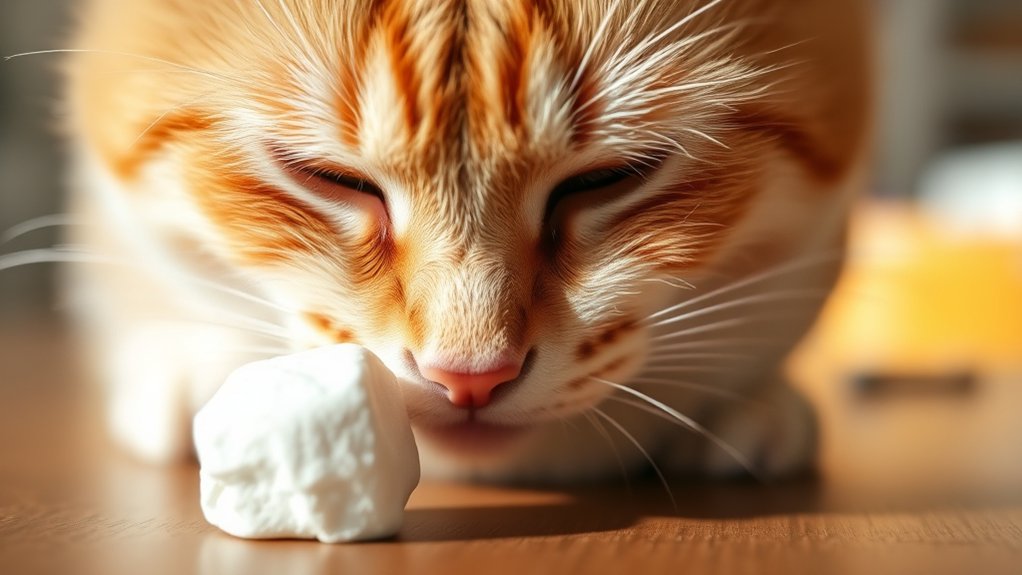
They rely heavily on their keen sense of smell and whiskers to explore, so the soft, squishy texture of marshmallows can mimic the feel of prey, sparking their interest.
Furthermore, cats may learn from watching you interact with food, which adds to their curiosity. However, this interest doesn’t mean marshmallows are suitable for them.
While your cat’s curiosity might make marshmallows seem appealing, you should remember they contain ingredients potentially harmful to feline health.
Why Marshmallows Are Unsafe for Cats
You really shouldn’t give your cat marshmallows. Their spongy texture makes them a choking hazard.
Plus, because they’re loaded with sugar, marshmallows can upset your cat’s digestion since cats aren’t able to process sugar well.
On top of all that, marshmallows don’t provide any nutritional benefits and could even lead to health issues like obesity.
Choking Hazard Risks
Marshmallows pose several choking hazards for cats because of their spongy, soft texture. This texture makes it hard for them to chew and swallow properly. It can easily get stuck in a cat’s throat, which is a serious choking risk.
As a cat owner, you should know that even small pieces might cause your cat to gag or choke, just like with young kids.
Plus, if swallowed, marshmallows can cause gastrointestinal blockages, especially in older cats with sensitive digestive systems. These blockages might need emergency vet care.
Considering these risks, the potential harm from marshmallows far outweighs any curiosity or brief enjoyment your cat might have.
Digestive Upset Potential
Although cats might show curiosity toward sweet treats, feeding them marshmallows can lead to serious digestive upset. Their digestive systems aren’t designed to process the high amounts of sugar found in marshmallows.
This can cause gastrointestinal upset, such as vomiting and diarrhea, triggered by sugar and additives. Bloating and discomfort can happen too, since cats lack the enzymes to break down sugar properly.
Marshmallows also offer empty calories, giving no nutritional benefit and increasing the risk of obesity. Plus, they might worsen any underlying digestive conditions by adding stress to your cat’s system.
Because marshmallows provide no essential nutrients and pose these risks, you should avoid offering them to your cat.
It’s much better to stick with species-appropriate food that supports your cat’s health and keeps their tummy happy.
Nutritional Deficiency Concerns
Since cats rely on a protein-rich diet to meet their nutritional needs, feeding them sugary treats like marshmallows offers no benefit and can cause harm. Cats are obligate carnivores, meaning they require high nutritional value from animal proteins. Marshmallows provide empty calories and high sugar content, which cats cannot metabolize.
Regular consumption of sugary treats leads to weight gain and associated health risks, including obesity. Because cats lack sweet taste receptors, marshmallows won’t satisfy cravings but just add harmful calories. So, giving your cat marshmallows isn’t doing any favors to their health.
| Aspect | Cats’ Needs | Marshmallows’ Impact |
|---|---|---|
| Diet Type | Protein-rich (obligate carnivores) | High sugar, no protein |
| Nutritional Value | Essential nutrients | Empty calories |
| Metabolism | Efficient protein use | Poor sugar metabolism |
| Taste Reception | No sweet receptors | Sweet, irrelevant |
| Health Risks | Weight maintenance | Weight gain, obesity risks |
Symptoms and Health Risks After Eating Marshmallows
When your cat eats marshmallows, you might notice signs of stomach upset like vomiting or diarrhea. Their digestive systems just can’t handle all that sugar properly. These symptoms can get worse pretty fast if you don’t keep an eye on them.
Here are some key symptoms and risks to watch for:
- Vomiting and diarrhea because the sugar irritates their digestive system.
- Lethargy or refusing to eat, which usually means they’re feeling uncomfortable or distressed.
- Choking hazards from the marshmallow’s spongy texture, especially if they don’t chew it right.
- There’s also a risk of obesity if your cat keeps getting sugary treats like this, which can affect their health over time.
Knowing these risks helps you keep your cat safe and avoid any unnecessary health problems after they accidentally eat marshmallows.
What to Do If Your Cat Eats Marshmallows
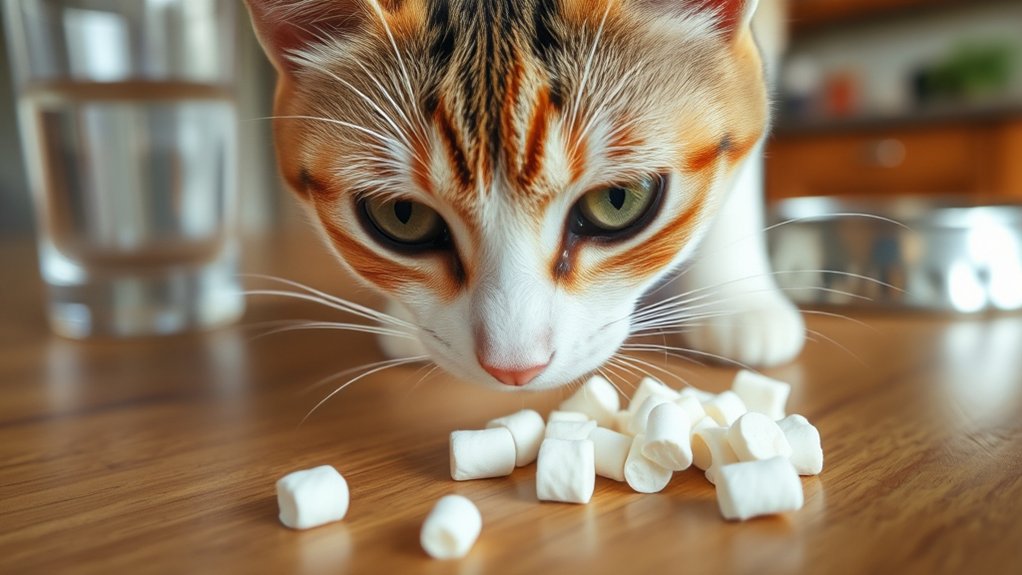
Noticing symptoms like vomiting or lethargy after your cat eats marshmallows means you should act carefully to support their recovery.
First, monitor for gastrointestinal symptoms such as vomiting or diarrhea, which might result from the high sugar and additives in marshmallows.
Watch for vomiting or diarrhea, common reactions to marshmallows’ high sugar and additives in cats.
If vomiting occurs, withhold food and water for up to 8 hours, then gradually reintroduce small amounts of water and a bland diet.
Watch closely for signs of lethargy, decreased appetite, or excessive drinking, as these can signal a more serious issue.
Knowing what to do if your cat eats marshmallows involves staying vigilant and being ready to seek veterinary advice if symptoms persist or worsen.
Immediate consultation is crucial if your cat shows continuous vomiting or distress to guarantee proper treatment.
Safe Human Treats to Give Your Cat Instead
Although cats shouldn’t eat sugary treats like marshmallows, you can still offer them safe human foods that provide nutritional benefits and satisfy their curiosity.
When choosing treats, focus on options that are safe for your cat and given in small amounts to avoid digestive upset.
Consider these alternatives:
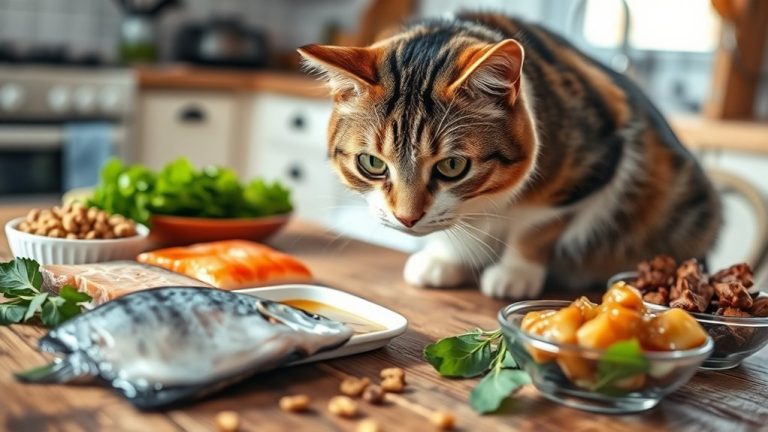
- Cooked lean meats, such as chicken or turkey, which supply essential protein.
- Small amounts of cooked fish like tuna, given occasionally to limit mercury exposure.
- Peeled fruits, including apples, bananas, or blueberries, offering vitamins without harmful sugars.
- Specialized cat treats formulated to guarantee safety and nutritional balance.
How a Catio Can Satisfy Your Cat’s Curiosity
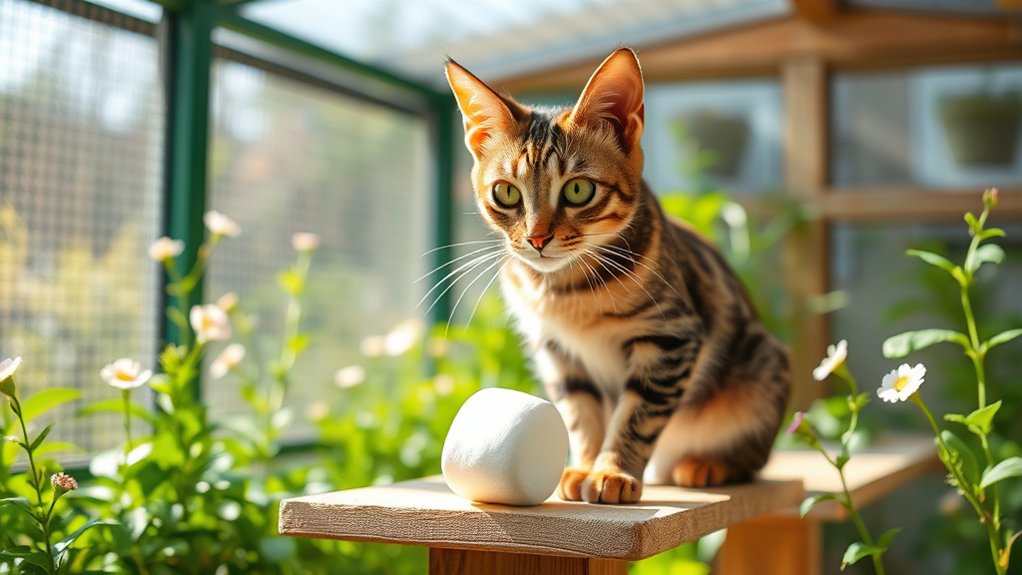
Because cats need mental and physical stimulation to stay healthy, providing a catio is a great way to satisfy their curiosity safely. A catio lets your cats explore natural sights, sounds, and scents without the risks of unsafe foods or outdoor dangers.
Adding climbing structures and perches encourages physical activity and mimics hunting behaviors, which supports their well-being. It’s a fun way for them to stay active and engaged.
Keep updating the catio regularly to prevent boredom and reduce stress. This safe space helps curb unwanted behaviors linked to anxiety, like seeking out unhealthy treats.
Creating a Cat-Friendly Space to Avoid Unhealthy Snacking
You can cut down on your cat’s urge to snack on unhealthy human foods by setting up a cat-friendly space, like a catio.
Giving them climbing structures, natural elements, and fun toys keeps your kitty both mentally and physically busy. This kind of engagement really helps curb their curiosity about food.
Plus, if you regularly switch things up in their space, your cat will stay interested and less likely to go after unsafe treats like marshmallows.
It’s a simple way to keep them happy and healthy!
Benefits Of A Catio
When you create a catio, you provide your cat with a secure outdoor space that satisfies its natural instincts to explore and stay active. This controlled environment offers several benefits to keep your curious creatures healthy and mentally engaged.
A catio allows natural stimulation by exposing cats to fresh air, sights, and sounds. This supports mental stimulation and helps reduce boredom.
Climbing structures and hiding spots in the catio encourage physical activity, which helps prevent unhealthy snacking habits. Regularly updating the catio with new features keeps your cat curious and less likely to seek harmful human foods like marshmallows.
By promoting natural behaviors such as climbing and hunting, a catio reduces stress and supports overall well-being. This makes your cat less prone to unhealthy cravings.
A catio is a smart, safe investment in your cat’s health.
Enriching Cat Environments
Although cats naturally seek stimulation, providing a carefully designed, cat-friendly environment can considerably reduce their urge to snack on unhealthy human foods like marshmallows.
By enriching cat environments with climbing structures, hiding spots, and interactive toys, you can provide mental stimulation that satisfies their curiosity and natural instincts.
Incorporating puzzle feeders encourages problem-solving and play, which helps divert attention from inappropriate snacks.
Creating a catio or safe outdoor space lets your cat explore safely, reducing boredom that often leads to unhealthy snacking.
Regularly updating these features keeps your cat engaged and less likely to seek out human food.
Always keep an eye on your cat’s behavior and guarantee they’re getting balanced nutrition from quality cat food to support their overall health and well-being.
It’s all about keeping them happy and healthy while steering them away from those tempting marshmallows!
Reducing Food Curiosity
Since cats are naturally curious creatures, reducing their food curiosity means creating a stimulating environment that keeps them engaged and satisfied.
It’s important to remember that eating marshmallows can be harmful, so managing your cat’s environment helps protect their health.
To support cats overall while reducing food curiosity, you can design a cat-friendly space with safe climbing structures and interactive toys to encourage mental and physical activity.
Regularly changing the layout maintains interest and prevents boredom-driven snacking.
You can also provide healthy, cat-specific treats to satisfy snack cravings safely.
Keep an eye on their behavior and adjust the environment to discourage them from seeking out human foods like marshmallows.
Keeping Your Cat Healthy: Tips for Diet and Play
To keep your cat healthy, you need to focus on providing a balanced diet rich in high-quality proteins designed for obligate carnivores. Feeding schedules matter, so offer consistent portions to prevent obesity and support digestion. Avoid treats like marshmallows that lack nutritional value and could harm your cat.
Beyond diet, play is vital for a happy and healthy cat. Use interactive toys to stimulate natural hunting instincts and reduce boredom. Consider a catio for safe outdoor exploration, which boosts physical activity and sensory engagement without unhealthy snacks.
Play and exploration keep cats active and engaged, promoting happiness without relying on unhealthy treats.
Don’t forget regular veterinary check-ups to monitor your cat’s dietary health, identify food sensitivities, and keep your feline friend thriving.
Balancing diet and play helps guarantee your cat stays energetic and content. It’s all about keeping things steady and fun!
Frequently Asked Questions
Can Marshmallow Ingredients Cause Allergies in Cats?
Yes, marshmallow ingredients can cause cat allergies and trigger feline reactions. You should know that additives like gelatin, corn syrup, and artificial flavors often lead to food sensitivities in cats.
These ingredients may cause itching, digestive upset, or respiratory issues. Since cats lack enzymes to properly digest sugars, even one-time exposure can provoke allergic-like symptoms.
If you notice any signs, consult your vet immediately to protect your cat’s health. It’s always better to be safe when it comes to your furry friend’s well-being.
Are Sugar-Free Marshmallows Safer for Cats?
No, sugar-free marshmallows aren’t safer for your cat. They often contain artificial sweeteners like xylitol, which can disrupt feline metabolism and cause serious health problems.
Sugar substitutes in these treats may trigger digestive issues or even hypoglycemia.
Since cats can’t process these ingredients well, feeding them sugar-free marshmallows poses more risks than benefits.
It’s best to avoid these and stick to safer, cat-friendly treats instead.
How Much Marshmallow Is Toxic to a Cat?
There isn’t a defined marshmallow toxicity level for cats, but even a small amount can trigger digestive reactions like vomiting or diarrhea. This is because marshmallows contain ingredients like high sugar and additives that aren’t great for cats.
Cats lack the enzymes needed to process sugar well, so it’s really best to avoid marshmallows altogether.
Instead, you should stick to safe treat alternatives made specifically for cats. That way, you keep their digestion smooth and avoid any unnecessary risks.
It’s always better to be safe than sorry when it comes to their health!
Can Marshmallows Affect a Cat’s Dental Health?
When it comes to your cat’s dental hygiene, marshmallows can really throw a wrench in the works. Their sticky texture gets in the way of your cat’s natural chewing habits, which are super important for keeping their mouth healthy.
Plus, the high sugar content feeds harmful bacteria. This can mess with your cat’s nutrition and lead to plaque buildup or even periodontal disease.
So, if you want to keep your cat’s teeth in great shape, it’s best to avoid sugary, sticky treats like marshmallows altogether.
Trust me, your cat’s smile will thank you!
Do Cats Prefer Sweet or Savory Treats Naturally?
You’ll find cats naturally lean toward savory instincts rather than sweet preferences because their taste receptors don’t detect sweetness.
Their dietary habits as obligate carnivores mean they’re wired to seek protein-rich, umami flavors, not sugary treats.
Even if they show curiosity about sweets, it’s their savory cravings that truly satisfy.
Conclusion
So, while your cat might eye that marshmallow like it’s the ultimate snack, remember it’s really just a fluffy no-go zone. Sure, it’s sweet and tempting for you, but for your feline friend, it’s a recipe for tummy trouble and more.
Ironically, the best treat isn’t the sugary fluff but a safe, vet-approved snack. Keep your cat curious, not sick, because marshmallows belong with hot cocoa, not kitty bowls.