
Are Roses Poisonous To Cats – Truth And Safety Tips
Roses themselves aren’t poisonous to your cat, but their thorns can cause painful injuries. Also, some rose varieties like Desert or Easter Rose are toxic if ingested. So, it’s good to be cautious.
Be careful with pesticides and flower food on roses too. These chemicals can lead to serious health issues for your furry friend. It’s best to keep roses out of your cat’s reach.
Watch for any signs of discomfort in your cat. If you want to protect your feline friend, there’s more you should know about keeping roses safe around them. Taking a few extra steps can make all the difference!
Are Roses Toxic To Cats? The Essential Facts

Wondering if roses pose a danger to your curious cat? The good news is roses themselves are non-toxic, so roses toxic to cats is generally a misconception. You can feel safe around these flowers since nibbling on petals or leaves usually won’t cause serious harm.
However, thorns can still cause injuries like scratches or punctures if your cat rubs against or chews them.
Also, be cautious about pesticides or flower food applied to roses, as these chemicals can be toxic and trigger severe reactions.
If your cat shows signs of mild gastrointestinal upset, such as vomiting or diarrhea, after contact, monitor them closely. It’s best to keep your pets away from treated roses.
But if symptoms persist, contact your veterinarian promptly for advice and care.
Which “Rose” Plants Are Toxic To Cats?
Although many people assume all roses are safe, several plants with “rose” in their name can be toxic to your cat. For instance, the Desert Rose and Moss Rose contain compounds that can cause poisoning if ingested. The Easter Rose, despite its beautiful flower, poses serious toxicity risks to cats.
Similarly, Rosebay and certain Rhododendron species are dangerous and should never be accessible to your feline friend. Even Primrose, often mistaken as harmless, can harm your cat’s health.
To keep your cat safe, it’s important to identify these toxic plants and remove them from your home or garden.
How Rose Thorns Can Injure Your Cat
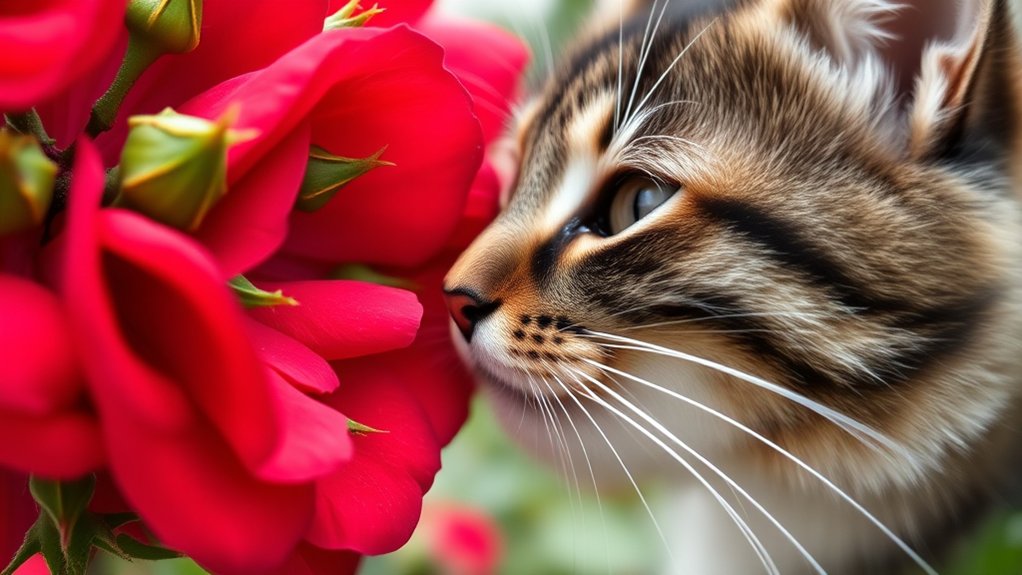
Three common ways rose thorns can injure your cat include scratches, puncture wounds, and internal damage from chewing.
Rose thorns pose a real risk of physical injuries, especially if your cat rubs against thorny stems or tries to chew on them. These injuries can cause cuts or scrapes, often requiring close monitoring for infection or discomfort.
Chewing thorns can lead to internal injuries or bleeding within your cat’s digestive tract, which can be serious. So, it’s something to watch out for closely.
To protect your feline friend, consider these:
- Trim thorny stems before bringing roses indoors.
- Watch for signs of pain or swelling around your cat’s mouth.
- Check paws and skin regularly for cuts or scrapes.
- Seek veterinary help if you notice unusual behavior linked to internal injuries.
Taking these steps can really help keep your kitty safe and comfortable.
Risks Of Pesticides And Flower Food On Roses
You should know that pesticides on roses can be really toxic to your cat. If your cat ingests any, it could lead to some serious health problems.
Also, those flower food packets and the water sitting in the vase often have harmful chemicals in them, which can make things even riskier.
Pesticide Toxicity Risks
Since roses often come treated with pesticides and flower food, it’s important to recognize the serious risks these substances pose to your cat. Pesticides are highly toxic, and even minor ingestion can lead to severe health issues.
You should watch for symptoms like vomiting, lethargy, or seizures, which require immediate veterinary attention. Chemical leaching into stagnant vase water also increases toxicity risks.
Here’s what you can do to protect your cat:
- Remove flower food packets before bringing roses home.
- Avoid letting your cat drink vase water.
- Monitor your cat for any unusual behavior after exposure.
- Seek veterinary help promptly if symptoms appear.
Being vigilant can save your cat from potentially life-threatening pesticide poisoning. Just keep an eye on them and act quickly if you notice anything off.
Harmful Effects Of Flower Food
Although flower food packets are meant to keep roses fresh, they contain chemicals that can be harmful to your cat if ingested. These packets often include pesticides and other chemical treatments that are toxic to cats. This can cause symptoms like vomiting, lethargy, and severe gastrointestinal distress.
Even stagnant vase water, which may hold residues from flower food or pesticides, poses additional risks. So, it’s not just the packets themselves you need to watch out for.
If your cat shows any signs of poisoning, such as sudden vomiting or weakness, seek immediate veterinary attention. Understanding the harmful effects of flower food and pesticide residues is really important for your cat’s safety.
Following safety tips, like keeping roses and their water out of reach, will help protect your pet from these dangerous substances. This way, you can guarantee a safe environment for both your flowers and your feline friend.
Safe Handling And Disposal
Keeping your cat safe goes beyond just recognizing the dangers of flower food and pesticide residues on roses. You’ve got to practice safe handling and disposal to keep your furry friend from being exposed to toxic substances.
Here’s what you can do to keep roses safe for cats in your home:
First, always remove flower food packets from bouquets before bringing them inside. Those little packets can be super tempting for curious cats and contain harmful chemicals. Better safe than sorry!
Next, try to choose organic roses that are free from pesticides. This helps reduce the risk of toxicity and keeps your home a healthier place for your cat.
Don’t forget to regularly change the water in your vases. Stale water can grow harmful bacteria, which might affect your cat if they decide to take a sip.
Finally, get rid of wrappers, ribbons, and plant ties right away. Cats love to chew on these, and they can cause serious harm if swallowed. Keep things tidy and safe!
Effects Of Eating Rose Petals Or Leaves
When your cat nibbles on rose petals or leaves, you might worry about their safety. The good news is that rose petals are non-toxic to cats, but eating them can cause mild gastrointestinal upset, including an upset stomach or mild vomiting.
Since cats’ digestive systems aren’t designed to process plant material well, consuming rose leaves might also irritate their stomach, potentially leading to vomiting or diarrhea.
Although roses are generally flowers safe for cats, it’s important to keep an eye on your feline friend after ingestion. Symptoms like vomiting flower parts or decreased appetite usually resolve within 24 to 48 hours.
Still, it’s a good idea to monitor your cat closely. If symptoms persist or get worse, consulting a veterinarian is the best thing to do. That way, you can be sure your cat stays healthy and happy.
How To Monitor Your Cat After Eating Roses
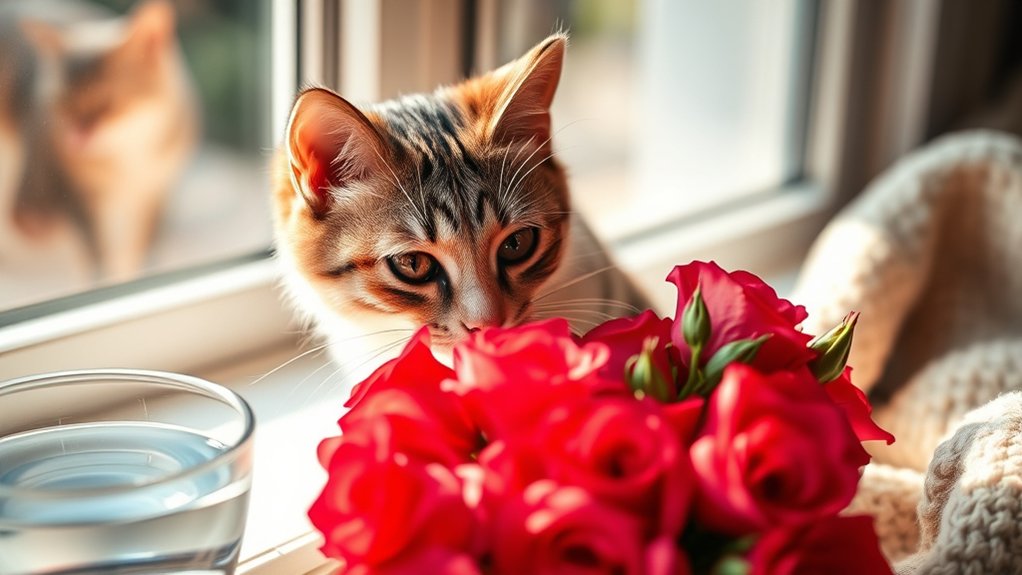
You should monitor your cat closely for 24 to 48 hours after they eat any part of a rose.
Watch for signs of gastrointestinal upset like vomiting or diarrhea, which are common reactions. Also, check for thorn injuries that may cause cuts in their mouth or paws.
Monitor for vomiting, diarrhea, and thorn-related cuts in your cat’s mouth or paws.
Keep an eye on your cat’s behavior and appetite. Any sudden changes can indicate pain or discomfort. If symptoms persist or worsen, contact your veterinarian promptly and provide a sample of the rose parts your cat ingested.
- Observe for vomiting, diarrhea, or lethargy.
- Inspect your cat’s mouth and paws for scratches or cuts.
- Note any decrease in appetite or unusual behavior.
- Reach out to a veterinarian immediately if severe symptoms appear.
Practical Tips To Keep Your Cat Safe Around Roses
If you want to keep your cat safe around roses, a good start is to place the flowers somewhere your pet can’t reach.
It’s also a smart idea to remove any thorns from cut stems to avoid injuries.
Another thing to remember is to always choose organic, untreated roses.
This way, you won’t expose your cat to any harmful chemicals.
By doing these simple things, you’re helping protect your furry friend from both physical harm and toxic substances.
It’s a small effort that makes a big difference!
Safe Rose Placement
Although roses add beauty to your home, their placement requires careful consideration to keep your cat safe. Your curious cat might nibble on petals or leaves, so safe rose placement is essential.
Here’s how to manage it:
Place roses on high shelves or spots unreachable to your cat to prevent cat nibbles and injury. Avoid using flower food or pesticides; opt for organic roses to eliminate toxicity risks.
Keep cat-safe plants like catnip nearby to distract your cat from the roses.
Regularly monitor your cat for any signs of distress after exposure and act quickly if symptoms appear. It’s all about keeping both your flowers and your furry friend safe and happy!
Thorn Management Tips
Since rose thorns can pose a real hazard to your curious cat, managing them carefully is crucial for their safety.
Start thorn management by regularly trimming rose thorns and removing any from cut rose arrangements to minimize injury risks.
Placing rose arrangements in high or inaccessible spots keeps your cat from encountering sharp thorns.
Consider opting for thornless varieties, which offer a more cat-friendly option without compromising your garden’s beauty.
Always monitor behavior, especially if your cat tends to nibble on plants, so you can spot and address any injuries quickly.
Educate everyone in your household about these safety tips to guarantee consistent vigilance.
These practical steps provide effective injury prevention and help keep your curious cats safe around roses.
It’s all about staying aware and proactive.
Chemical Exposure Prevention
While roses can brighten your home or garden, they may also expose your cat to harmful chemicals like pesticides and fertilizers. Remember, roses aren’t toxic themselves, but chemical exposure from treated plants can threaten your curious cat’s health.
To guarantee cat safety, follow these practical tips:
- Choose organic roses and pet-safe options to avoid pesticide poisoning.
- Remove flower food packets immediately; they’re dangerous if ingested.
- Prevent access to stagnant water in vases or gardens, which can harbor bacteria or chemicals.
- Inspect roses regularly for signs of chemical treatments and keep your cat away from recently treated plants.
Taking these steps will help keep your furry friend safe while still enjoying the beauty of roses around your home.
Cat-Safe Flower Alternatives To Roses
If you want to enjoy beautiful blooms without risking your cat’s health, choosing cat-safe flower alternatives to roses is essential. Opting for pet-safe options helps in avoiding toxic plants, especially since curious creatures like cats often explore flowers.
Great cat-safe options include orchids, which are non-toxic to cats and offer elegant blooms. Spider plants create a playful environment and are safe for cats indoors. African violets bring vibrant color without health risks.
For outdoor gardens, petunias and snapdragons provide beautiful blooms and are both safe for cats. By selecting these flower alternatives, you protect your feline friends while still enjoying your home’s floral beauty.
Remember, flowers are safe when you prioritize non-toxic to cats species, ensuring peace of mind and a healthy environment.
It’s always better to be safe and keep your furry pals happy!
When To Contact A Vet About Rose-Related Issues
Although roses are generally not highly toxic to cats, you should contact your vet immediately if your cat shows severe symptoms like vomiting, lethargy, or seizures after ingesting any part of the plant or flower food.
It’s essential to monitor your cat closely and act quickly.
Here are key moments to consult a veterinarian:
- Your cat has eaten rose petals or leaves and shows persistent stomach upset lasting over 24 hours.
- The cat shows signs of mouth or digestive injuries after chewing on thorns, such as bleeding or drooling.
- You suspect your cat ingested flower food or pesticides, which can be extremely toxic.
- Your cat shows irritation symptoms like pawing at the mouth or excessive drooling.
Keep your cat safe by recognizing these signs and contacting your vet immediately.
Don’t wait if you’re worried—better safe than sorry!
Understanding What ‘Poisonous’ Means For Cats And Roses
Because roses are labeled as non-toxic to cats by the ASPCA, you might assume they pose no danger. However, “non-toxic” means roses aren’t poisonous if ingested but aren’t entirely risk-free.
When cats nibble on roses, they may experience mild digestive upset like vomiting or diarrhea. Usually, these symptoms pass quickly.
The thorns on rose stems present another hazard. They can cause cuts or scrapes if your cat rubs against or chews them.
Also, chemical treatments such as pesticides and flower food applied to roses can be harmful to cats.
To keep your feline safe, follow safety tips like checking for chemical residues and supervising your cat around rose plants.
Understanding these risks helps you protect your cat while enjoying roses safely. It’s all about being aware and cautious.
Frequently Asked Questions
Can Rose Water or Rose Oil Harm My Cat?
Rose water benefits your cat only if it’s pure and used sparingly.
But you should watch for floral allergies or any reactions your feline might have.
Rose oil toxicity is a real concern.
Essential oil safety is critical to prevent health risks like vomiting or breathing issues.
Natural remedies for cats must be chosen carefully.
Avoid aromatherapy that cats might inhale since rose scent effects can cause irritation or worse.
Always consult your vet first.
It’s the best way to keep your furry friend safe.
Do Dried Rose Petals Pose a Risk to Cats?
Dried petals toxicity is generally low, but if your cat ingests them, watch for symptoms like vomiting or diarrhea.
Cats might be curious because of the scent, but dried petals aren’t very tasty.
To keep your garden safe, choose pet-friendly plants and avoid toxic flower arrangements.
If you notice any unusual behavior in your cat, it’s best to get vet advice right away.
Using natural remedies and safe alternatives helps keep your feline happy and healthy without risking their wellbeing.
How Do Cats Typically React to the Smell of Roses?
Curiosity killed the cat, but satisfaction brought it back. Your feline’s reactions to the scent of roses can vary quite a bit. Thanks to their sensitive noses, cats often show a lot of interest in floral scents like roses.
You might see them rubbing against the flowers or sniffing them closely. This can be a nice bit of enrichment for your cat, but you’ll want to be careful about thorns.
Keeping an eye on their behavior helps you understand how they’re feeling, especially around indoor plants. That way, you can make sure your furry friend stays safe and enjoys the experience without stress.
It’s all about watching and learning what your cat likes and dislikes.
Are Rose Hips Safe for Cats to Consume?
Rose hips are generally safe for cats in small amounts and offer benefits like vitamin C, supporting feline digestion and overall health.
However, watch for rose hips toxicity if your cat eats too much, which can upset their stomach.
Considering cat dietary needs, rose hips can be a gentle natural remedy or herbal supplement.
But always prioritize pet safety by ensuring pesticide-free rose cultivation.
It’s a good idea to consult your vet before adding any plant-based diets.
Can Rose Pollen Trigger Allergies in Cats?
Pollen allergies can cause perplexing problems for your feline friend. Rose pollen, as one of many pollen sources, might trigger immune responses leading to subtle feline reactions like itching or sneezing.
Since allergy symptoms in cats differ from humans, you need to watch for unusual signs after rose exposure.
Environmental triggers can impact cat health, so taking safety precautions, like regular grooming and vet check-ups, helps manage pollen allergies effectively.
This way, you can keep your cat comfortable and cared for. Just a little extra attention can make a big difference!
Conclusion
Now that you know roses aren’t poisonous to cats, you can enjoy their beauty with peace of mind. But remember, “an ounce of prevention is worth a pound of cure.” Keep thorns trimmed, avoid pesticides, and watch for any unusual behavior.
If your cat shows signs of distress, don’t hesitate to contact your vet. With these precautions, you and your feline friend can safely share the joy roses bring.