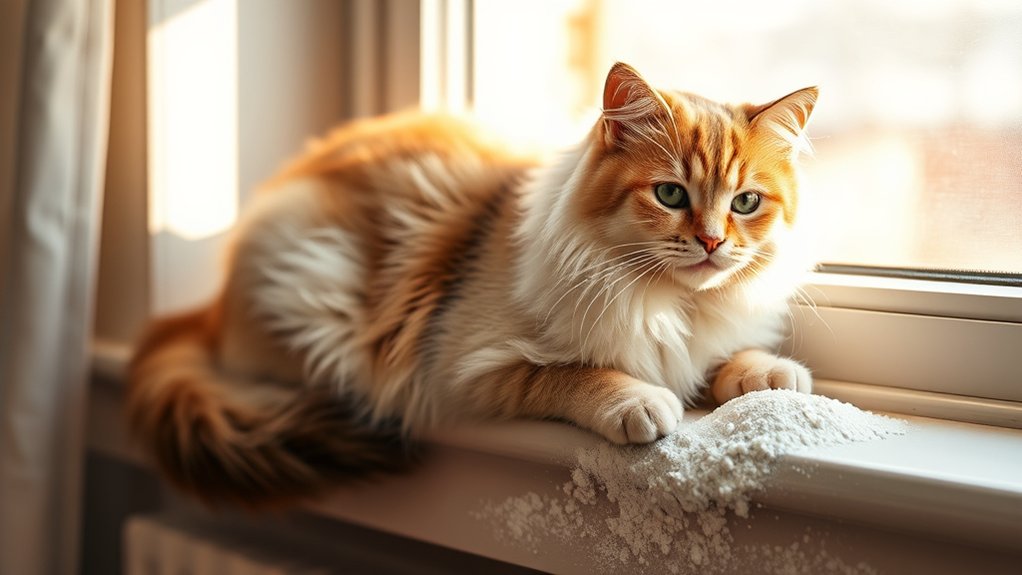
Can I Put Diatomaceous Earth On My Cat – Safety And Proper Use
You can safely put food-grade diatomaceous earth (DE) on your cat to control fleas, but only apply it lightly and avoid the eyes, nose, and mouth. Use it in a well-ventilated area to prevent respiratory irritation for both your cat and yourself.
Never use non-food-grade DE, as it contains harmful silica. Oral use requires vet guidance and specific dosing.
For proper application, precautions, and more details, keep exploring how to use DE correctly for your cat’s health.
What Is Diatomaceous Earth and How Does It Work on Cats
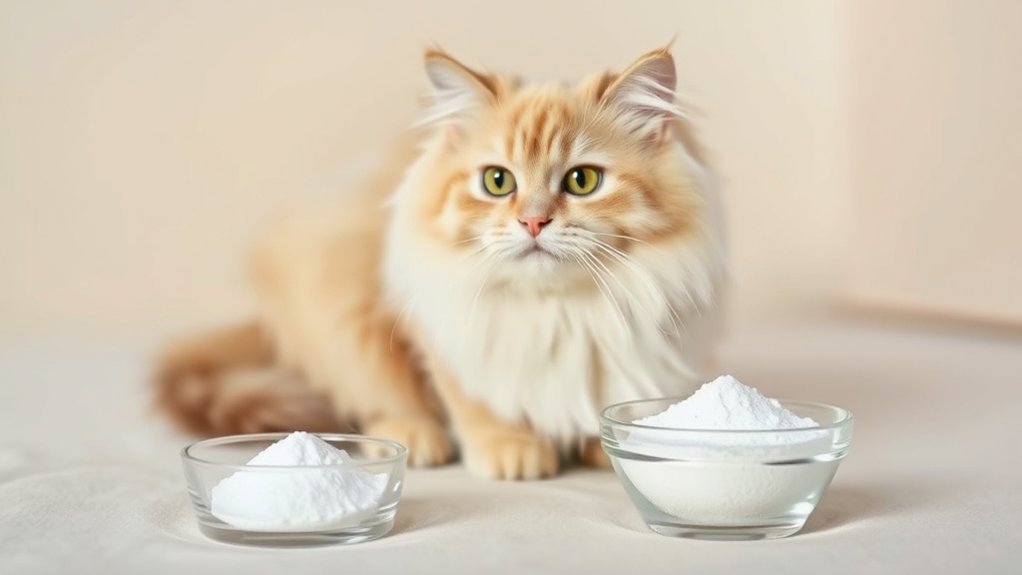
Diatomaceous Earth (DE) is a natural powder made from fossilized algae, primarily composed of silica. You can use it to control fleas and ticks on your cat without chemicals. This mechanical insecticide works by damaging the exoskeletons of fleas, causing dehydration and death.
When you use food-grade diatomaceous earth, it guarantees safety for cats due to its low crystalline silica content. This is different from harmful filter-grade DE.
For effective flea control, sprinkle DE on your cat’s bedding and carpets rather than directly on their coat to avoid respiratory irritation.
Always consult your veterinarian to determine the correct application and dosage, especially for kittens or cats with health concerns.
Using DE properly offers a chemical-free, safe method to manage fleas around your pet. It’s a simple way to keep your furry friend comfortable without harsh chemicals.
Why Only Use Food-Grade Diatomaceous Earth for Cats
You should only use food-grade diatomaceous earth for your cat because it contains less than 1% crystalline silica, which makes it safe for ingestion and contact.
This is really important since filter-grade DE has much higher levels of crystalline silica and can pose serious health risks.
Food-grade DE is actually recognized as safe by the FDA, so you can feel more comfortable using it around your furry friend.
That said, you still want to be careful when applying it. Try to minimize dust to avoid any respiratory irritation for your cat—and yourself too!
Food-Grade Definition
When choosing diatomaceous earth for your cat, it’s crucial to select food-grade quality to guarantee safety and effectiveness. Food grade diatomaceous earth contains amorphous silica and less than 1% crystalline silica, making it safe for cats and generally recognized as safe by the FDA. This classification guarantees it’s non-toxic and suitable for use around pets without causing harm.
Using non-food-grade DE risks skin irritation and respiratory issues due to higher crystalline silica content. Food-grade DE works mechanically to eliminate parasites by damaging their exoskeletons while remaining safe for ingestion and skin contact by your cat.
To minimize any inhalation risks, apply it sparingly and avoid areas your cat frequently grooms. That way, you keep the product safe for cats in your care.
It’s all about being careful and choosing the right type so your furry friend stays healthy and happy.
Crystalline Silica Risks
Although diatomaceous earth offers natural pest control benefits, using non-food-grade varieties poses serious health risks due to their high crystalline silica content. The crystalline form found in filter-grade DE can make up 50-70% of its composition and is a known carcinogen. Inhaling this crystalline silica dust can cause severe respiratory problems, including chronic lung disease.
That’s why only food-grade DE, which contains less than 1% crystalline silica, is generally recognized as safe (GRAS) by the FDA for use around pets.
Food-grade DE effectively controls pests without the harmful effects linked to crystalline silica, making it the only safe choice for your cat’s environment.
Safety For Cats
Understanding the dangers of crystalline silica in non-food-grade diatomaceous earth highlights why only food-grade DE should be used around cats.
Food-grade diatomaceous earth is considered safe because it contains less than 1% crystalline silica. This makes it suitable for ingestion and skin contact.
Non-food-grade DE, with its high silica content, poses serious respiratory issues and carcinogenic risks.
But even food-grade DE requires cautious use due to cats’ skin sensitivity. It can also cause respiratory irritation if inhaled during grooming.
To minimize risks, avoid direct application on your cat’s fur. Make sure there’s proper ventilation, and always consult your veterinarian before use.
Following these guidelines helps protect your cat’s health while safely using diatomaceous earth for pest control.
Giving Diatomaceous Earth Orally to Cats: Dosage Tips
When giving diatomaceous earth orally to your cat, it’s important to stick to dosage guidelines based on their weight.
For smaller cats, you’d use about ½ teaspoon, while larger cats can have up to 1½ teaspoons.
You’ll want to give it daily for at least 7 days, but extending the treatment up to 30 days can help target developing worms more effectively.
And, of course, always check with your veterinarian first to make sure the dosage is safe and right for your cat’s health.
Recommended Oral Dosages
Since proper dosing is essential, you should give your cat the right amount of food-grade diatomaceous earth based on its weight to confirm safety and effectiveness.
For small cats and kittens under 7 lbs, the recommended oral dosage is ½ teaspoon daily.
Cats weighing between 7 and 13 lbs should receive 1 teaspoon daily, while those over 13 lbs can have 1½ teaspoons daily.
Always verify you use 100% food grade diatomaceous earth, as this form is safe for cats and effective against parasites.
Administering the correct dosage not only maximizes benefits but minimizes risks.
Duration And Frequency
Although you may see results within a week, administering food-grade diatomaceous earth orally to your cat should continue for at least 7 days to effectively eliminate adult worms.
The duration can extend up to 30 days to target developing parasites. When giving Diatomaceous Earth, verify it’s 100% food-grade, keeping it safe for cats.
Dosage depends on your cat’s weight: under 7 lbs, give ½ teaspoon daily; between 7 and 13 lbs, 1 teaspoon; over 13 lbs, 1½ teaspoons.
Maintain consistent daily dosage throughout the treatment period for maximum effectiveness.
By following the proper duration and dosage, you help guarantee your cat’s safety and the successful elimination of parasites with Diatomaceous Earth.
It’s all about staying consistent and patient to get the best results.
Veterinary Consultation Importance
Before giving your cat diatomaceous earth orally, you should always consult a veterinarian to confirm it’s safe and suitable for your pet’s health status.
A veterinary consultation guarantees you use diatomaceous earth properly and only if it’s safe for cats.
Here are essential dosage tips to keep in mind:
- Use only 100% food-grade diatomaceous earth to avoid harmful additives.
- Dosage varies by weight: ½ teaspoon for cats under 7 lbs, 1 teaspoon for 7-13 lbs, and 1½ teaspoons for over 13 lbs.
- Administer DE for at least 7 days to target adult worms; continue up to 30 days for developing parasites.
- Monitor your cat for any adverse reactions and seek veterinary advice if symptoms appear.
Following these guidelines helps protect your cat’s health while using diatomaceous earth effectively.
It’s always better to be safe and keep an eye on how your furry friend responds.
How to Safely Apply Diatomaceous Earth on Your Cat’s Fur
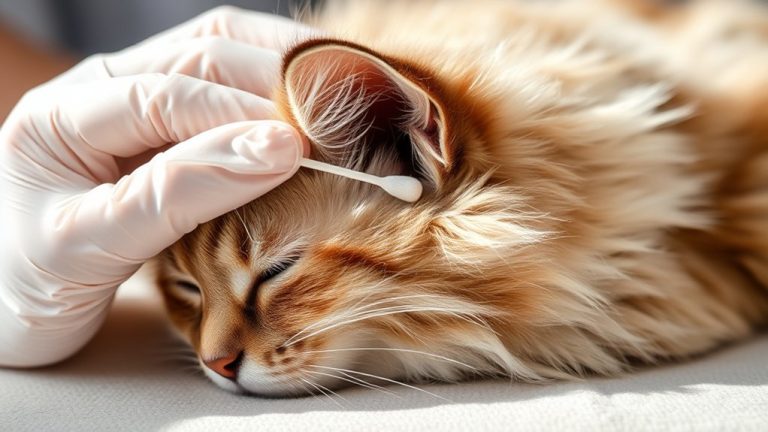
When applying diatomaceous earth (DE) to your cat’s fur, always choose 100% food-grade DE to confirm their safety. Apply diatomaceous earth lightly and sparingly, focusing on the fur and avoiding eyes, nose, and mouth to prevent respiratory irritation.
Use a well-ventilated area and consider wearing a mask to protect yourself from inhaling the powder. Keep an eye on your cat for any signs of discomfort or respiratory issues after application.
| Step | Action | Precaution |
|---|---|---|
| 1 | Select food-grade DE | Confirm it’s safe for cats |
| 2 | Apply sparingly on fur | Avoid eyes, nose, and mouth |
| 3 | Use in well-ventilated space | Wear a mask if possible |
| 4 | Monitor cat post-application | Watch for respiratory irritation |
Risks and Side Effects of Diatomaceous Earth for Cats
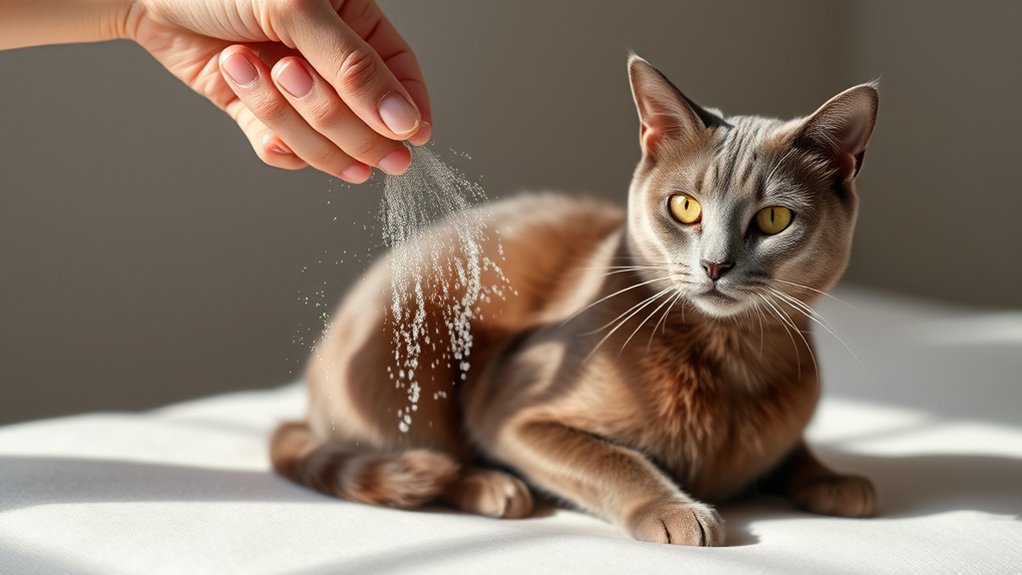
Because diatomaceous earth (DE) can irritate your cat’s respiratory system if inhaled, you need to apply it cautiously and in well-ventilated areas.
While food-grade diatomaceous earth is generally safe for cats, it can still cause irritation and side effects if misused. Here are key risks to evaluate:
Food-grade diatomaceous earth is usually safe for cats but can cause irritation if not used properly.
- Inhalation may lead to coughing or sneezing, especially in sensitive or brachycephalic breeds.
- Direct skin contact can cause irritation and discomfort, particularly in cats with sensitive skin or eyes.
- Ingestion during grooming might result in gastrointestinal upset.
- Only food-grade DE is safe for cats; crystalline forms contain harmful silica and must be avoided.
Keep a close eye on your cat after you apply DE. If you notice any unusual reactions, don’t hesitate to get advice from your vet.
Preventing Respiratory Irritation in Cats and Humans
Managing the risks associated with diatomaceous earth (DE) means taking careful steps to protect both your cat’s and your own respiratory health. When using diatomaceous earth, apply it with light dusting techniques to minimize airborne particles that cause respiratory irritation.
Always choose well-ventilated areas to prevent dust buildup, reducing the chance of breathing difficulties. Keep DE applications away from your cat’s eating, sleeping, and high-traffic zones to limit exposure.
Monitor your cat closely for signs of respiratory distress, especially if they belong to sensitive breeds like brachycephalic cats.
To stay safe for cats and humans alike, consider wearing masks and gloves during application. These precautions guarantee that using diatomaceous earth remains both effective and safe for cats without triggering respiratory irritation.
It’s all about being careful so everyone breathes easy.
Home Use of Diatomaceous Earth for Flea Control
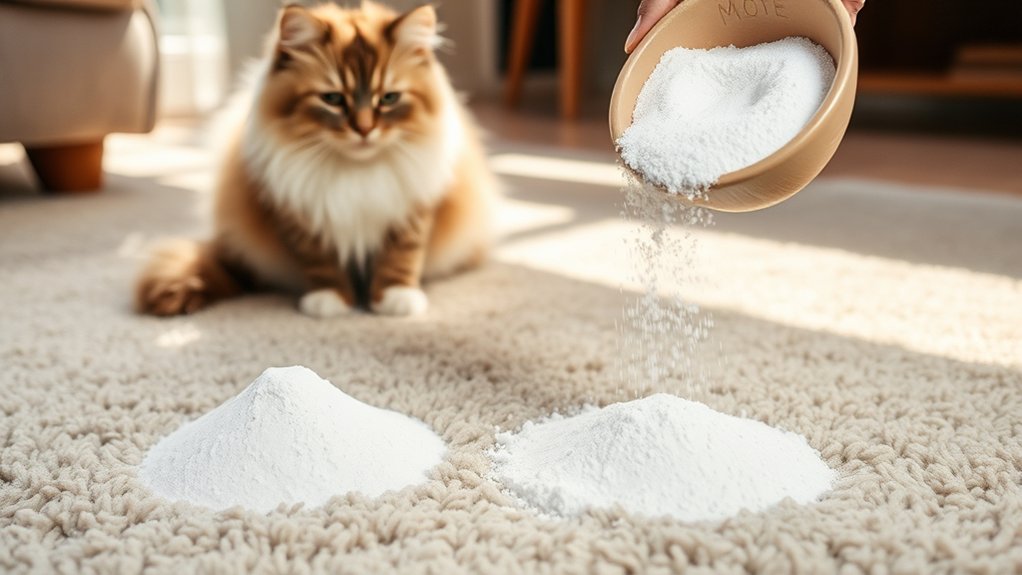
Although diatomaceous earth (DE) won’t eliminate flea eggs, you can use food-grade DE effectively in your home by sprinkling it lightly on carpets, furniture, and other areas where your cat spends time. Diatomaceous earth helps kill fleas by damaging their exoskeletons, making it a natural option safe for cats when used properly.
To maximize results, here’s what you can do:
- Use only food-grade DE to avoid respiratory hazards.
- Apply a thin layer on flea-prone areas, but try to avoid direct contact with your cat.
- Vacuum thoroughly before each reapplication to remove dead fleas and debris.
- Keep the treatment going for 1 to 3 months to catch any newly hatched fleas.
This method supports flea control, but remember, it should be part of a broader strategy since DE doesn’t affect flea eggs.
When to Consult a Veterinarian About Diatomaceous Earth Use
You should consult a veterinarian at the first sign of any adverse reactions in your cat after using diatomaceous earth. Even though diatomaceous earth is generally safe for cats, certain symptoms require immediate veterinary attention to prevent complications.
| Symptom | Reason to Consult |
|---|---|
| Respiratory distress | Inhalation can cause irritation |
| Gastrointestinal upset | Vomiting or diarrhea may signal issues |
| Persistent flea infestation | May need alternative or additional treatment |
Before starting diatomaceous earth, especially with kittens or cats with health conditions, always consult a veterinarian. And if you notice excessive grooming or behavioral changes, it’s a good idea to seek veterinary advice to keep your cat safe and healthy.
Frequently Asked Questions
Can Diatomaceous Earth Affect Other Pets in the Household?
Yes, diatomaceous earth can affect other pets in your household. For pet safety, you should avoid applying it directly to their fur or bedding.
Inhalation may cause respiratory irritation or health risks, especially in sensitive animals.
Use careful application methods, like treating contained areas with good ventilation. If you have exotic or delicate pets, consider alternative treatments.
And always consult your veterinarian to guarantee safe use and minimize potential harm.
How Long Does Diatomaceous Earth Remain Effective on a Cat?
Diatomaceous earth duration on your cat typically lasts up to 48 hours after application.
To maximize effectiveness, use gentle application techniques, focusing on flea-prone areas, and keep the coat dry.
Since cats groom themselves extensively, watch out for excessive licking. This helps avoid ingestion and respiratory issues.
Always follow safety precautions by reapplying every few days if fleas persist.
Also, limit DE exposure to prevent skin irritation and ensure your cat’s well-being.
Taking these steps will help keep your furry friend comfortable and flea-free.
Is Diatomaceous Earth Safe for Kittens or Pregnant Cats?
Diatomaceous earth requires careful kitten safety measures and pregnant cat precautions.
For kittens, start with no more than ½ teaspoon daily, and always consult your vet before use. Pregnant cats shouldn’t have DE applied directly due to respiratory and gastrointestinal risks.
Use only food-grade DE and avoid inhalation by applying it carefully. It’s best to put it around resting areas rather than directly on your cat.
Keep an eye out for any irritation and reach out to your vet if you notice anything unusual.
Can Diatomaceous Earth Interfere With Flea Medications or Treatments?
Yes, diatomaceous earth can interfere with flea treatment interactions by coating your cat’s fur and reducing the effectiveness of topical medications.
To avoid this, follow proper application techniques and dosage guidelines carefully. Make sure you apply DE separately from flea treatments.
Also, think about treating your pet’s environment to boost flea control efforts.
It’s a good idea to chat with your vet to coordinate DE use with other treatments safely and effectively. That way, you can keep your furry friend comfortable without any hiccups.
How Should I Store Diatomaceous Earth to Maintain Its Potency?
To maintain diatomaceous earth’s potency, follow these storage tips: use airtight containers to control humidity and prevent moisture absorption.
Moisture can shorten its shelf life, so keeping it dry is key.
Store DE in a cool, dry place away from direct sunlight to avoid degradation. It’s best to choose containers that seal tightly.
Also, label them clearly to avoid confusion between food-grade and other varieties.
Regularly check the powder’s consistency to make sure it hasn’t clumped. That way, you’ll know it’s being stored properly.
Conclusion
Using diatomaceous earth for your cat is like steering through a delicate dance. You need the right moves to keep it safe and effective. Always choose food-grade DE, apply it gently, and avoid inhalation risks to protect both your furry friend and yourself.
Stick to recommended dosages and keep an eye out for any side effects. When in doubt, consulting your veterinarian guarantees you’re treating your cat with the care it deserves. Safety and precision make all the difference.